Answer brief
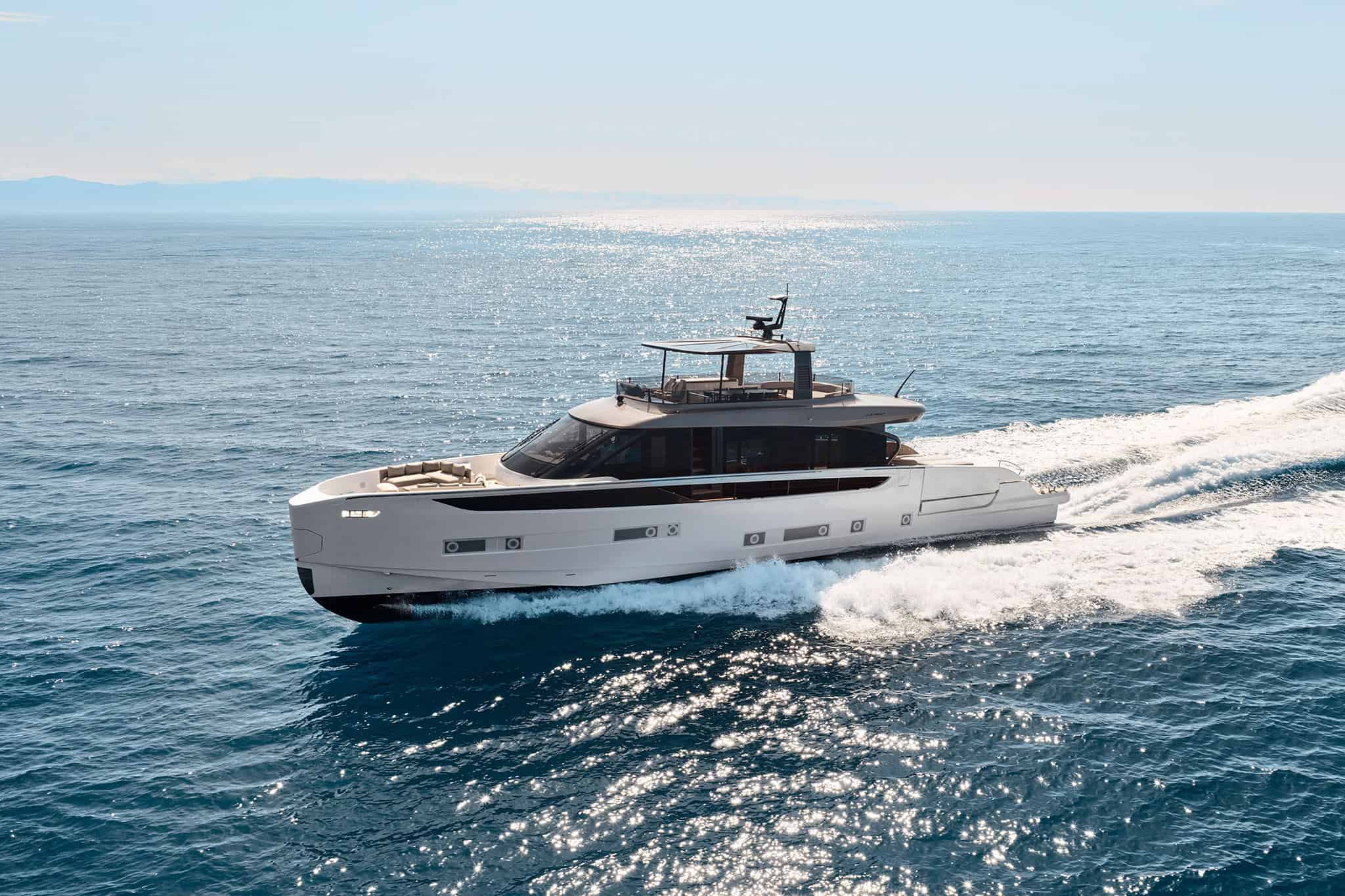
The Azimut Seadeck 9 is a 25.60-metre planing yacht whose published specification combines carbon-fibre and GRP construction, triple Volvo Penta IPS propulsion and provision for hybrid-electric technology. Azimut also describes a separate 60 kWh battery-supported Hotel Mode intended to serve onboard loads with the generators switched off. These systems address different operating states and should not be compressed into a single sustainability claim. The official record establishes the design and declared specification; it does not provide an independent season of fuel, emissions, range, reliability or lifecycle data.
Fact unit
- Model: Azimut Seadeck 9.
- Length overall: 25.60 metres under the builder's ISO-referenced data summary.
- Beam and full-load draft: 6.30 metres and 1.88 metres.
- Construction: carbon fibre and GRP; Azimut says carbon fibre is used in 40% of the yacht.
- Propulsion options: three Volvo Penta IPS 1200 units or three IPS 1350 units as the published option.
- Declared speeds: up to 24 knots cruise and up to 30 knots maximum under stated test conditions.
- Hotel system: builder-described 60 kWh lithium battery pack for generator-off Hotel Mode.
- Authorship: Alberto Mancini, exterior; Matteo Thun & Antonio Rodriguez, interior; hull work with NAMES and Azimut R&D.
- Evidence boundary: all performance and efficiency values are manufacturer statements, not Luxe Digital test results.
What kind of yacht is being assessed
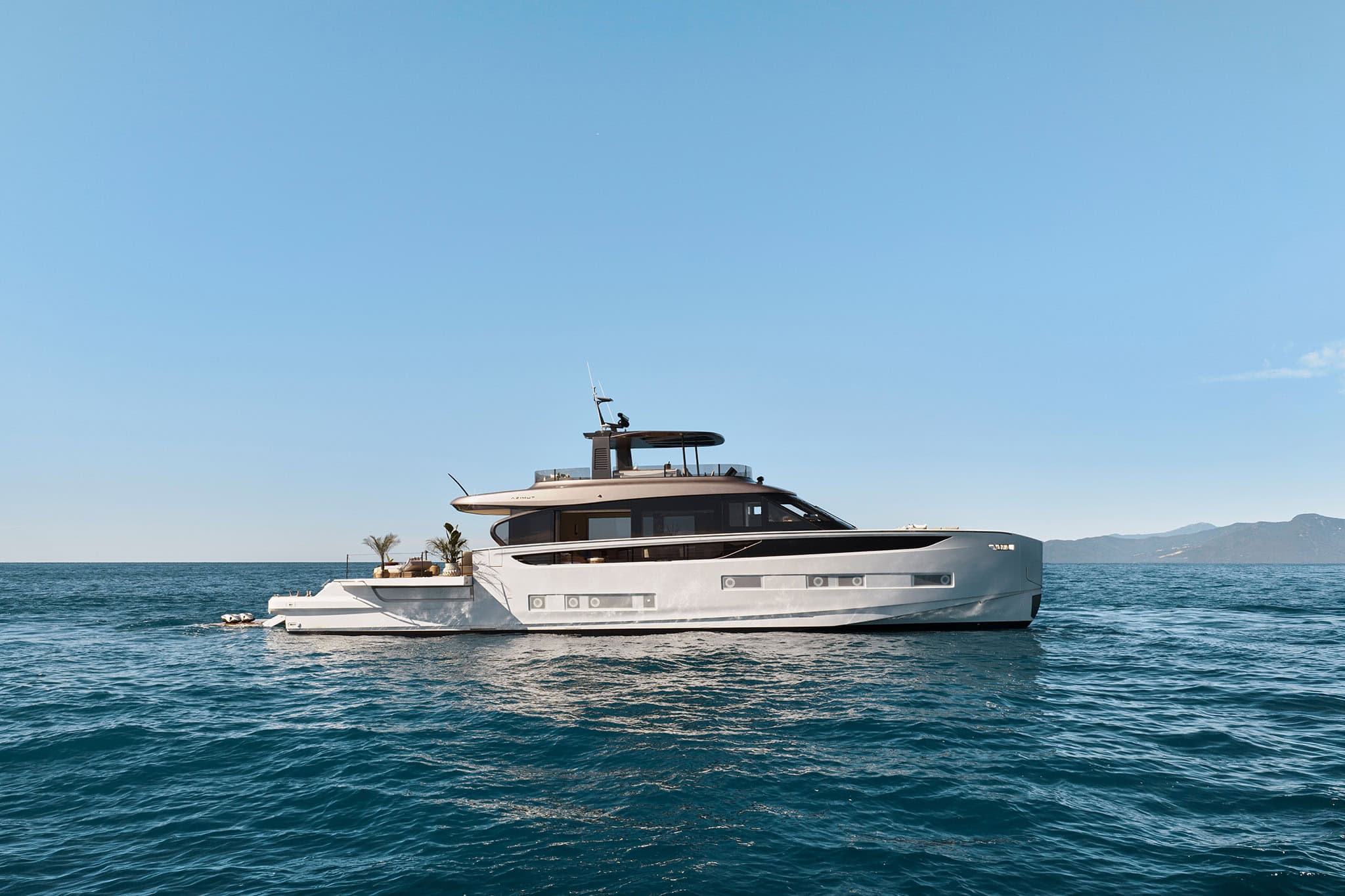
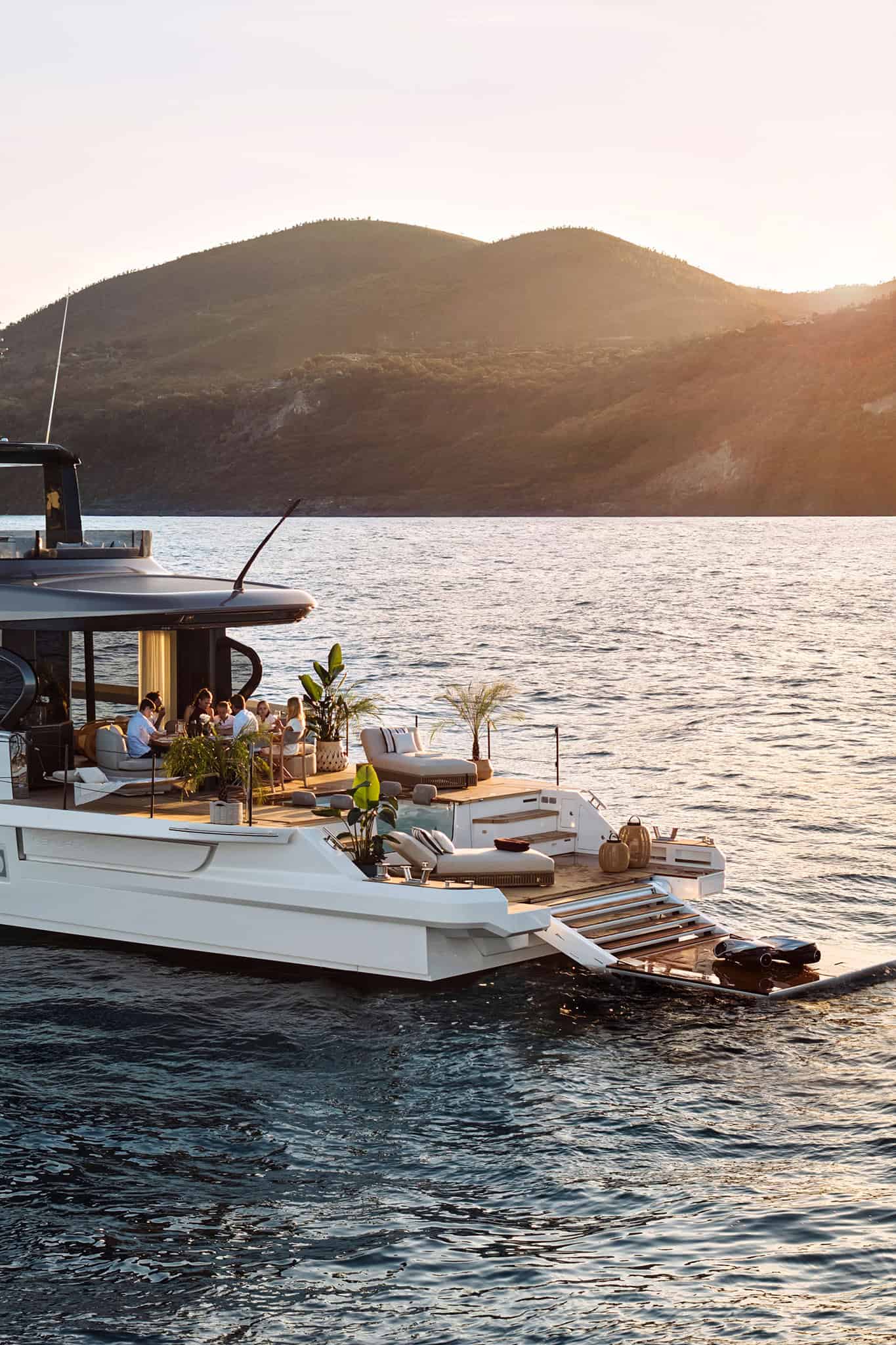
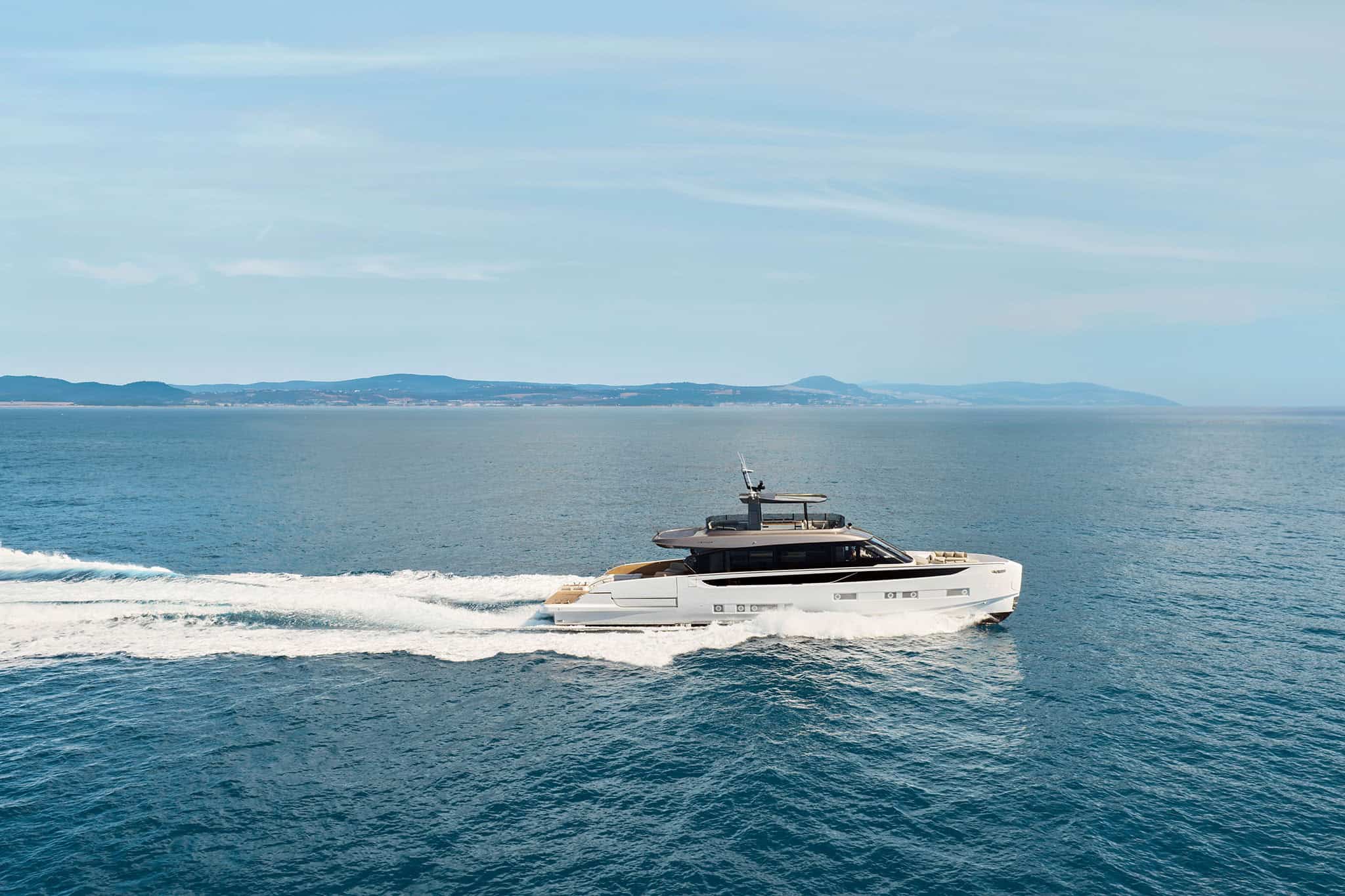
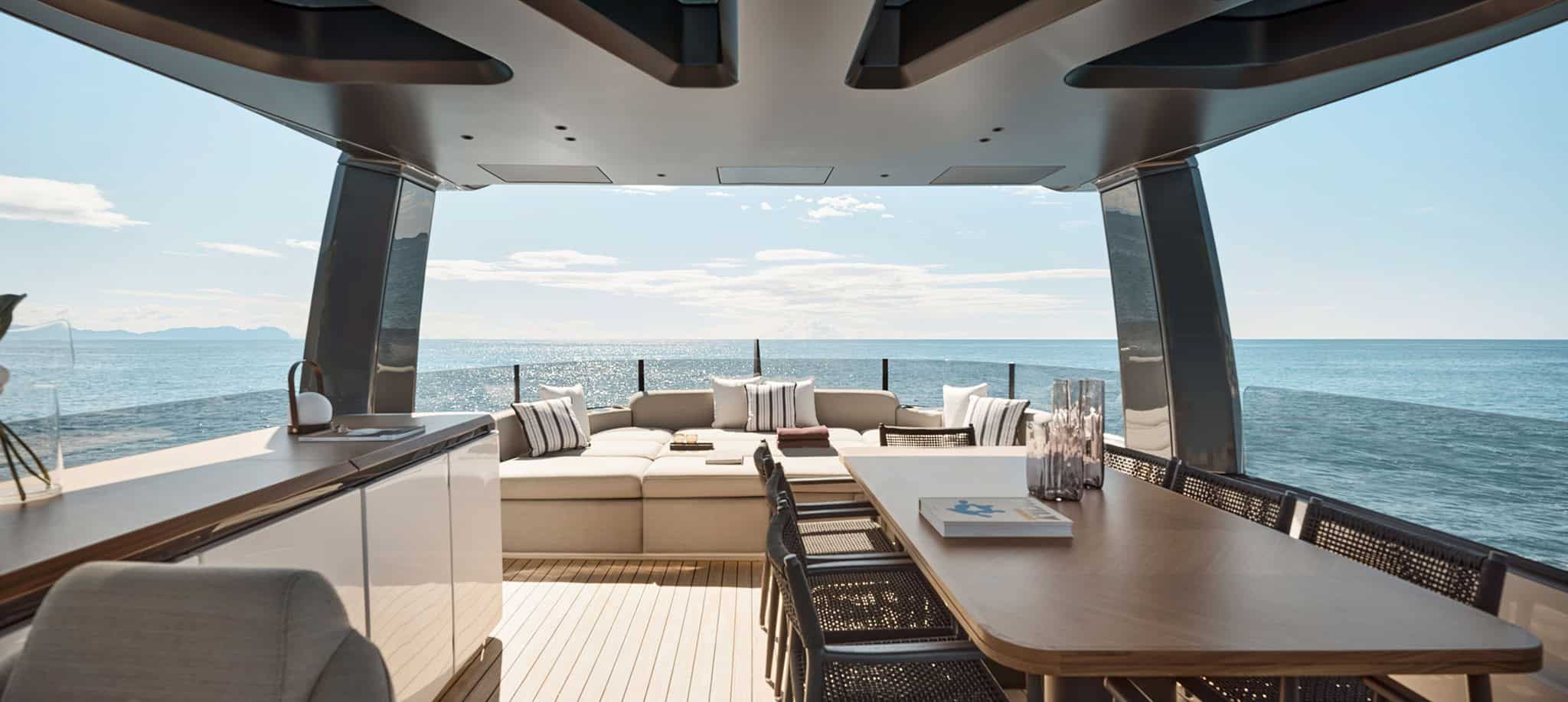
Seadeck 9 is a production platform rather than a one-off custom superyacht. That distinction changes the useful questions. A series yacht must make its hull, tooling, certification, machinery package and core arrangement repeatable. Owners may configure cabins and finishes, but the principal naval-architecture and systems decisions belong to a defined product.
Repeatability can make comparisons easier because the specification is not unique to one commission. It does not eliminate variation. Engine option, load, equipment, sea state, maintenance and owner use all influence results. The published model page is therefore the baseline for verification, not a promise that every delivered unit will reproduce every headline number in every condition.
Hull, weight and propulsion are separate levers
Azimut frames Seadeck around hull efficiency, lighter construction and electrified operation. They are related but not interchangeable. Hull form affects resistance across the speed range. Structural material and equipment choices affect displacement. IPS propulsion changes thrust direction, installation and manoeuvring. Battery-supported services change when generator sets need to run.
The official data identify a deep-V planing hull developed with NAMES and Azimut R&D. The builder offers triple IPS installations rather than a conventional shaft-line arrangement. The result should be assessed as a complete propulsion architecture. It is not sound to attribute a consumption claim to carbon fibre, hull geometry or IPS alone when the published comparison combines several variables.
Azimut states that the Low Emission Yacht configuration reduces fuel consumption by at least 20% against a defined market-average comparison, while its newer Seadeck 9 release describes reductions of up to 30% in an average year of use against comparable traditional hull and shaft-line vessels. Those are not equivalent test statements. Before publication, the editor must preserve the builder attribution, the comparison class and the conditional language rather than presenting either percentage as an independent result.
The Hotel Mode is not propulsion
The 60 kWh battery described for Hotel Mode serves a different task from moving the yacht. At anchor, lighting, refrigeration, pumps, communications, entertainment and climate control continue to demand electricity. Supplying some of that demand from a battery can allow generator-off periods, subject to the actual load and state of charge.
Battery capacity alone does not establish silent-mode duration. A 60 kWh pack will last very differently under a modest overnight load and under heavy air-conditioning demand. Usable state-of-charge limits, inverter losses, ambient temperature, recharge strategy and battery ageing also matter. The owner-relevant number is therefore a measured load profile with a declared operating condition, not the capacity label in isolation.
The builder describes the IPS installation as compatible with hybrid-electric technology. Compatibility must not be confused with the precise installed specification of every yacht. A buyer should identify which motors, generators, batteries, controls and shore-power equipment are included in the contracted unit and which are options or future provisions.
Design at the waterline
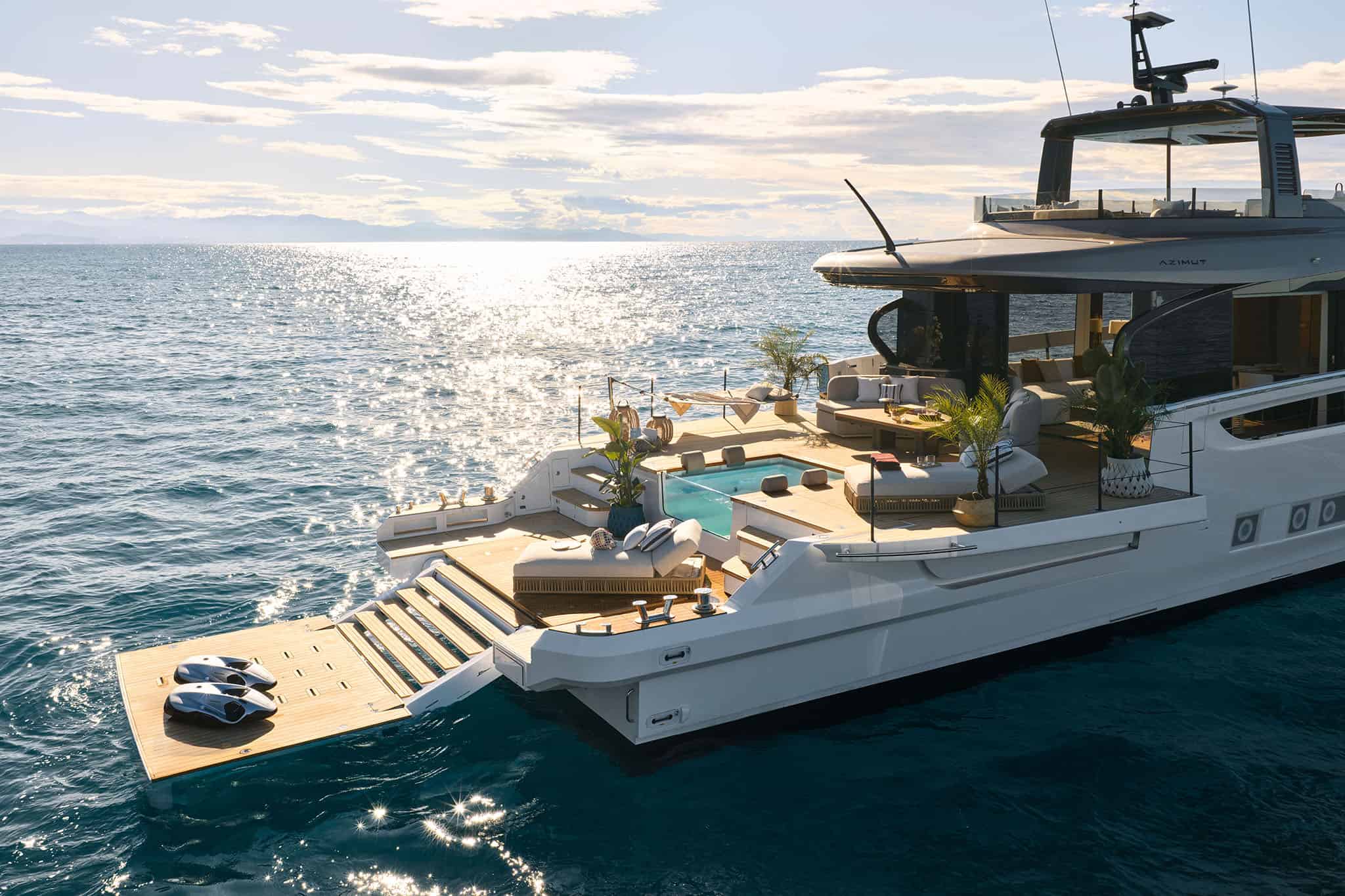
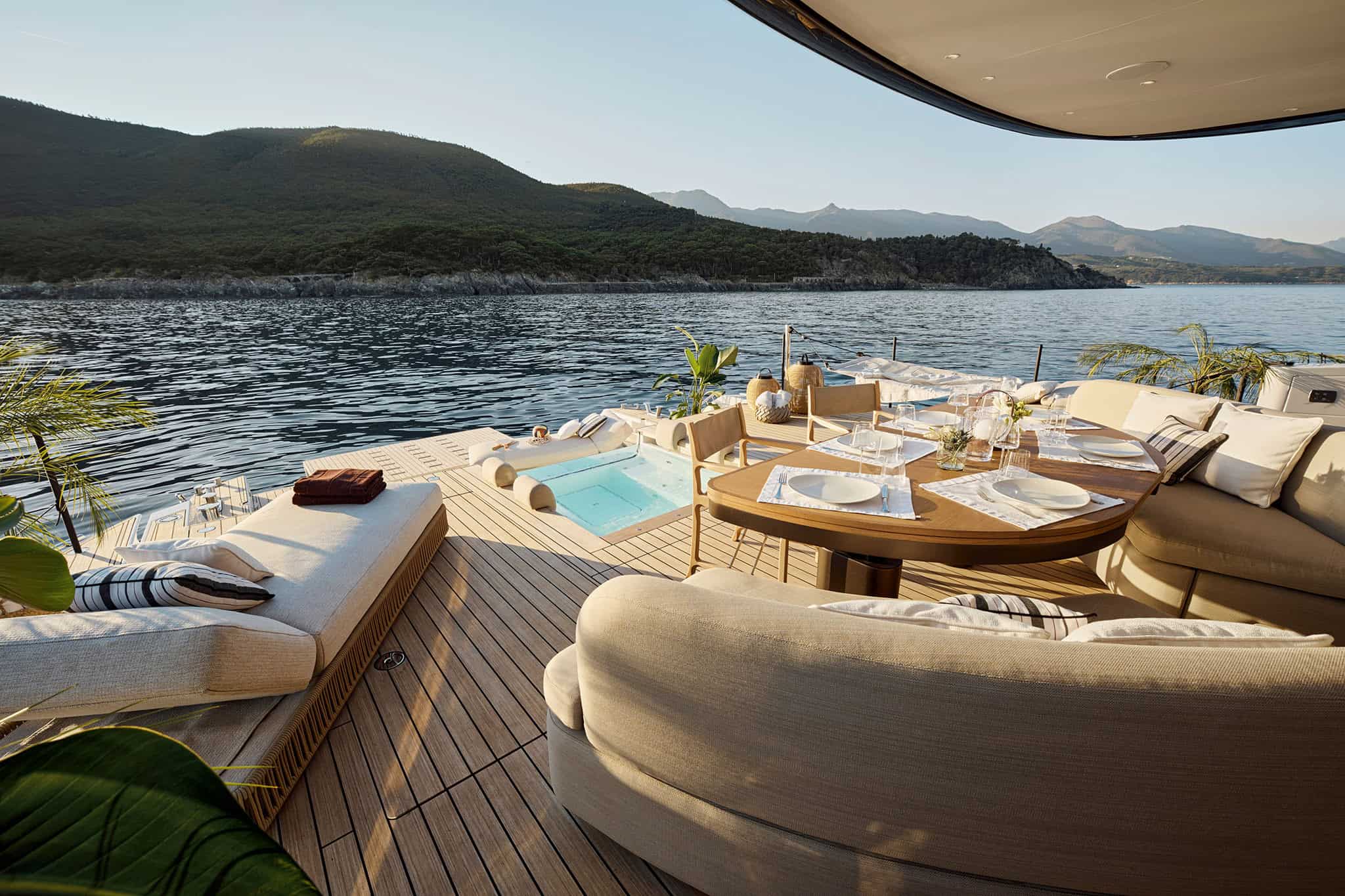
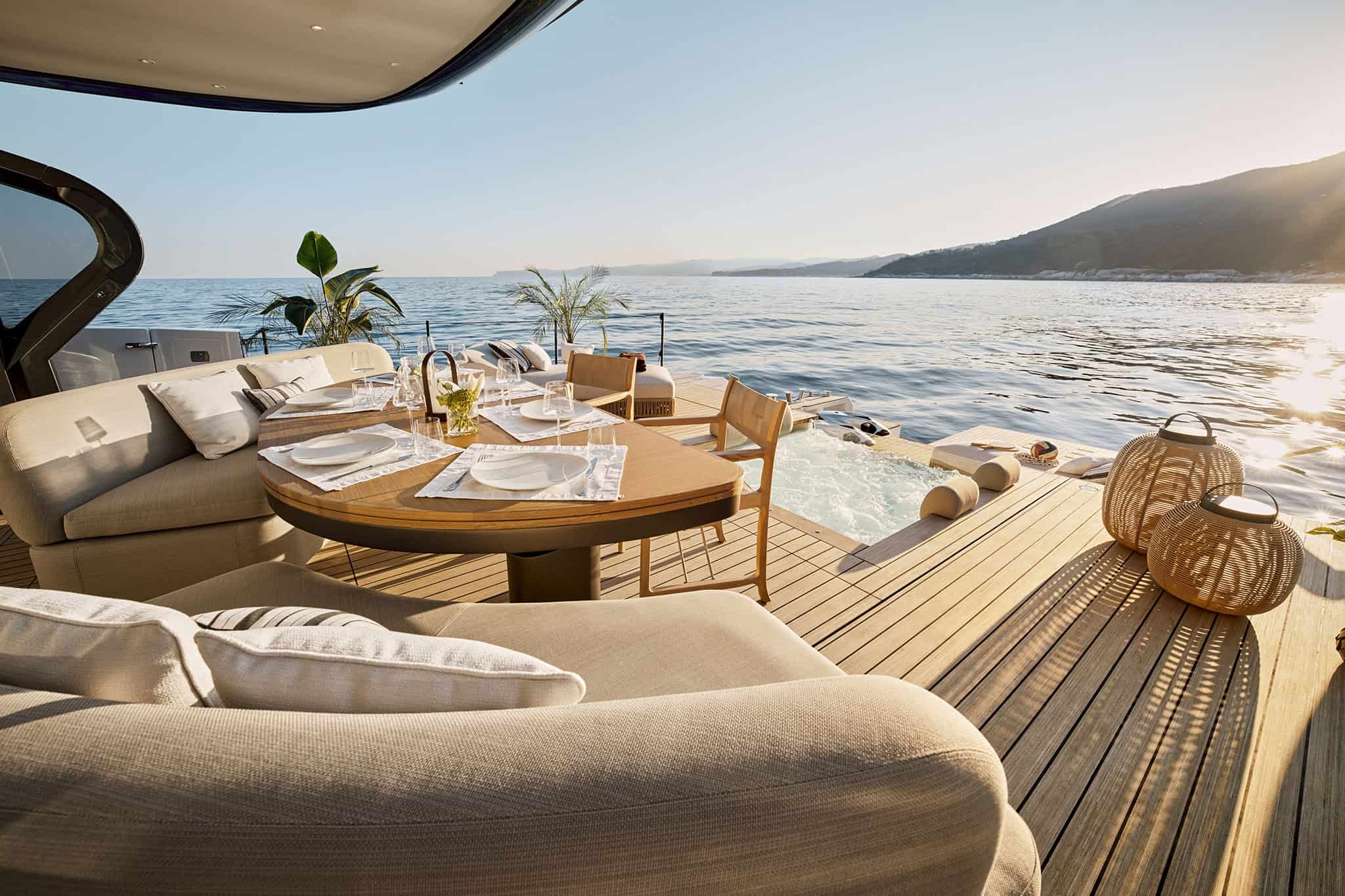
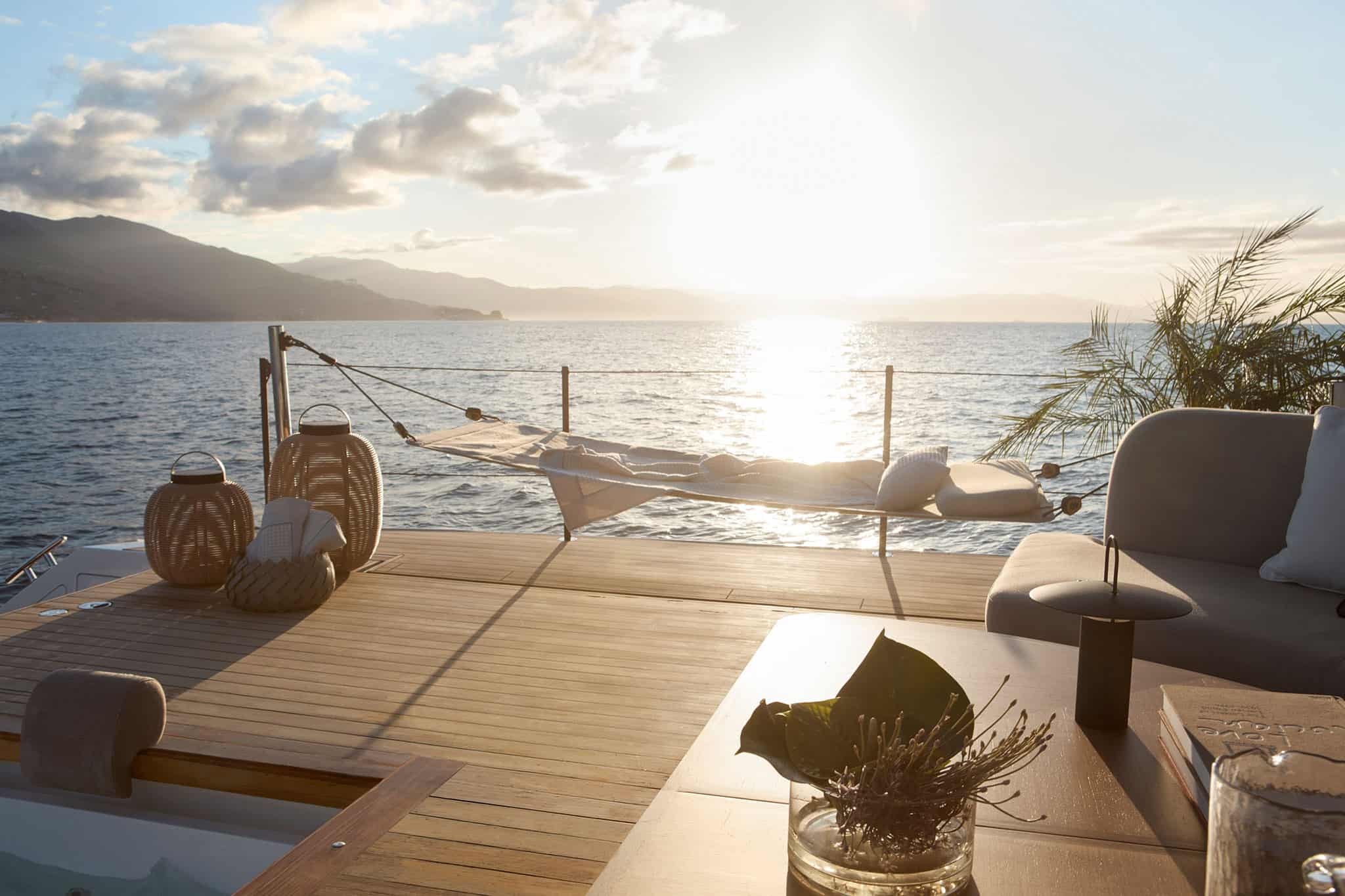
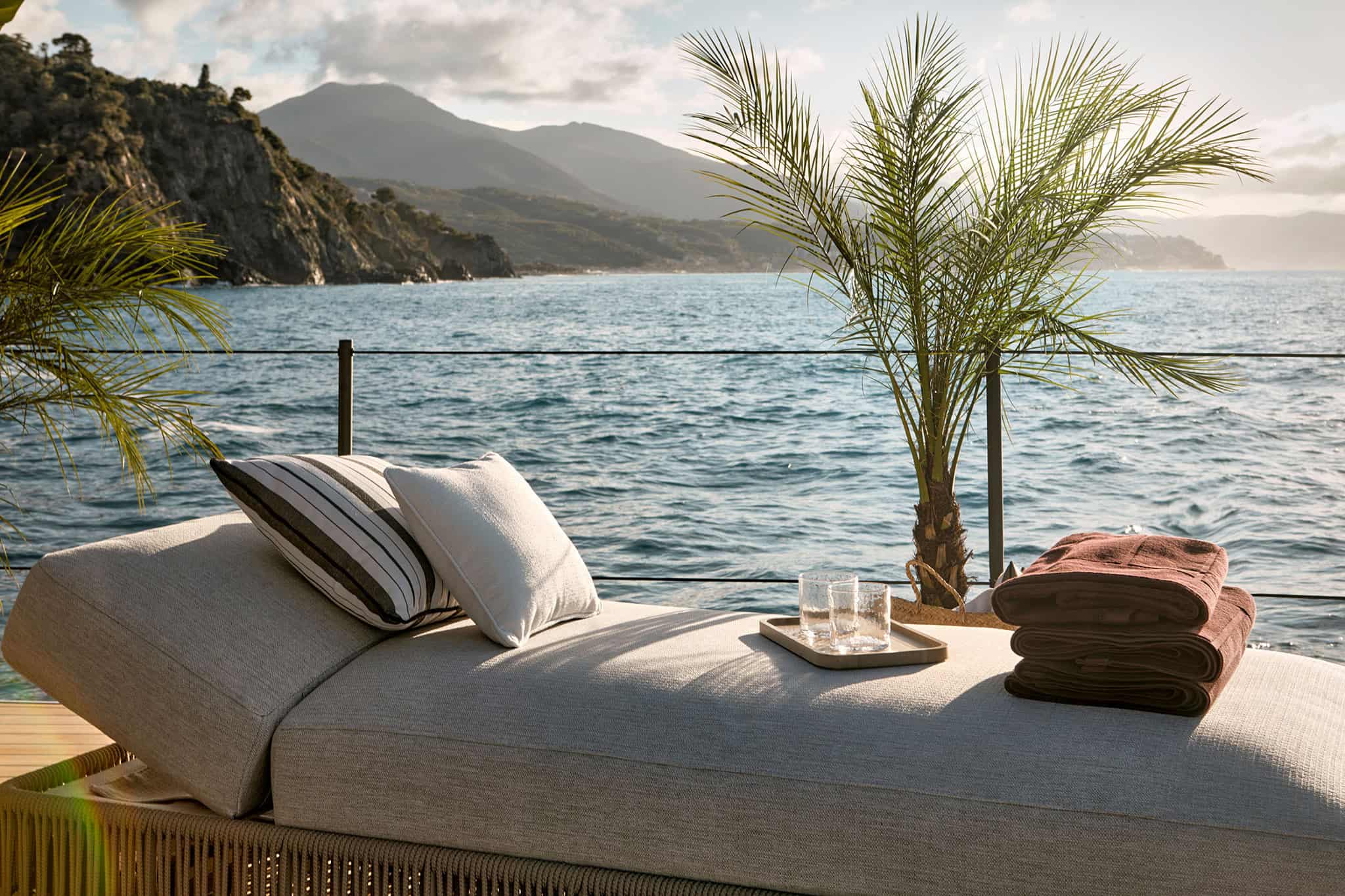
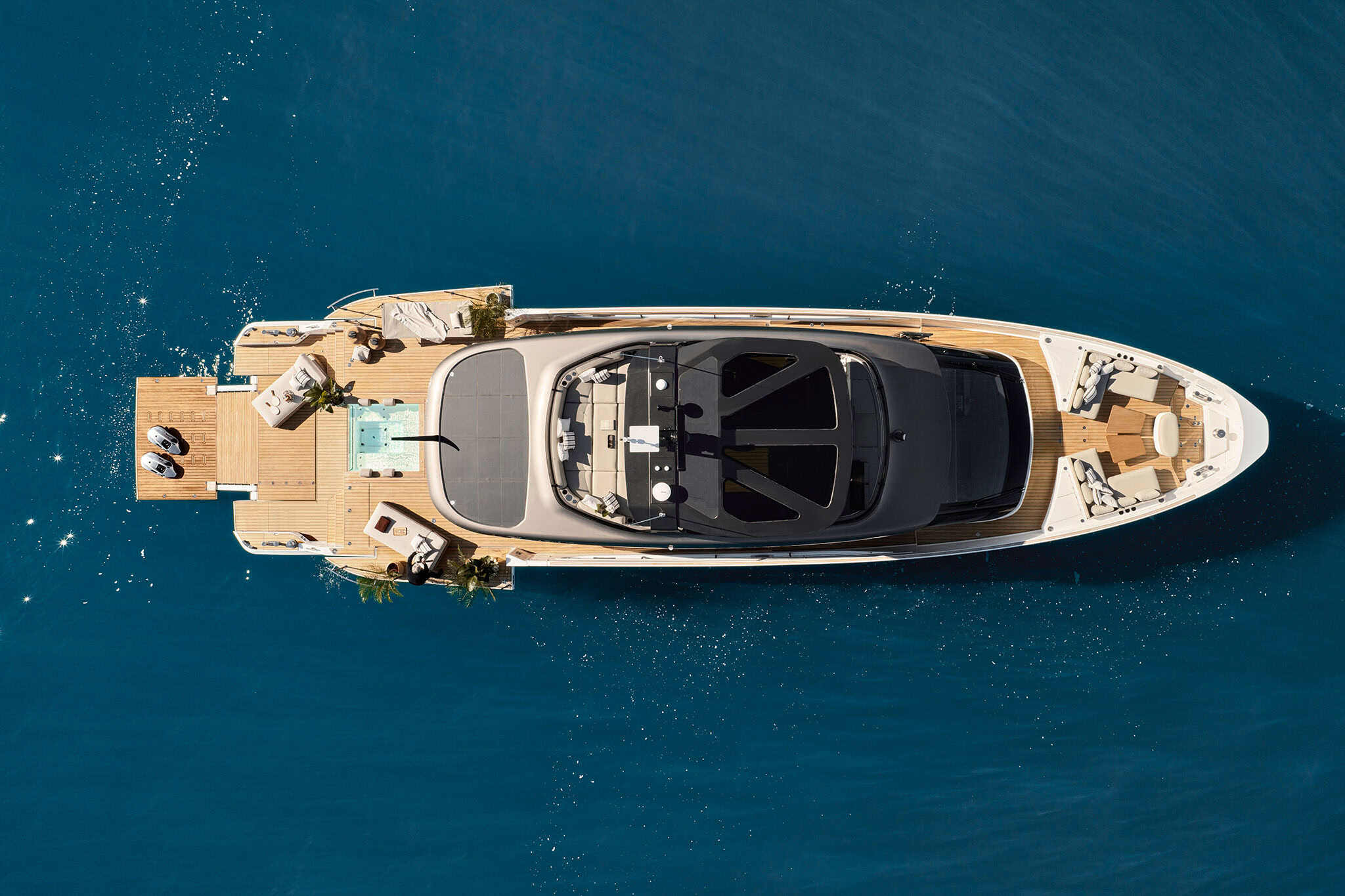
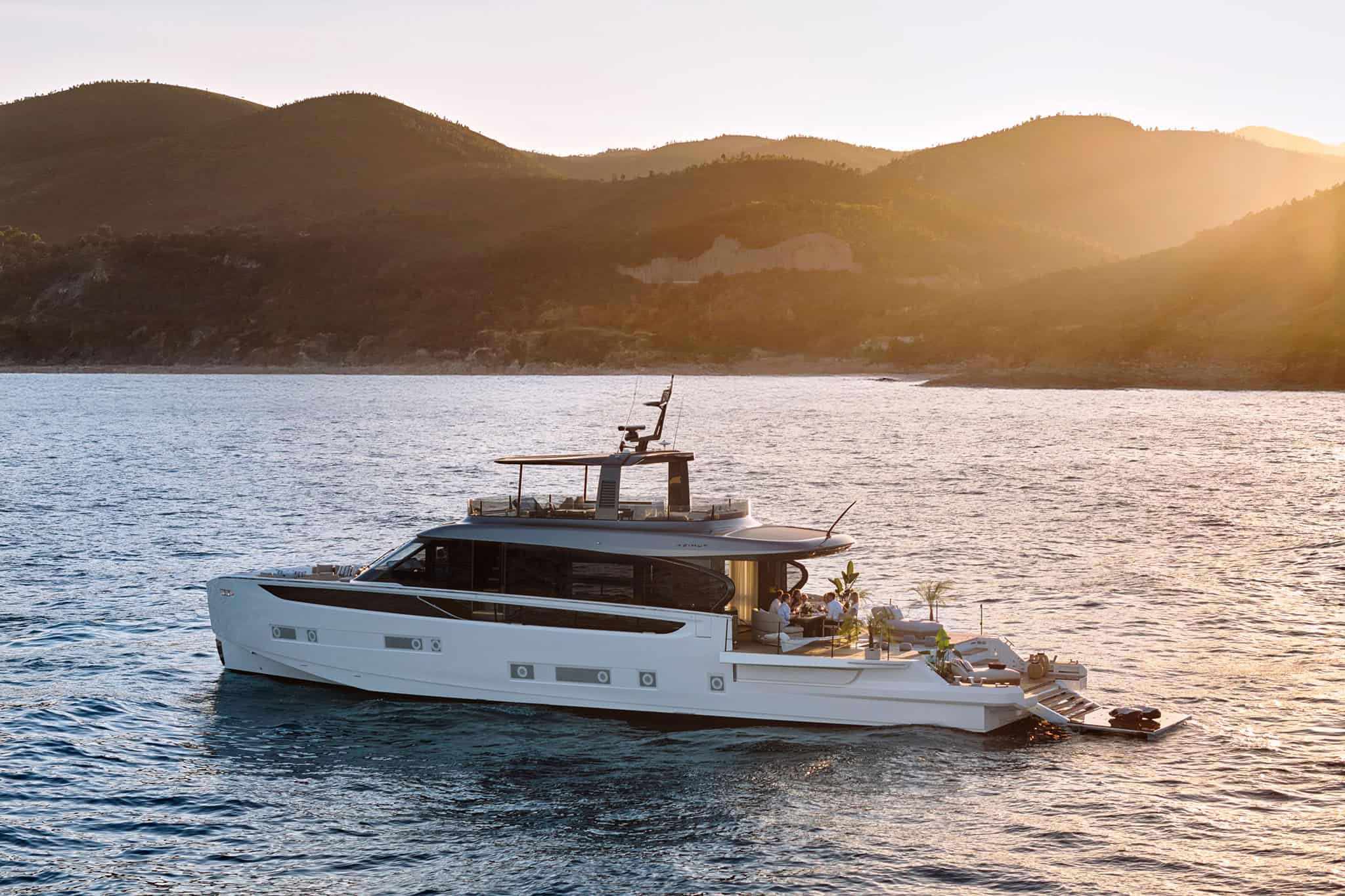
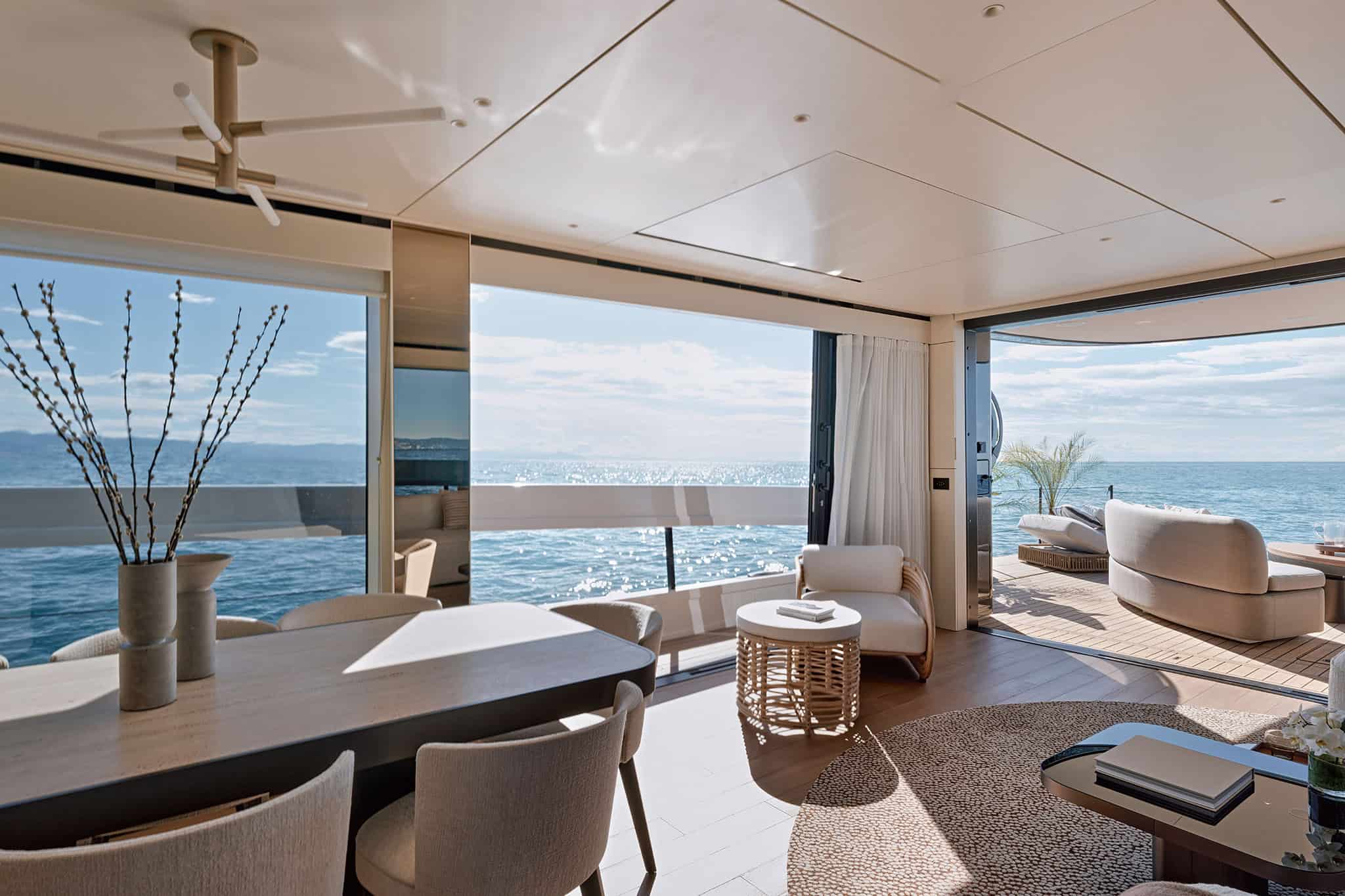
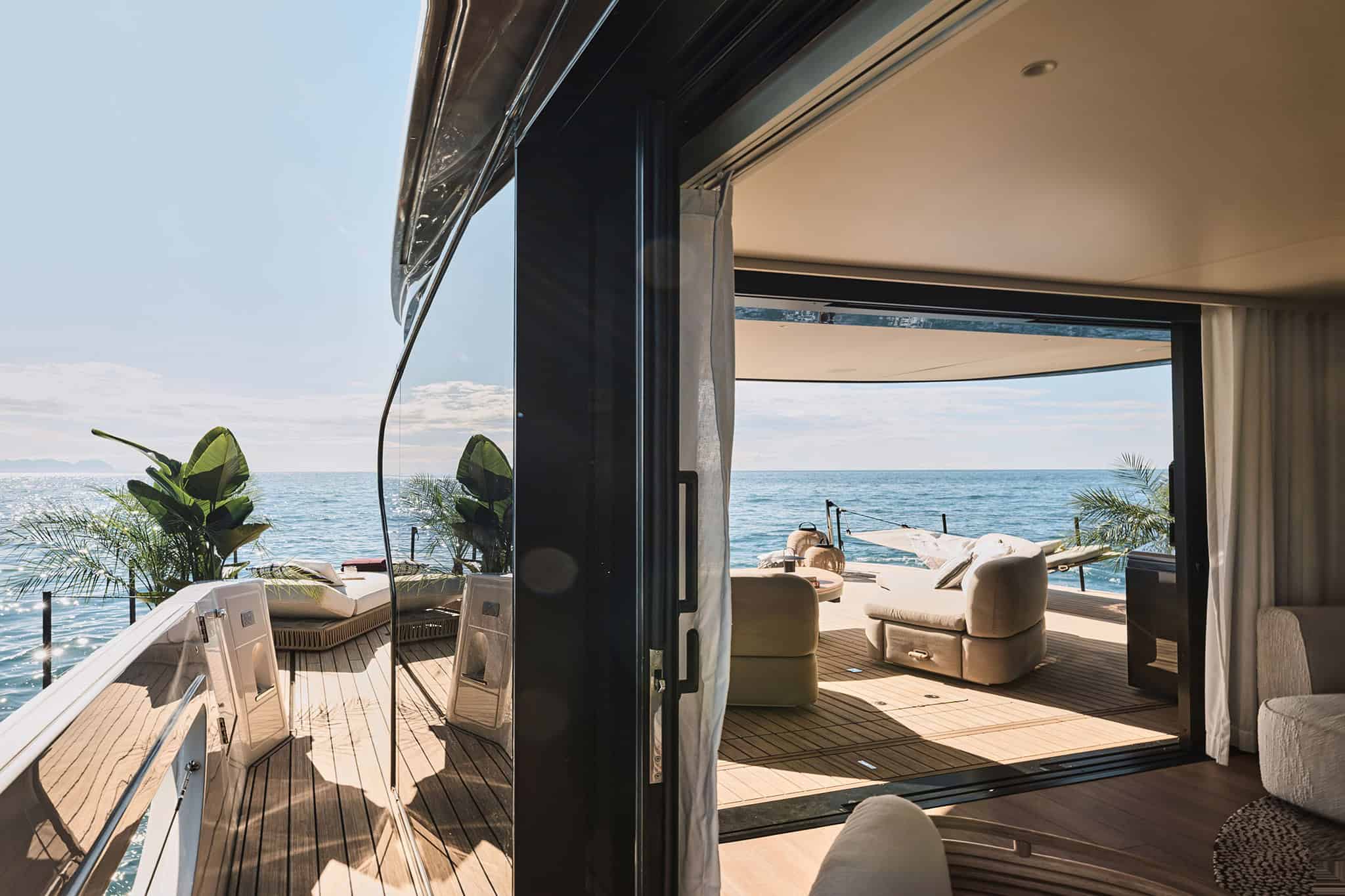
The aft architecture is the clearest experiential proposition. Azimut describes more than 60 square metres arranged across three levels, with terraces, opening wings, an integrated pool and a seven-square-metre transformer platform. The main deck and aft lounge are intended to read as one continuous environment rather than as separate interior and exterior rooms.
This is more than an image-making exercise, but photographs and renderings cannot prove usability. On a finished yacht, drainage, wind protection, safe circulation, tender and toy handling, privacy at anchor and movement when the platform is deployed all need direct observation. The same applies to the disappearing glass door and full-height windows: they establish design intent while thermal gain, reflections, sealing, maintenance and acoustic performance remain operational questions.
Exterior authorship by Alberto Mancini and interior work by Matteo Thun & Antonio Rodriguez are explicitly documented. The material narrative should remain attributed. A description of bamboo furniture, timber palettes or eco-resort references is evidence of a design vocabulary, not evidence of durability or environmental performance.
The specification in context
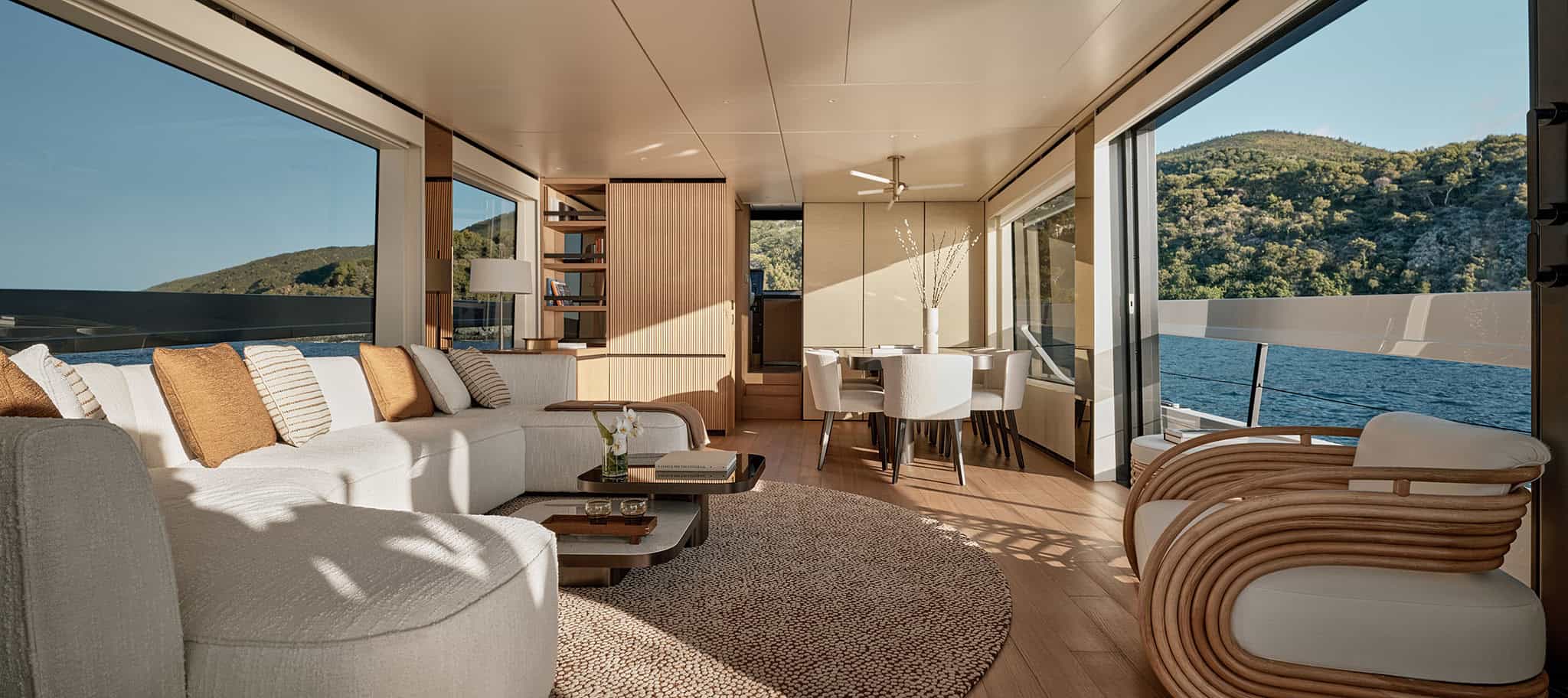
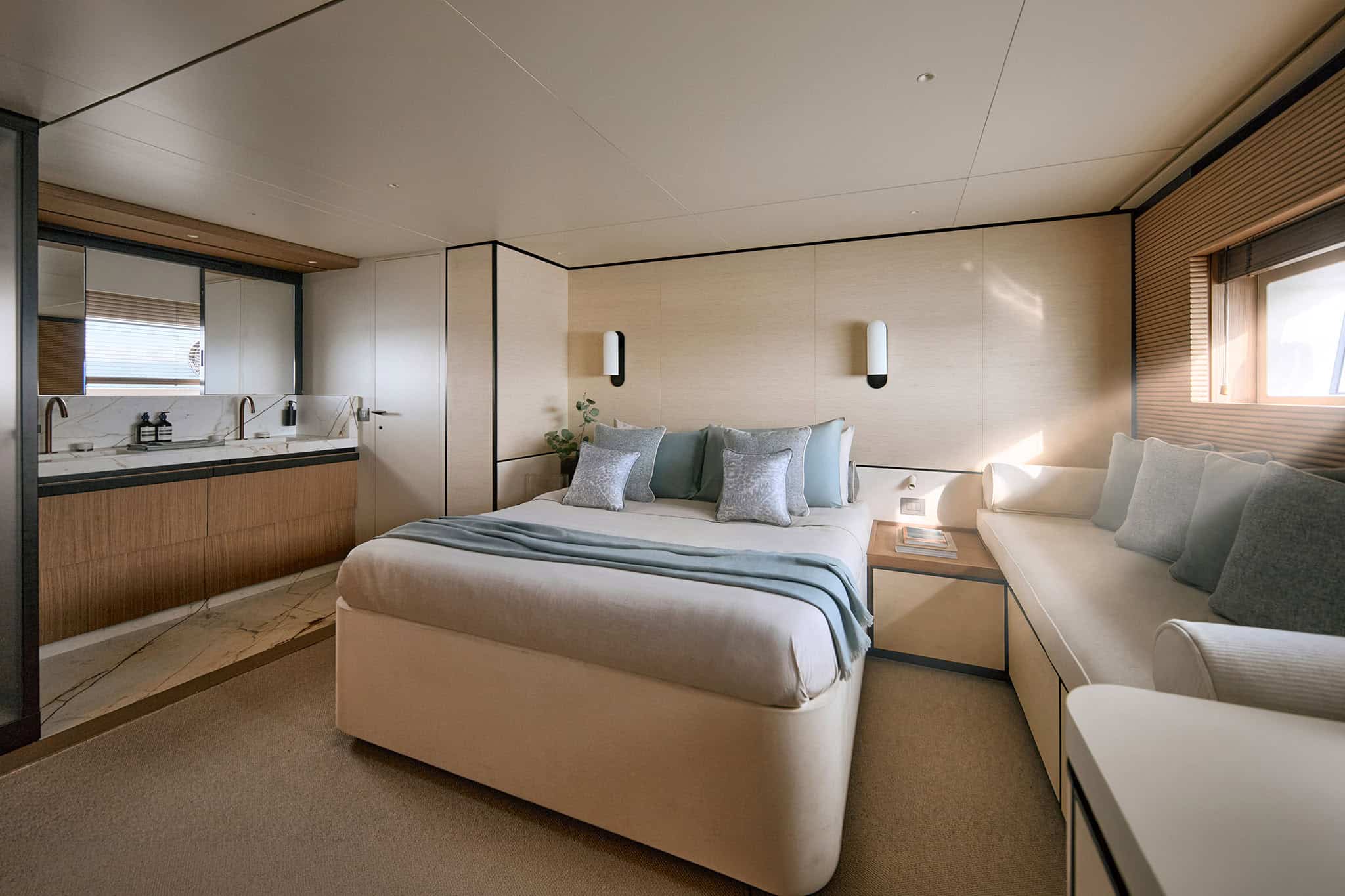
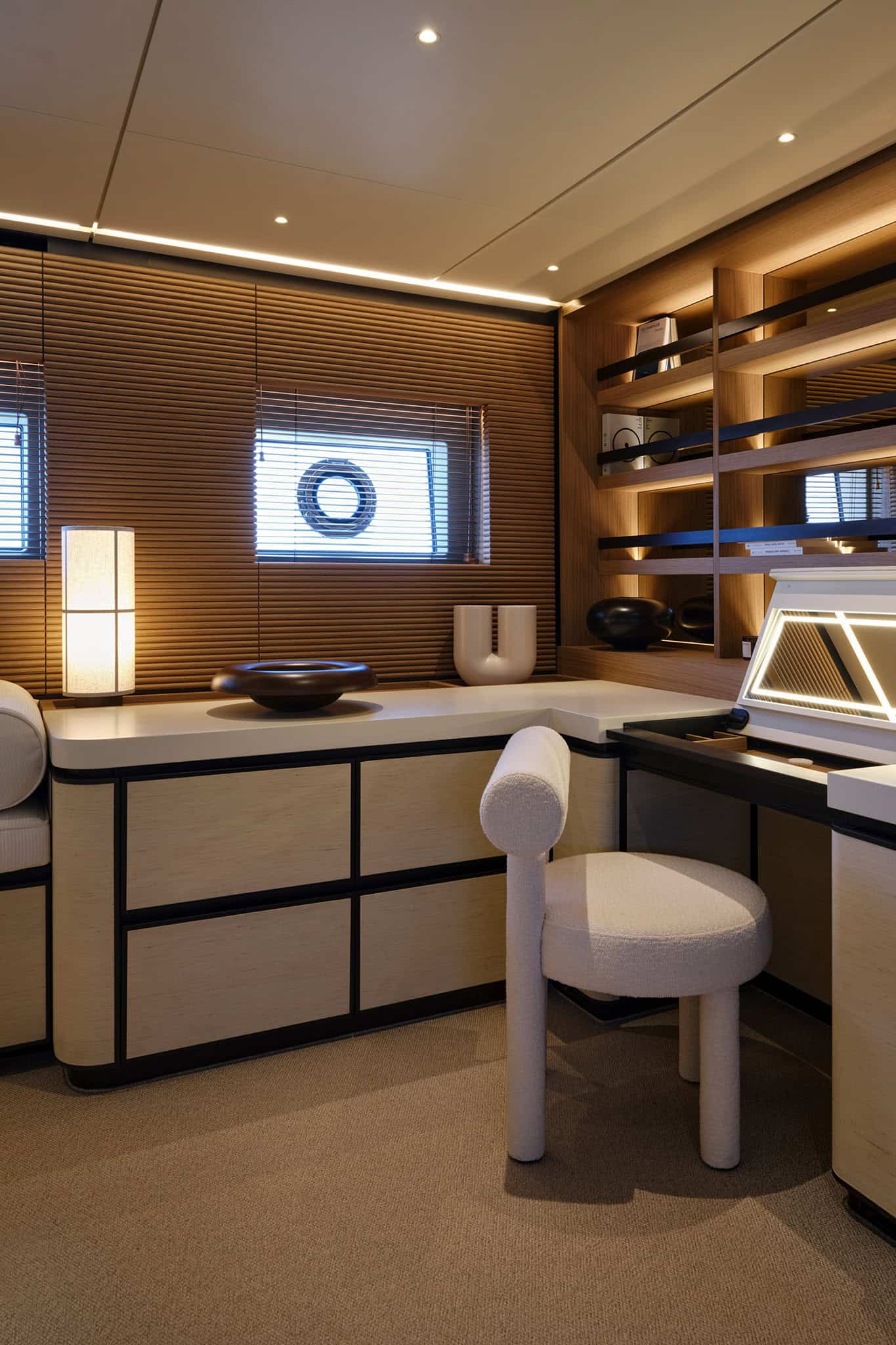
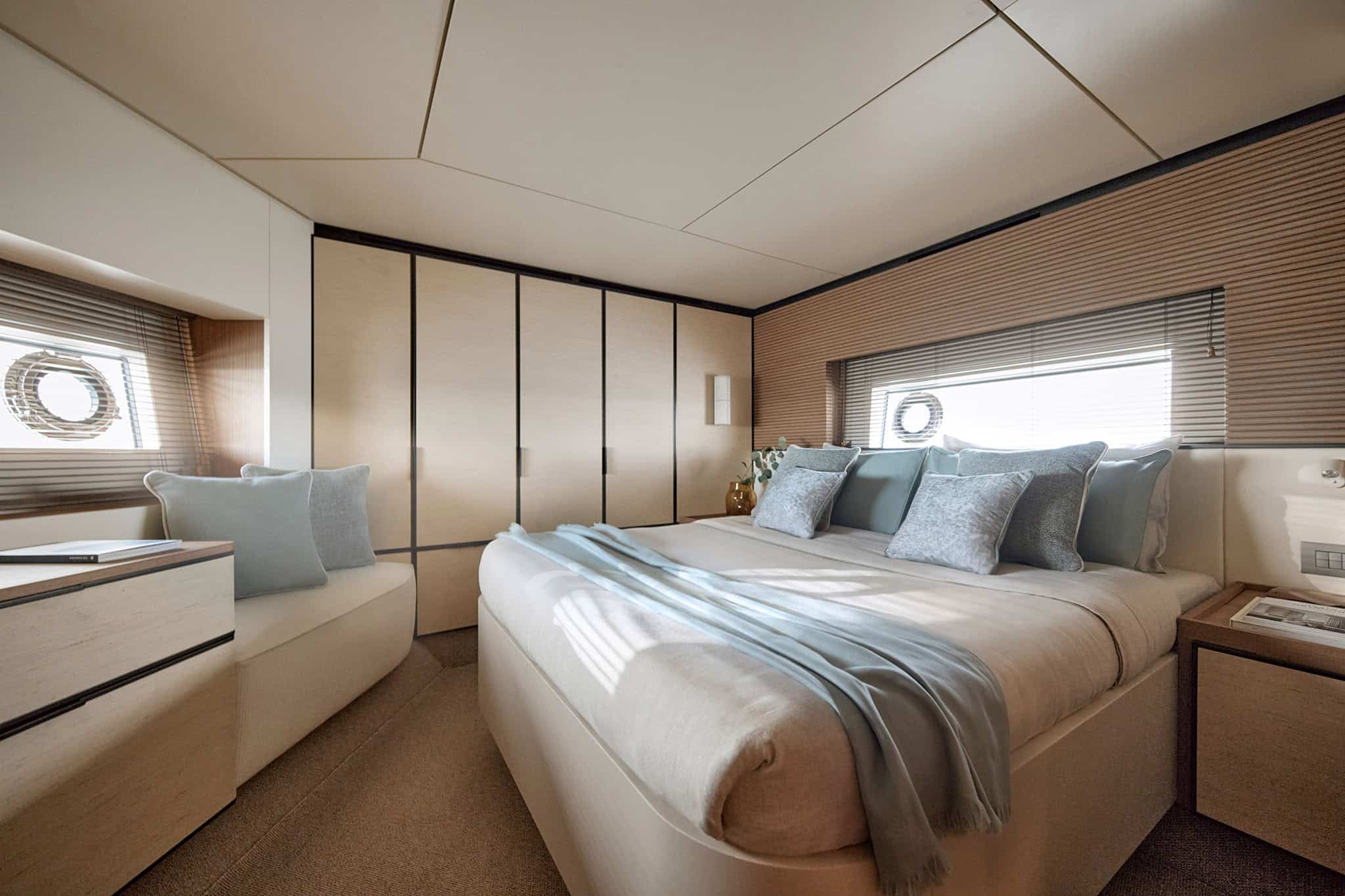
The builder records a full-load displacement of 76.79 tonnes, four or five guest cabins, and accommodation for eight or ten guests plus crew. It also provides fuel and water capacities. These values help define mission and volume, but they do not calculate real range by themselves. Range requires speed, load, reserve policy, weather and measured consumption.
The maximum and cruise speeds are stated as "up to" figures and tied to test mass or test load. They should stay in that form. A publication should not strip away the condition, round the numbers into a guaranteed result or combine them with an unsupported range estimate.
CE A certification and a builder specification are meaningful controls, yet they answer different questions from independent sea trials. Certification addresses conformity against an applicable framework. A sea trial examines a particular yacht in declared conditions. Long-term evidence covers availability, maintenance and ageing. None substitutes for the others.
Owner and captain verification checklist
Before contract or delivery, the decision team should request a configuration-specific technical schedule:
- Which IPS units, hybrid components and battery systems are included in the exact build?
- What is the usable battery capacity and the continuous Hotel Mode load at defined ambient conditions?
- Which hotel consumers remain available during generator-off operation?
- How is the battery recharged from shore power, engines or generators, and how long does each path take?
- What automatic fallback operates when battery charge or inverter capacity reaches its limit?
- What fire detection, isolation, cooling and emergency procedures apply to the battery installation?
- Which declared fuel-consumption baseline is used for the selected propulsion configuration?
- What sea-trial protocol will record speed, displacement, weather, trim and consumption?
- How do deployed terraces and platform affect marina use, anchoring practice and crew routines?
- Which maintenance tasks require specialist support, haul-out access or software diagnostics?
This is the difference between choosing a concept and accepting a measurable yacht.
What evidence would change the assessment
A delivered-unit study should record speed against fuel flow at several load points, Hotel Mode demand over representative nights, generator runtime, recharge losses, noise, vibration and system availability. It should state displacement, sea condition, air and water temperature, equipment state and number of people onboard. Without those controls, comparisons are anecdotal.
Lifecycle claims would require another boundary: material manufacture, build process, fuel pathway, maintenance, replacement and end of life. Lower consumption in a defined operating case is useful evidence but not a complete lifecycle verdict. Luxe Digital should keep those claims in separate fields rather than turn them into a single score.
Editorial verdict
Seadeck 9 is a substantive design and systems proposition because it connects a repeatable 25.60-metre platform, an expansive waterline layout and several efficiency levers. Its published technical detail is strong enough for a source-led study. It is not yet enough for a Luxe Digital Review or a universal emissions conclusion.
The next editorial milestone is a configuration-specific delivered yacht with direct access and recorded operating data. Until then, the correct value of the model is as a clearly specified case study: what the builder says it has engineered, which owner questions follow, and what evidence remains absent.
Key takeaways
- Seadeck 9 combines a deep-V planing hull, mixed carbon-fibre/GRP construction and triple IPS propulsion.
- The 60 kWh Hotel Mode battery addresses onboard electrical loads, not main propulsion.
- Builder efficiency percentages depend on comparison boundaries and remain attributed claims.
- The aft terraces and pool define the design proposition, while real ergonomics require direct access.
- Delivered-unit consumption, range, reliability and lifecycle performance remain unverified.
Sources & credits
Methodology and sources
This study uses Azimut's current model specification and launch material plus classification guidance. Builder claims are attributed and were rechecked on 26 August 2026. Limitations: no onboard access, sea trial, owner interview, configuration sheet or independent lifecycle study was available.
- Azimut Seadeck 9 model and specification
- Azimut Seadeck series overview
- Azimut: Seadeck 9, The Time We Choose to Live
- Lloyd's Register yacht guidance
Media plan: 18 official-source candidates are attached to the governed draft for human review; publication remains blocked. Entities builder:azimut and yacht-model:azimut:seadeck-9 remain draft/noindex.