The most useful way to understand a hybrid yacht is to stop treating every hour afloat as the same kind of hour. Leaving a harbour, running at speed and spending an afternoon at anchor ask different things of the machinery. Propulsion is only part of the day. Air conditioning, lighting and the other services used aboard continue to draw energy when the yacht is no longer moving.
Azimut’s Seadeck 7 makes that distinction worth examining because its official material describes both a hybrid-electric pilot developed with Volvo Penta and a separate Hotel Mode battery proposition on the current model page. They should not be merged into one universal specification. The design opportunity is substantial, but the configuration has to remain legible before the benefits can be assessed.
Begin with the day, not the badge
Imagine a planning exercise rather than a reported sea trial: a short departure, a longer passage, several hours at anchor and a return to shore. Each part introduces a different question. Can propulsion be electric at the intended speed? Where does the energy come from? Which domestic services remain active while anchored? How will the batteries be charged before the next period of use?
These questions explain why the word hybrid is insufficient on its own. It describes a relationship between energy sources and equipment, but not a single operating result. Battery capacity, machinery, charging arrangements and demand aboard all affect what can happen. A system that supplies domestic loads at anchor is not automatically a system that propels the yacht electrically.
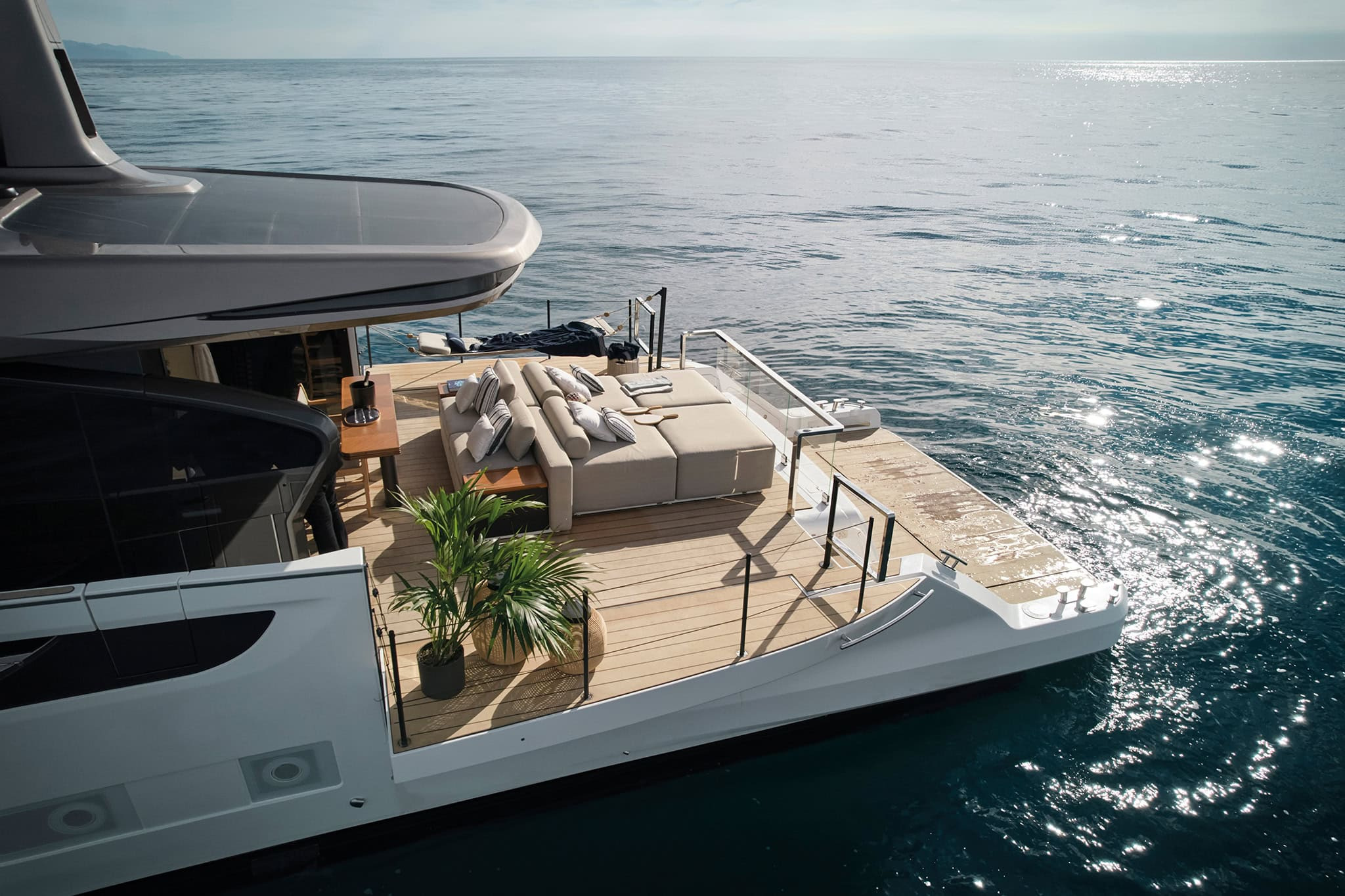
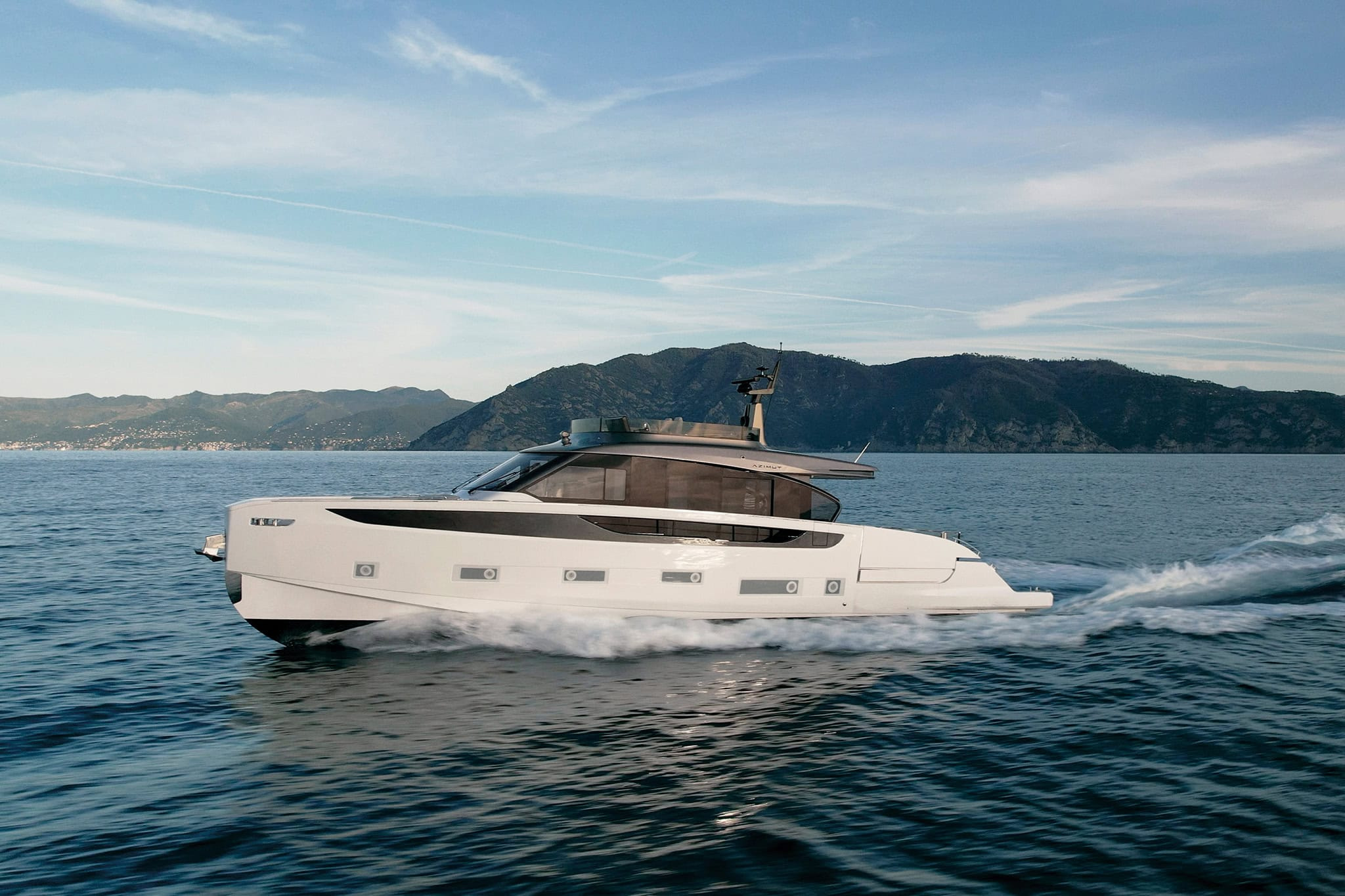
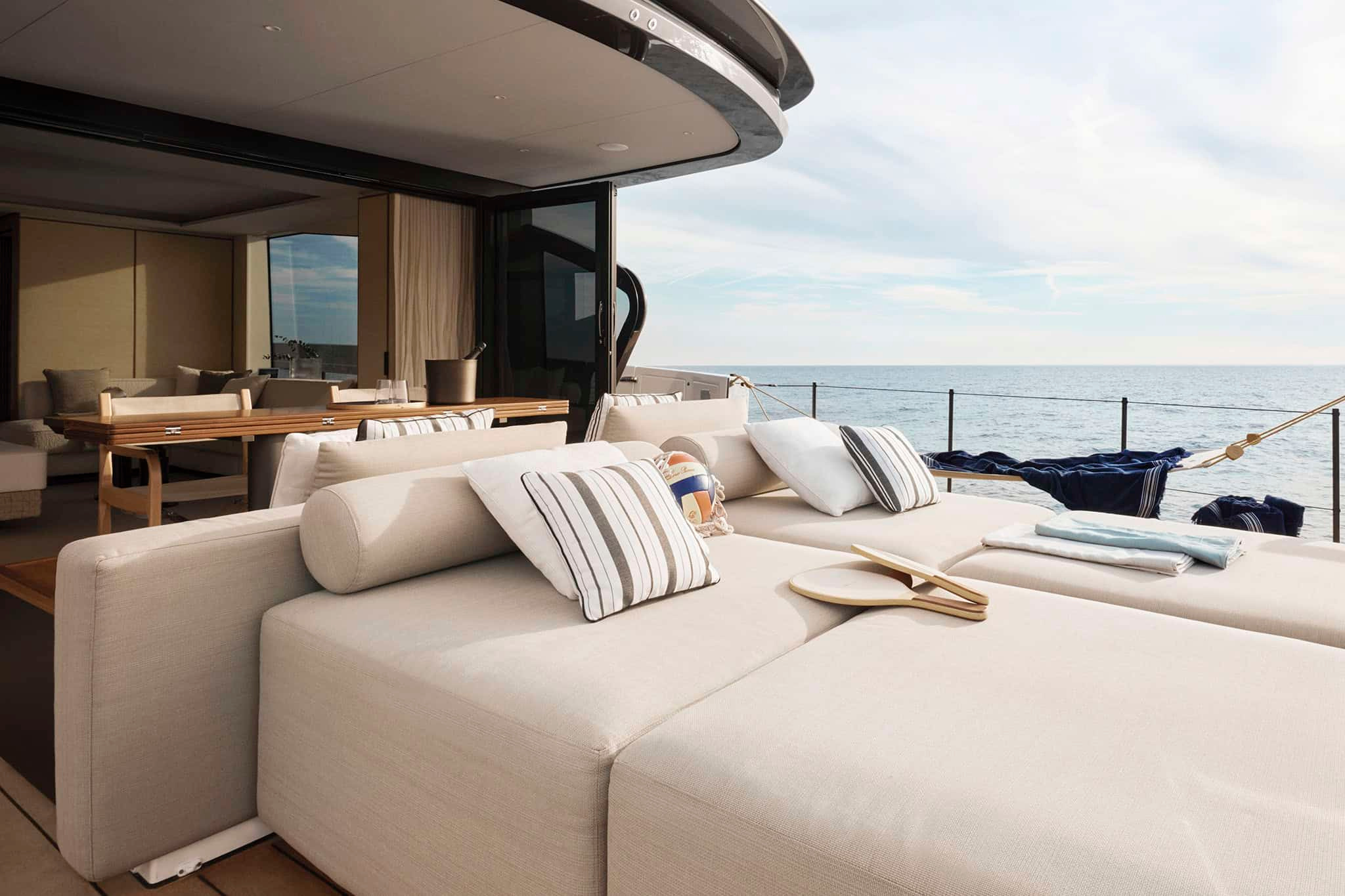
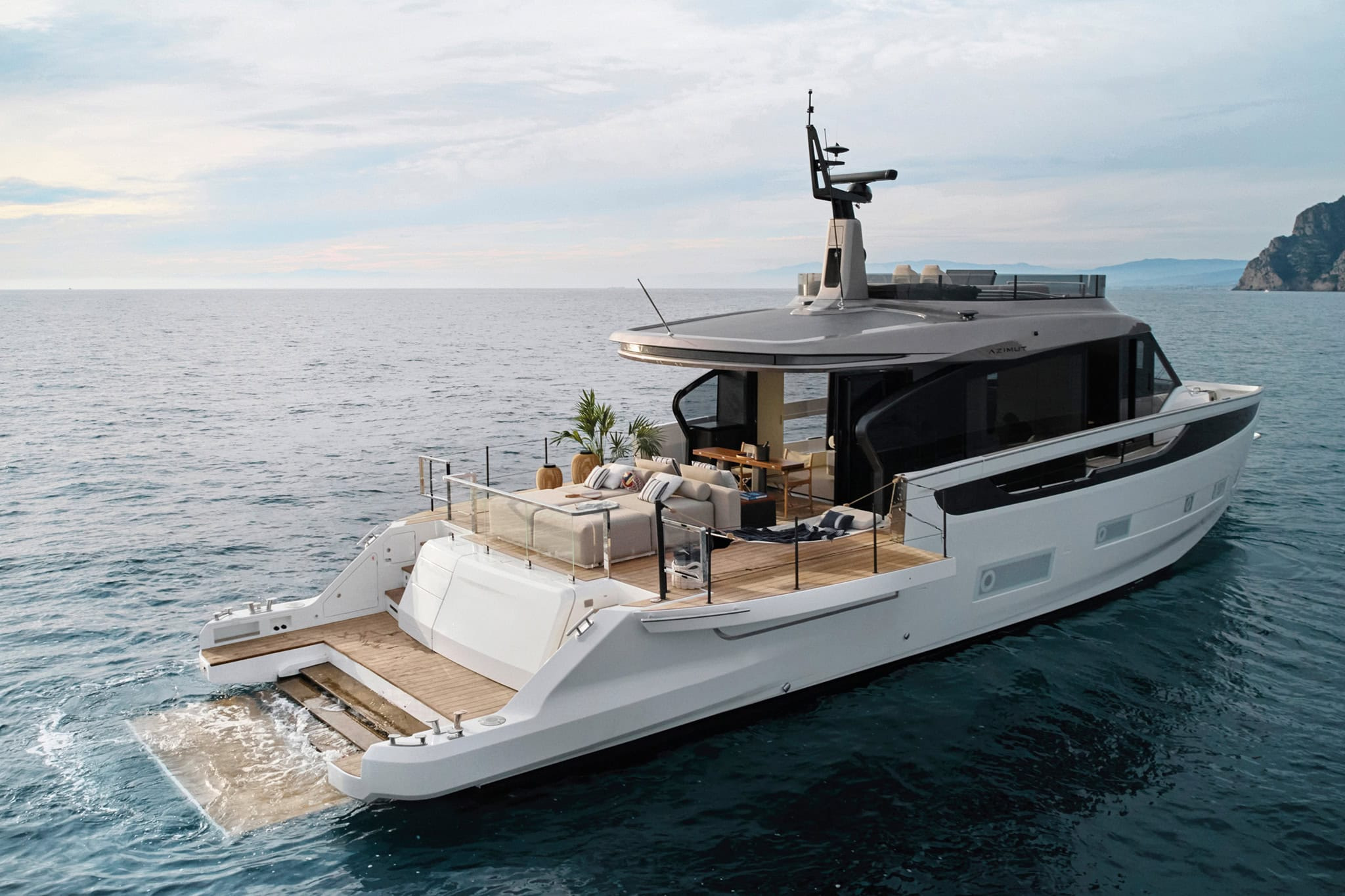
The Seadeck’s open aft arrangement makes the distinction tangible. The photographs show seating close to the water and a broad transition towards the saloon. Such spaces can make time at anchor a central part of the experience. That architectural intention gives hotel-load management a purpose beyond a line on the technical sheet: the equipment supports an occupied place where the yacht may remain stationary for hours.
What the 2024 pilot actually described
In its September 2024 joint programme announcement, Azimut described a Seadeck 7 equipped with Volvo Penta hybrid-electric pilot technology combining diesel engines, electric motors, batteries and IPS drives. The release stated pure-electric operation up to 11 knots and time at anchor up to 12 hours without local operating emissions. Those are claims for the described pilot, not independent measurements made by LuxeDigital.
The system is significant because it addresses both movement and domestic use. It is not simply a battery attached to an otherwise unchanged description of the boat. The official account places the propulsion package within a coordinated operating system. That allows different ways of supplying power to be considered across the day, provided the owner knows which equipment is actually being specified.
There is also a necessary boundary around the phrase zero emissions. Used for battery-powered operation, it concerns the local operating state. It does not establish that electricity generation, battery manufacture or the yacht’s complete lifecycle has no environmental impact. Keeping that boundary visible makes the claim more useful, because it tells the reader what kind of improvement is being discussed.
Hotel Mode is a different proposition
The current Seadeck 7 model page describes Hotel Mode using a 46.4 kWh battery pack and two inverters. Azimut gives illustrative endurance of up to four hours by day and eight hours at night, with duration depending on air-conditioning demand. The subject here is domestic service at anchor. These figures should not be rewritten as electric cruising endurance.
The distinction from the pilot’s 12-hour statement is important. Different equipment descriptions, operating conditions and publication dates can produce different claims. Choosing the largest number from each source would create a specification that no source actually supports. Instead, each figure needs to stay attached to its own configuration and stated context.
For an owner, that means asking for a written equipment schedule and an operating estimate based on expected use. A hot anchorage with substantial cooling demand is a different case from a mild evening with limited services running. The useful question is how the selected system serves that person’s day aboard, rather than whether a brochure contains the longest possible endurance figure.
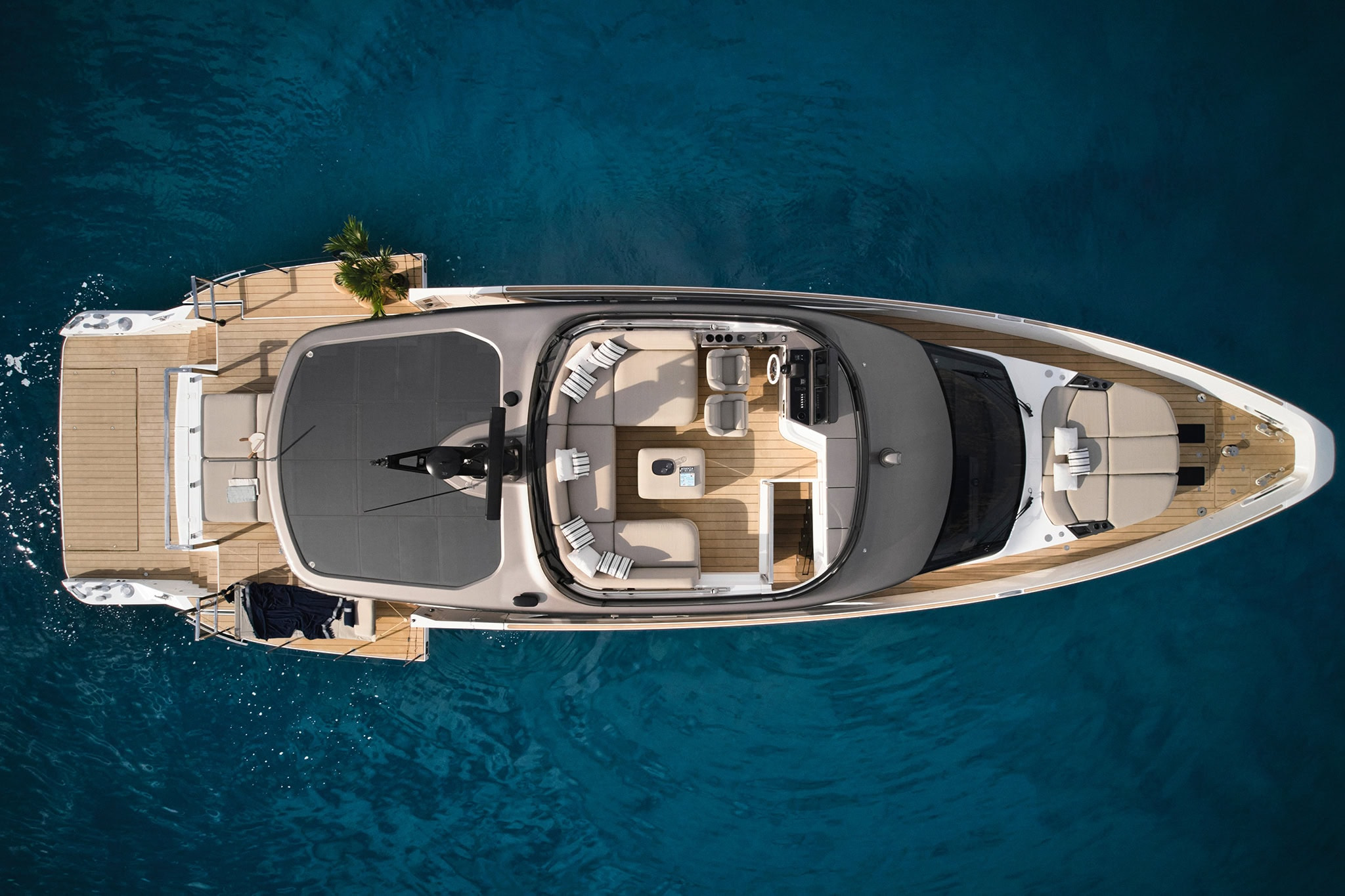
Read the claims in their proper columns
The following comparison separates the published records. It is not a performance test or a guarantee of equipment on every Seadeck 7. A contemporary purchase specification remains the decisive document for the yacht being ordered.
| Record | Published proposition | What the figure does not establish |
|---|---|---|
| September 2024 hybrid-electric pilot | Pure-electric operation up to 11 knots | Electric range, duration at that speed or standard fit on every boat. |
| September 2024 pilot at anchor | Up to 12 hours in the stated battery-powered condition | Endurance under every climate, occupancy and domestic load. |
| Current model-page Hotel Mode | 46.4 kWh battery pack; two inverters | A propulsion-capable hybrid package by itself. |
| Current Hotel Mode examples | Up to four hours by day; eight by night | A guaranteed duration independent of air-conditioning demand. |
| February 2026 Innovation Award release | Recognition of the Seadeck 7 hybrid-electric programme | Independent certification of every environmental or performance claim. |
The current model page also carries a development-timing statement for the full hybrid pilot. That timing and the later award coverage need reconciliation against the equipment available for a particular order. An award confirms recognition of the programme; it does not remove the need to establish what is being delivered, when, and under which conditions.
Design and energy demand meet at the stern
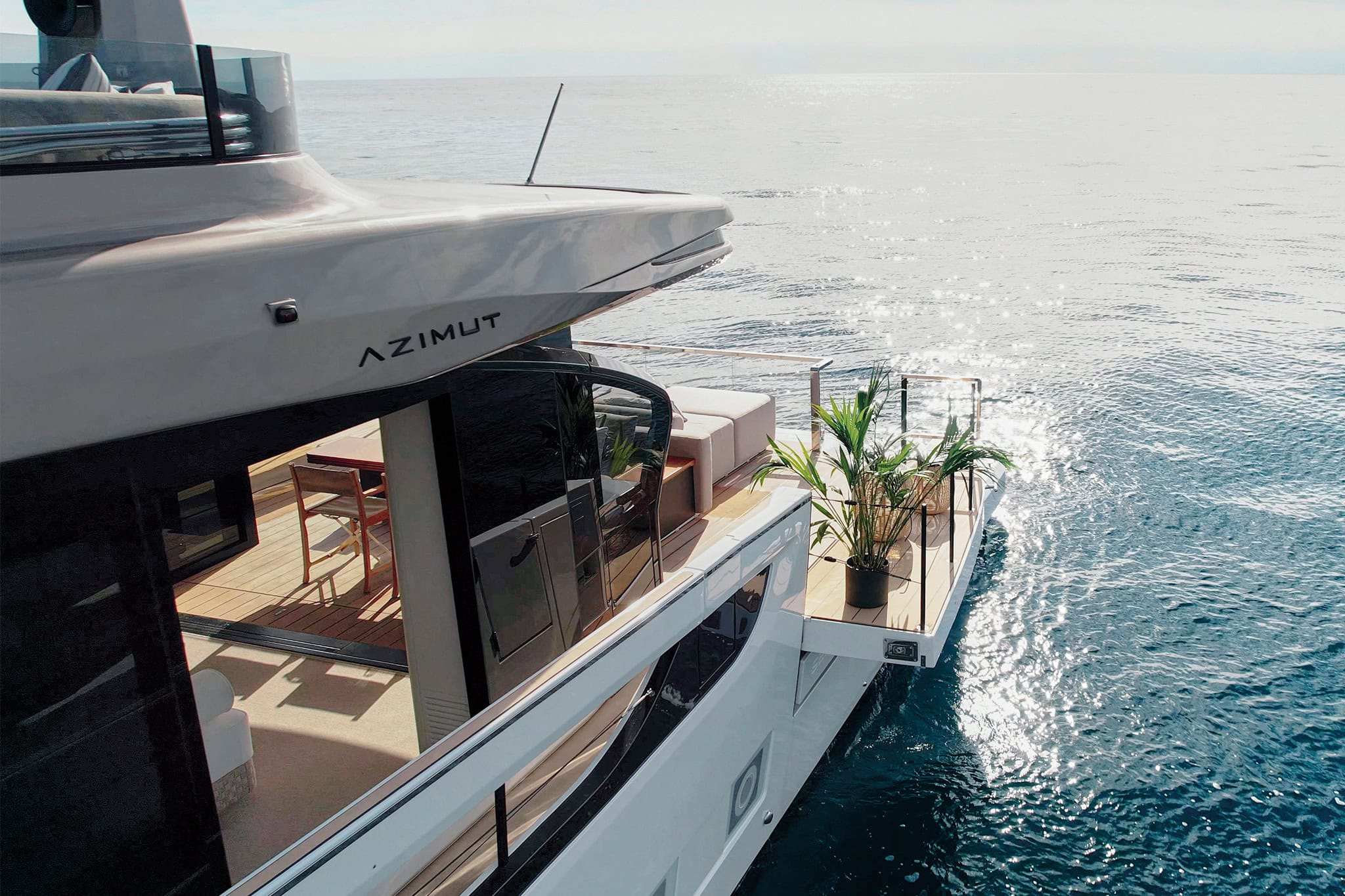
The Fun Island is not an energy diagram, but it explains the setting in which some of these systems matter. A wide stern, open seating and the transition through the glazing encourage the yacht to be read as a place to occupy near the water. The opening is broad enough for the inside and outside to read together. Seating, glazing and the water establish three successive edges, each with a different relation to shelter. That spatial arrangement explains why the domestic systems matter even when the yacht is stationary; it does not identify the equipment installed in the photographed hull.
This is where a product story and a technical story can support each other without becoming interchangeable. The exterior explains the intended life aboard. The machinery description explains how some of the services may be supplied. A quiet-looking photograph is not proof of silent operation, just as a battery specification is not a complete description of the social space it serves.
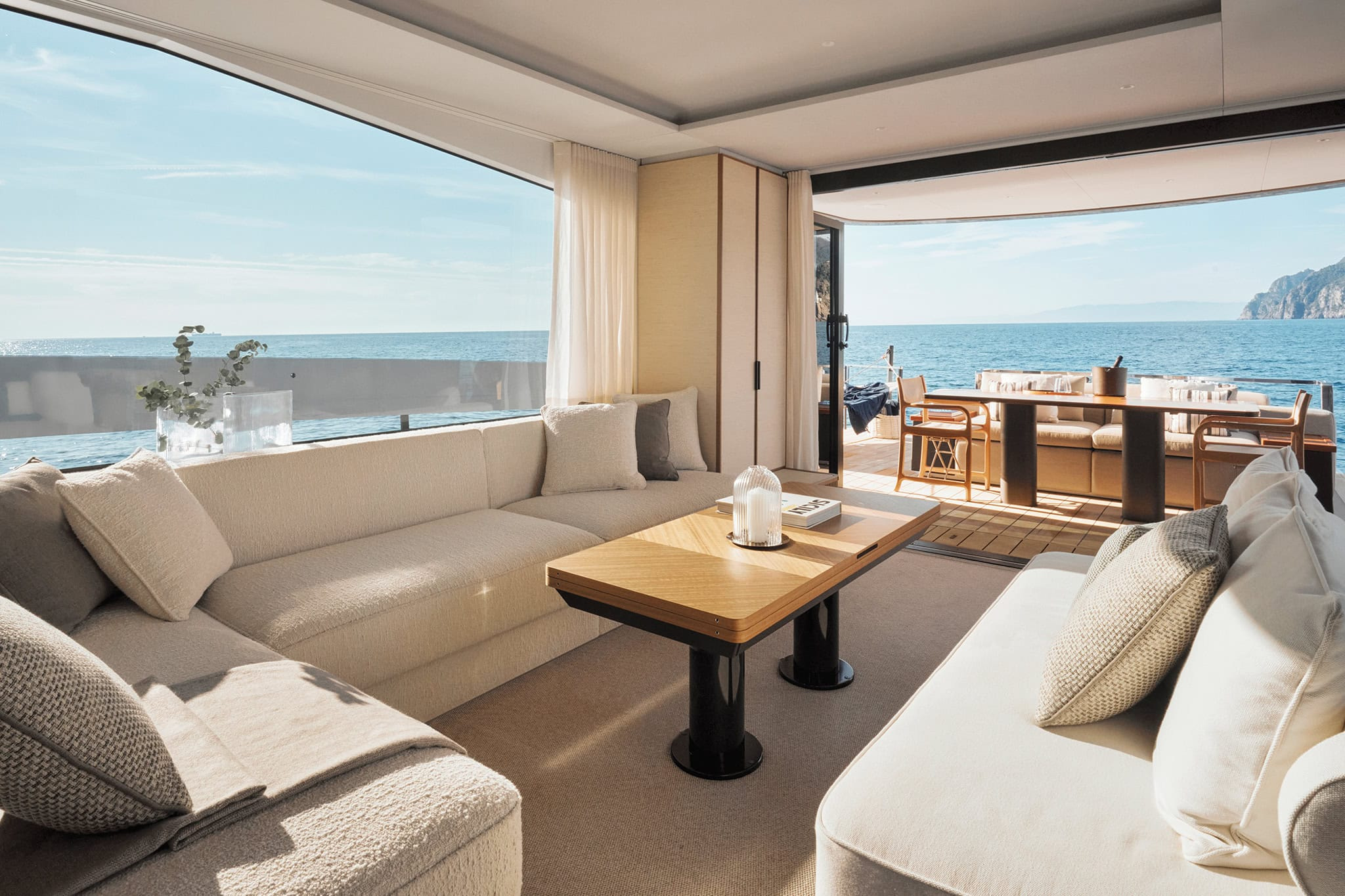
The interior photographs provide a second perspective on the same threshold. From inside, the stern is a continuation of the room’s outlook. From outside, the saloon is part of the setting behind the seating. This reciprocal relationship makes the operating questions more concrete: people will use both areas, while their lighting, cooling and other requirements draw on the yacht’s systems.
Percentages need a comparison before they mean anything
Azimut’s current model presentation refers to an overall CO2 reduction of up to 40 per cent under an average annual-use scenario that includes navigation and time at anchor. It also discusses a fuel-consumption comparison within its Low Emission Yacht approach. These are manufacturer claims with defined comparison contexts, rather than a single universal reduction delivered in every operating mode.
An annual-use figure cannot be substituted for fuel saved on a particular passage. Nor can a percentage based on a comparison yacht be applied automatically to any vessel of a similar length. The baseline, speed, loads and time distribution all affect the meaning of the result. A careful account retains those conditions instead of treating the percentage as a free-standing property of the hull.
For this reason, we do not calculate an owner’s annual savings from the published headline. That would require their actual usage pattern, energy prices, charging access and a validated performance model. The immediate value of the official material is to identify the questions that such an assessment must answer, not to imply a financial or environmental return already established for every owner.
Five questions for a serious specification meeting
First, establish the exact propulsion and battery package offered on the intended hull. Second, separate electric propulsion from domestic-load supply in the operating description. Third, ask which speeds, durations and service loads support the quoted examples. Fourth, establish charging opportunities during the planned itinerary. Fifth, request the baseline and method behind any comparative environmental figure.
These questions do not diminish the programme’s ambition. They make it possible to assess that ambition at the scale of a real boat and a real day aboard. A manufacturer developing several configurations needs an editorial presentation that preserves those distinctions, because an owner cannot operate a yacht made from the most attractive sentence in each of three different documents.
The most valuable hybrid specification is the one that explains an owner’s day aboard. Seadeck 7 provides a useful case because its spatial design and energy programme invite that discussion together. The architecture makes the time at anchor desirable; the operating documentation must make its conditions understandable. That is where the technology becomes an ownership proposition rather than a badge.
The most valuable hybrid specification is the one that explains an owner’s day aboard.
Sources & credits
Methodology and sources
This independent analysis compares Azimut’s current model page, its September 2024 announcement with Volvo Penta and its February 2026 award release, checked on 14 October 2026. It is not a sea trial, lifecycle assessment or equipment certification. Pilot and Hotel Mode figures remain separate and manufacturer-attributed. No unsupported electric range, guaranteed silence, universal availability or payback estimate is asserted. Photography illustrates the model’s architecture, not proof of the equipment installed in a specific photographed hull.