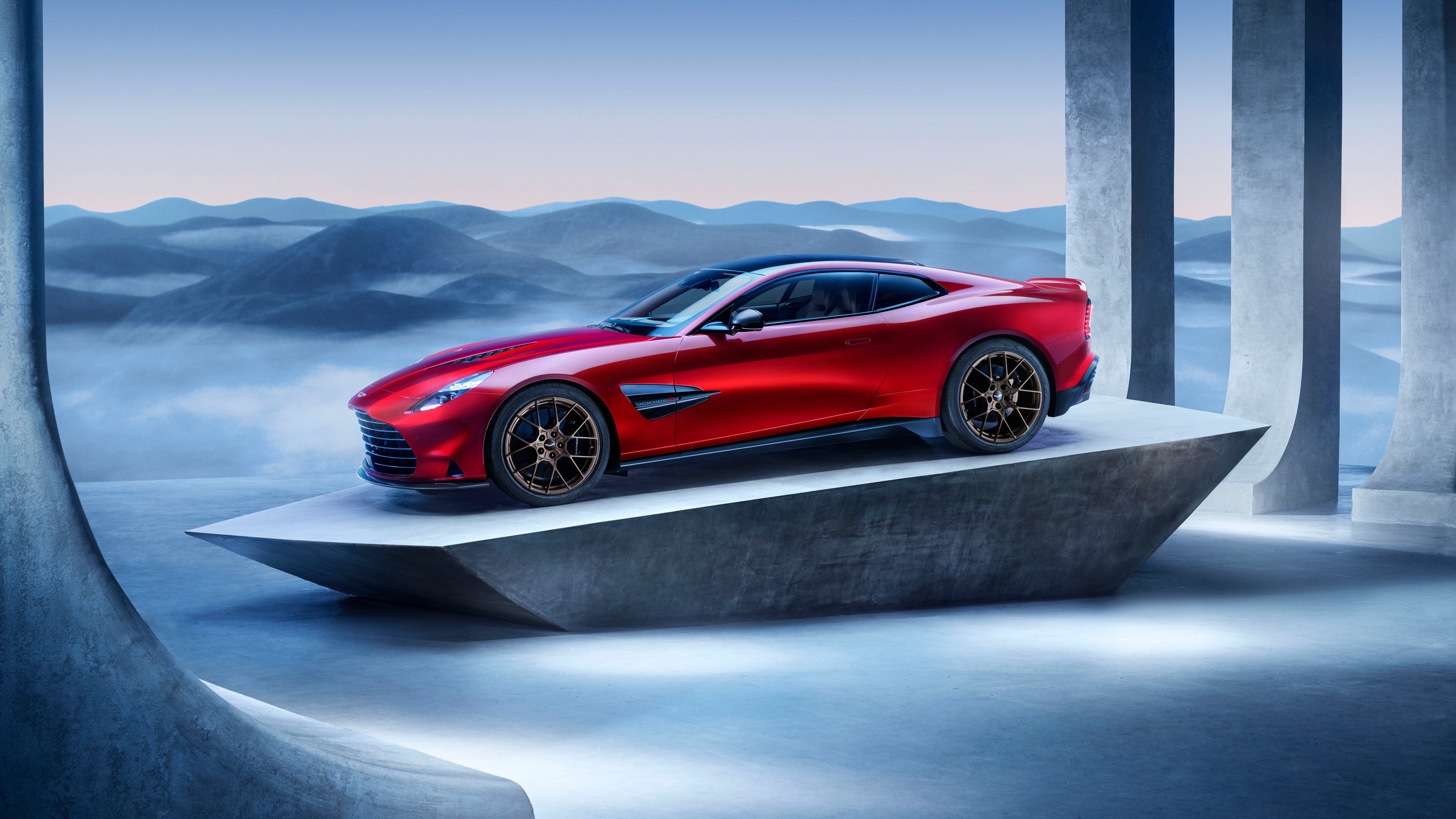
The 2024 Aston Martin Vanquish gives its longest visual statement to the bonnet. Behind it, a small passenger compartment and a sharply resolved tail make the car’s priorities immediately legible. The proportions are more than a familiar grand-touring gesture: they locate a front-mounted V12, establish distance around the occupants and give the body a clear direction.
Length placed where it can be seen
Aston Martin’s launch account identifies an 80 mm increase in wheelbase, placed between the front axle and the A-pillar. That is a particularly useful measurement because it connects directly to the silhouette. The additional distance occupies the area the eye already reads as the long bonnet, rather than disappearing into an indistinct increase in overall scale.
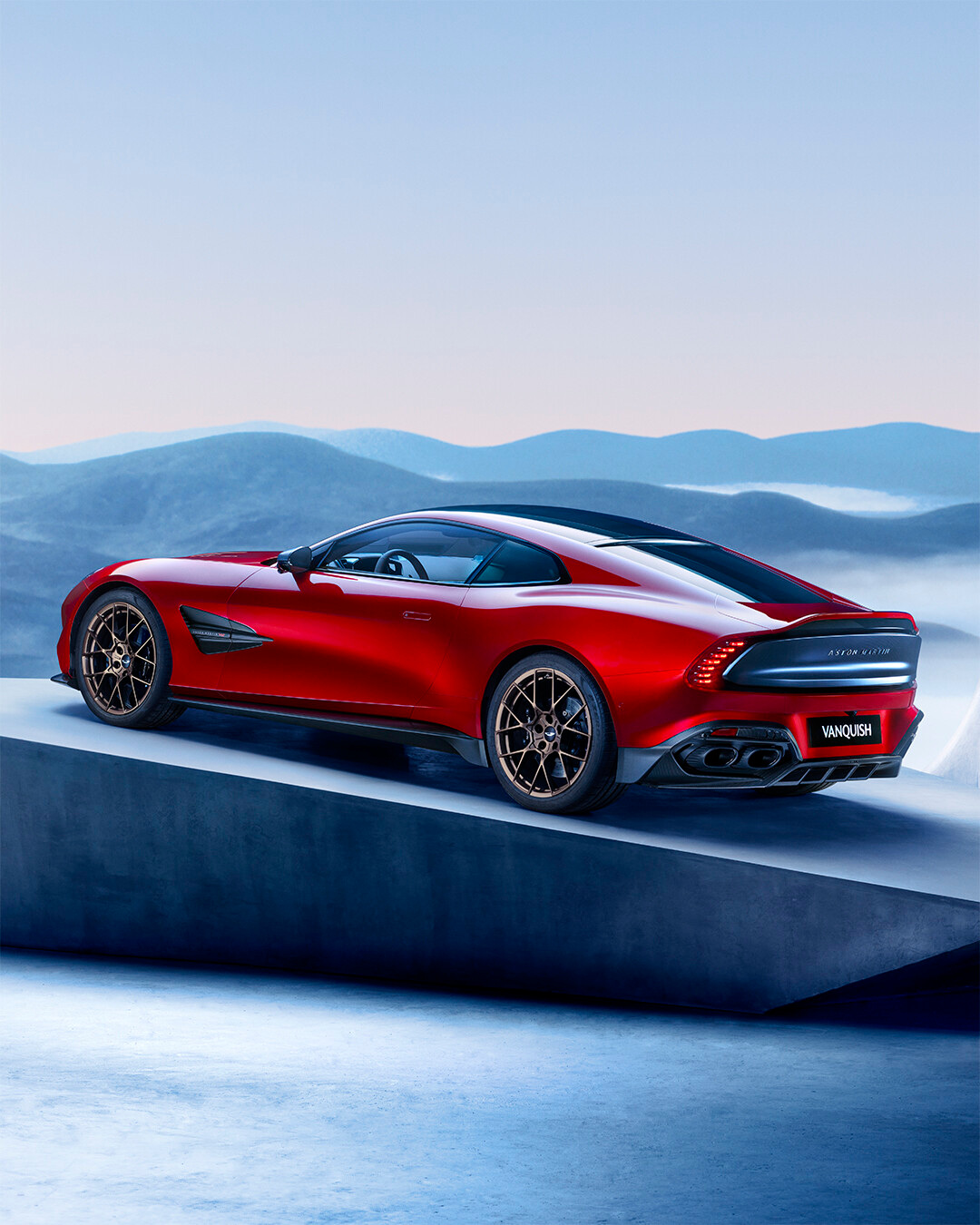
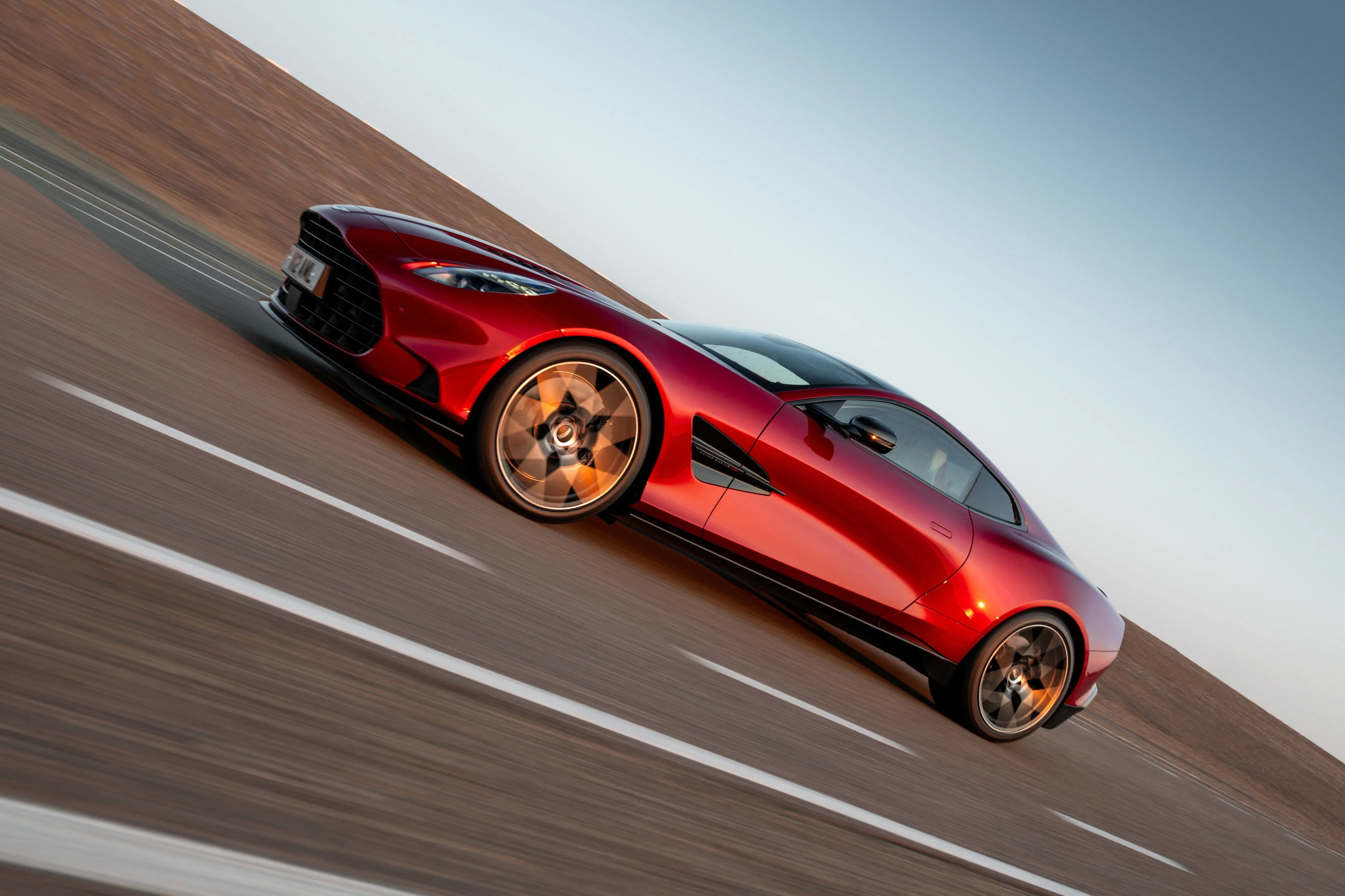
Seen from the side, the result gives the cabin a deliberate rearward emphasis. The roof begins after a substantial stretch of body, then falls towards a concentrated rear volume. A front-quarter view makes the bonnet dominant; a rear-quarter view reveals how little visual slack remains around the passenger compartment.
The official architectural launch images exaggerate this reading through their controlled setting. They are valuable studio presentations of the shape, while the road photographs give it a different context. Holding both kinds of image together helps separate the car’s underlying proportions from the theatre surrounding its introduction.
A V12 with a specific position in the structure
The September 2024 introduction specifies a 5.2-litre twin-turbocharged V12 producing 835 PS and 1,000 Nm. Those are launch figures for this generation of Vanquish. They should be read alongside the location and packaging of the engine, rather than as a floating claim about every vehicle that has carried the name.
The technical account is especially clear about the distinction between materials. It describes a bonded aluminium body structure and carbon-fibre bodywork. These are different parts of the car’s construction: one establishes the underlying framework, while the other forms the exterior surfaces. Treating them as interchangeable descriptions would make the car harder to understand.
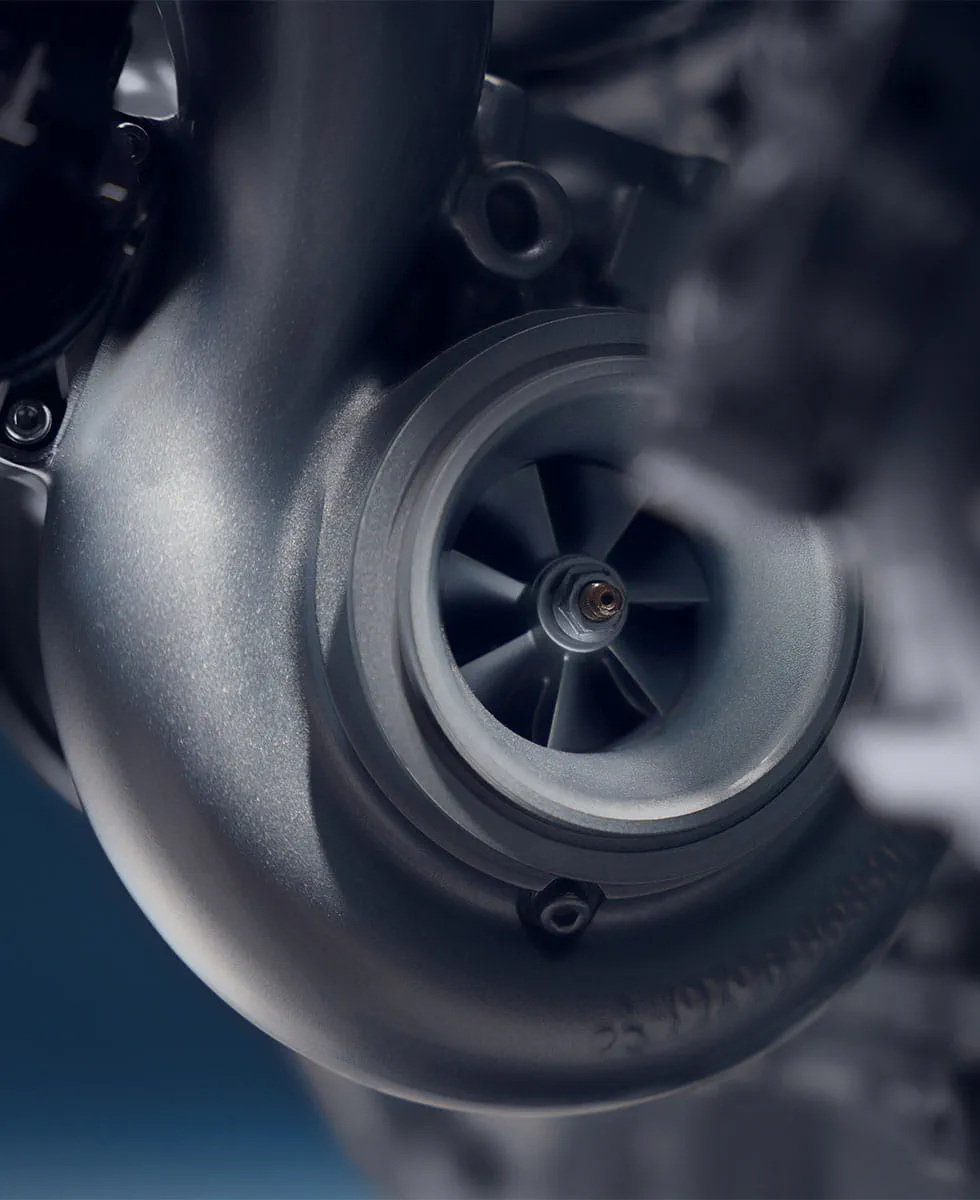
The close mechanical images supply a useful counterpoint to the long exterior. Turbocharger and engine details reveal compact, highly worked components inside a shape that appears almost effortless at a distance. The interest lies in that change of scale, from an uninterrupted bonnet to the dense assembly it accommodates.
The tail concentrates the composition
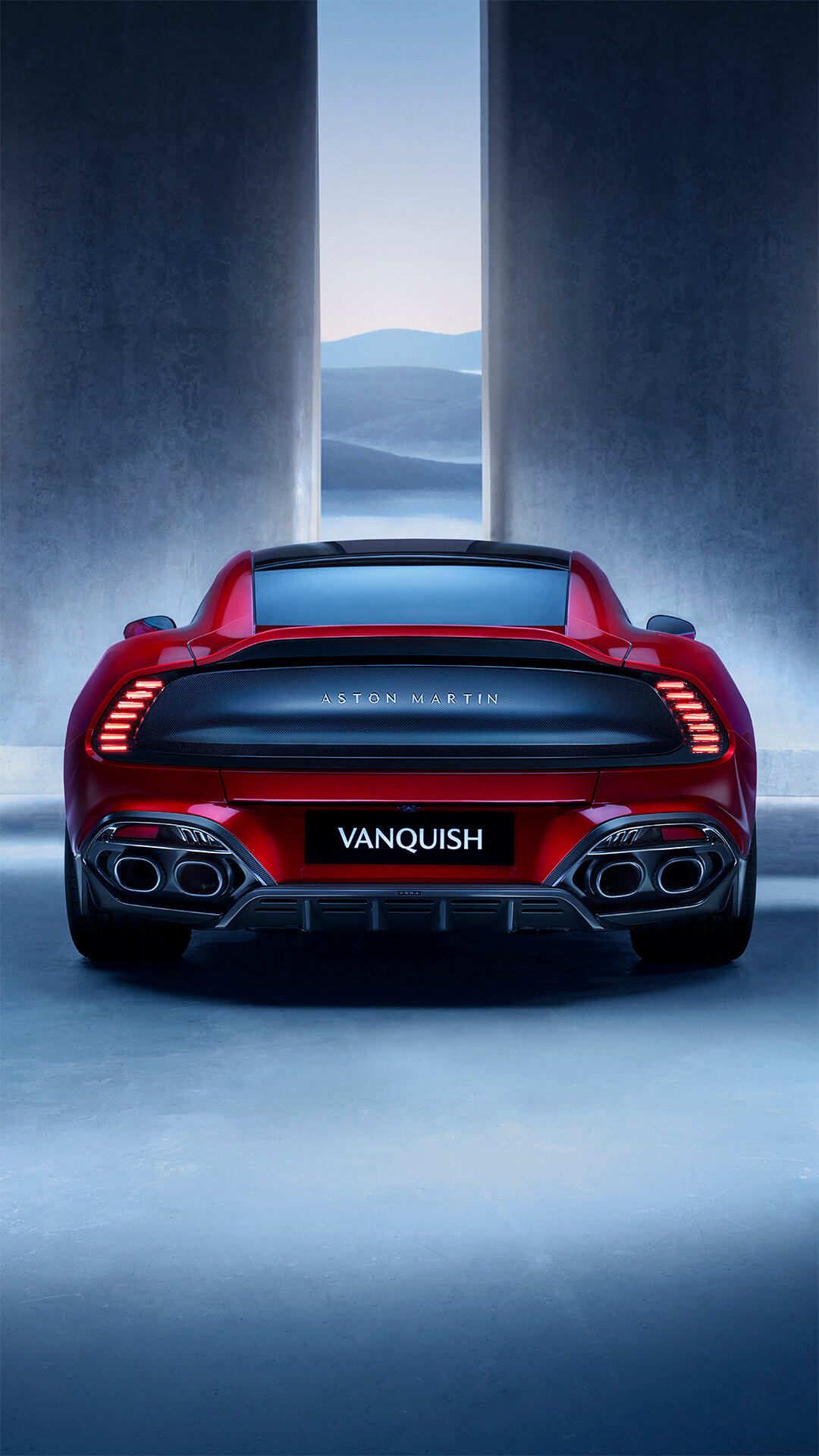
Viewed from behind, the Vanquish is more compressed than its long front section might suggest. The roof, rear window and upper body converge towards the tail, giving the eye a clear stopping point. It is a useful way to understand the design without relying on an undemonstrated claim about how the car feels at speed.
The rear-quarter launch visual makes the contrast particularly apparent. Length is spent ahead of the cabin; visual mass gathers behind it. A road photograph then shows the same relationship against a less controlled background, where wheel size, road height and the fall of the roof become easier to compare.

That consistency matters. A grand tourer’s design has to survive more than one flattering angle. Here, the front and rear accounts have different emphases but remain connected by the roofline and the broad shoulder of the body. The car can look expansive from one end and tightly drawn from the other without losing its identity.
A room organised around driving controls
The centre-console photograph moves the account from silhouette to operation. A display sits above physical switches and controls, with different surfaces establishing a hierarchy between information, adjustment and touch. The photograph does not prove ease of use, but it shows a layout in which those functions remain visibly distinct.
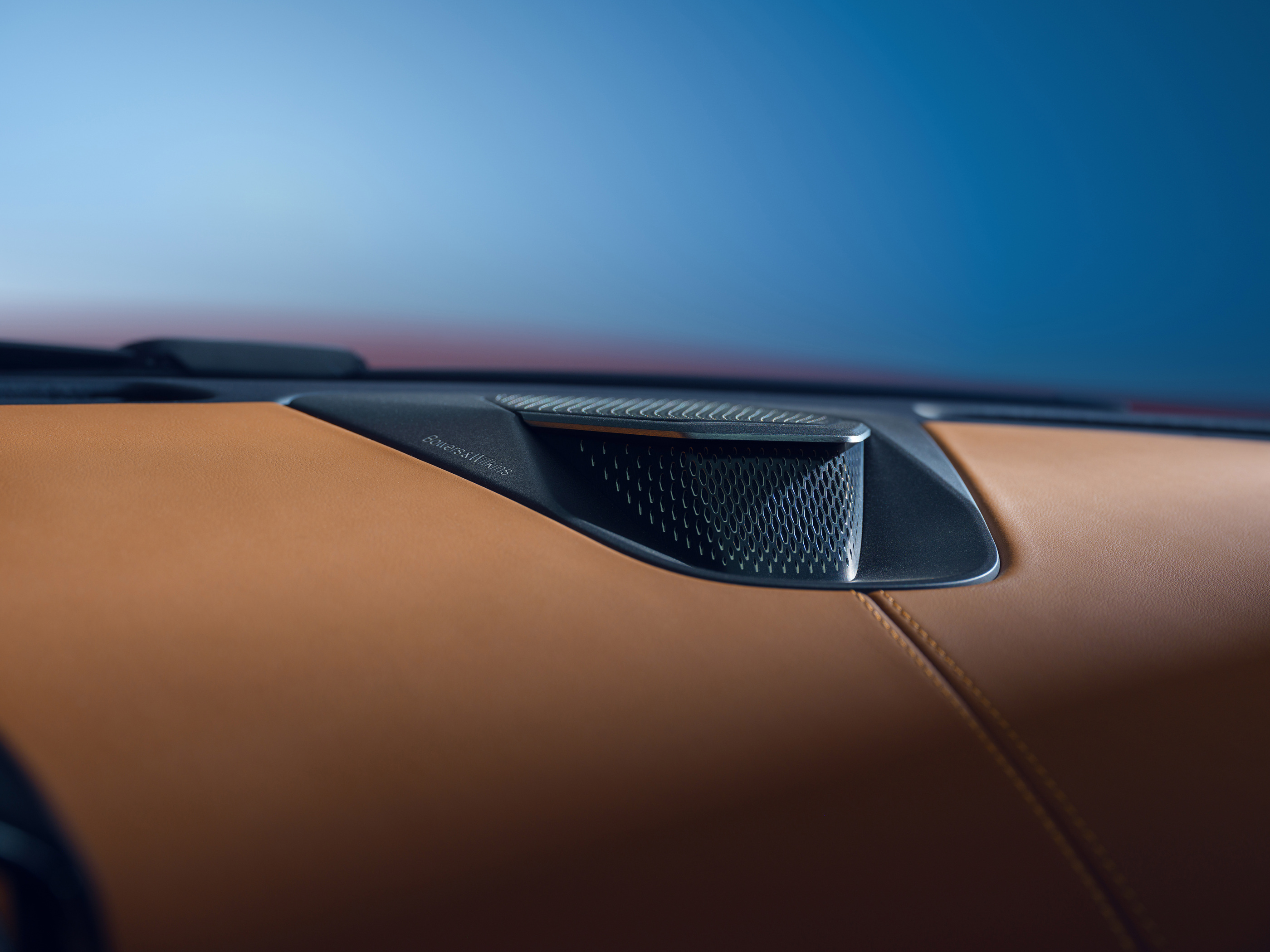
Material details deserve the same close reading. A speaker set into leather is a junction between two surfaces, with its own geometry and edges. Such moments are more revealing than a general description of a cabin as luxurious: they show where one material stops, how another begins and how an object at hand scale is resolved.
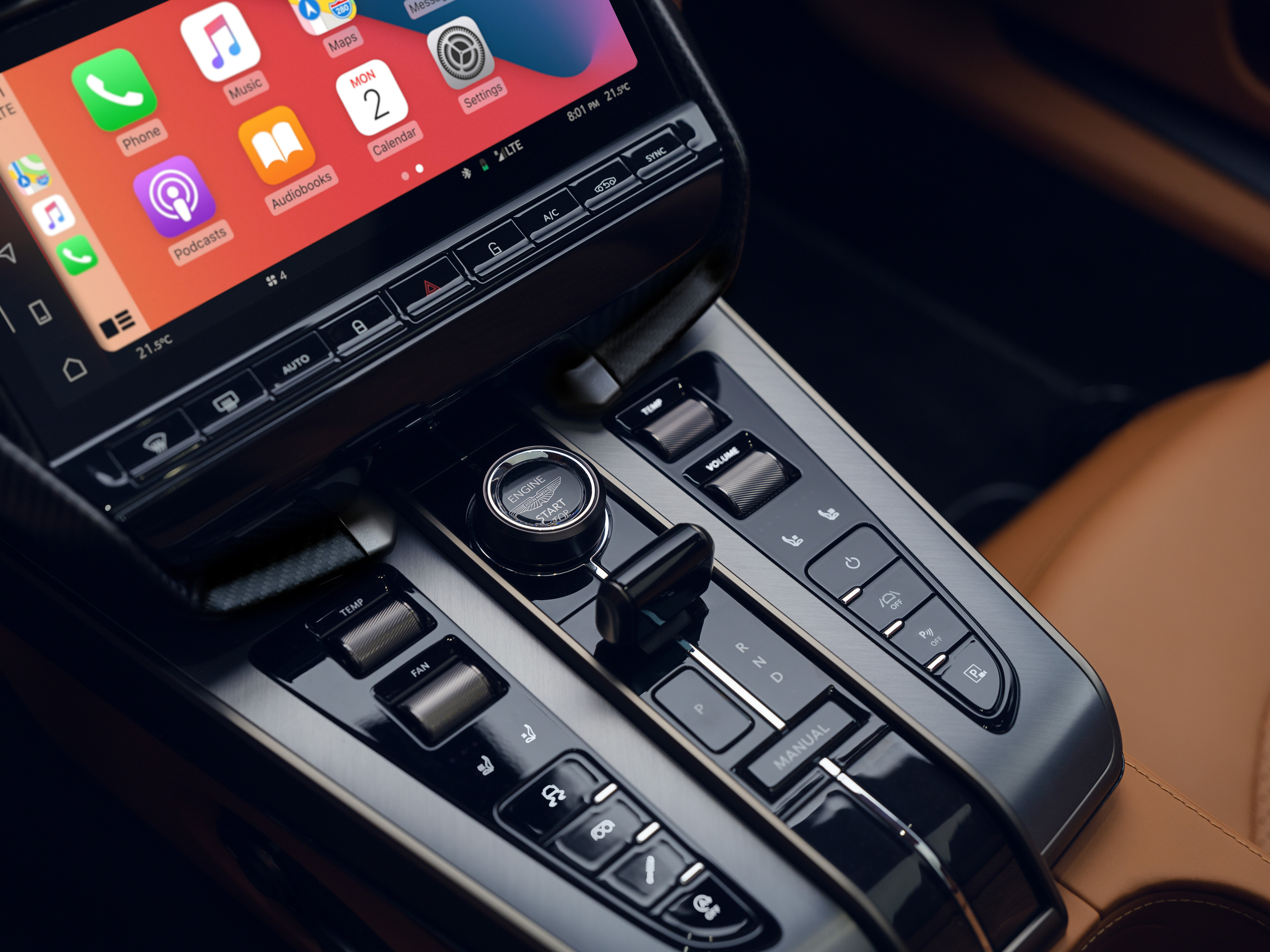
The transmission account adds a mechanical counterpart. Aston Martin specifies an eight-speed ZF automatic paired with an electronic rear differential. The owner encounters that arrangement through controls and responses, while the engineering record explains the hardware beneath. A considered presentation keeps those two scales connected without pretending that a console photograph supplies a driving verdict.
Reading the launch specification
The following distinctions keep the Vanquish’s identity precise. They also provide a better starting point for an ownership conversation than an isolated maximum-speed figure. Construction, engine and wheelbase placement explain what the car is; direct access is still needed to establish the qualities of a particular example in use.
| Element | Documented launch detail | Why it matters to the design |
|---|---|---|
| Engine | 5.2-litre twin-turbo V12 | Establishes the front-engine architecture |
| Output | 835 PS and 1,000 Nm | Identifies the generation’s declared specification |
| Structure | Bonded aluminium framework | Distinguishes the chassis account from the exterior skin |
| Bodywork | Carbon fibre | Describes the material forming the outer surfaces |
| Wheelbase | Additional 80 mm ahead of the A-pillar | Explains the visibly extended front proportion |
For a buyer, those distinctions suggest practical questions: which specification is being discussed, how the body is finished and how the interior has been configured. They also keep a design feature from drifting into an appraisal or a performance test that its evidence cannot support.
The Luxe Digital view
The Vanquish is strongest where its proportions make its architecture understandable. The long bonnet is the first impression, but its effectiveness depends on the concentrated cabin and the resolution of the rear body. Remove either relationship and length alone would offer a much thinner story.
Its interior adds another kind of precision. Physical controls, a clearly separated display and carefully framed material junctions give the person inside an environment with its own scale. That is an essential counterpart to a body designed to be read from a distance.
The worthwhile interpretation is therefore neither purely mechanical nor purely visual. The 2024 Vanquish gives a front-mounted V12 an unusually clear exterior expression, then brings the account back to the objects a driver sees and touches. Its identity holds across those changes of scale, which is a more lasting achievement than the theatre of a launch setting.
The Vanquish is strongest where its proportions make its architecture understandable.
Sources & credits
Sources and methodology
Independent design and reference analysis of the named official records and imagery, checked on 15 October 2026. Launch specifications and later product records retain their own dates and references. Images show the identified configurations. No independent road test or driving access is implied.