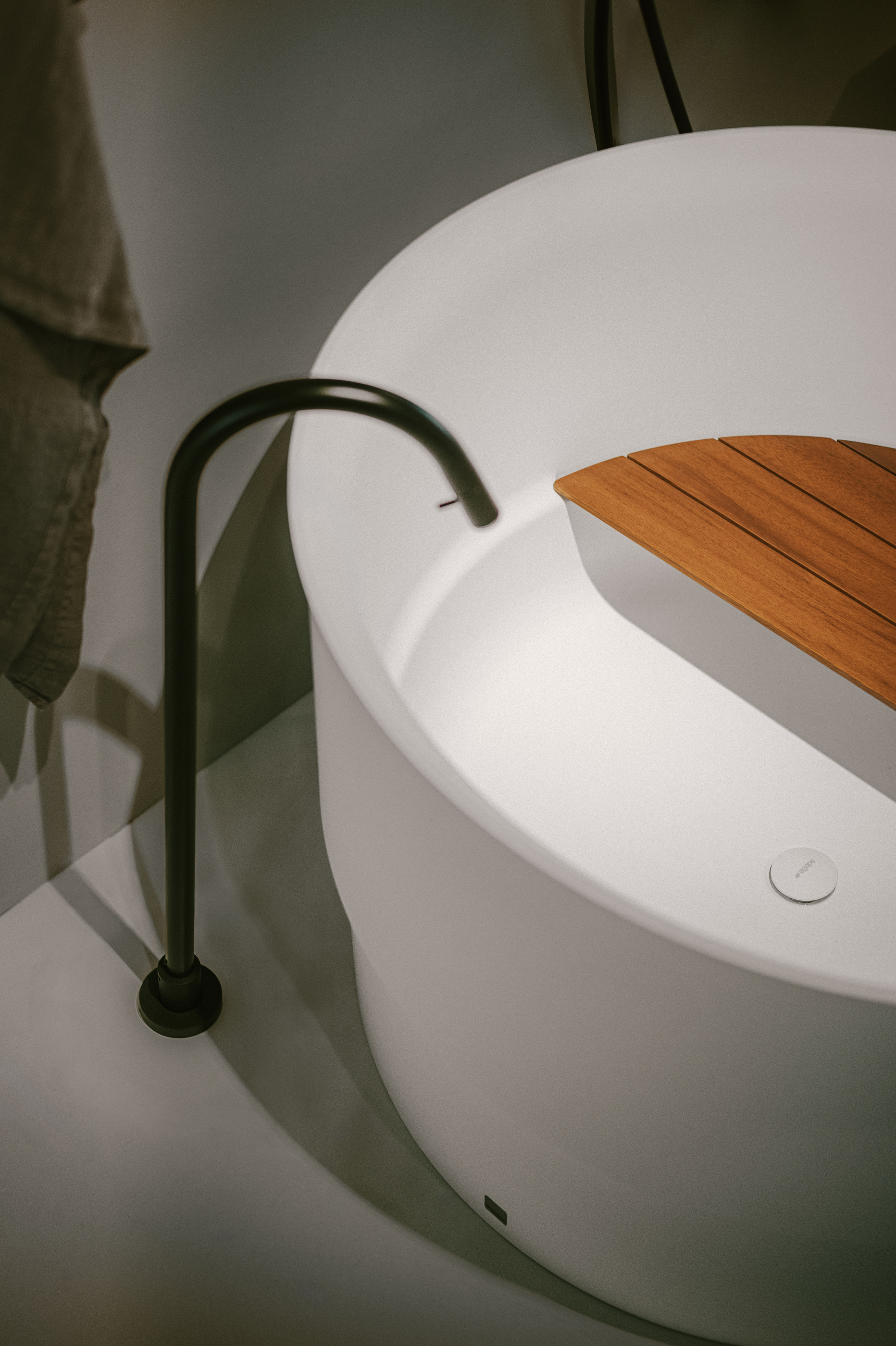
A deep bath changes the room around it. Agape’s Immersion family starts from a more upright relationship to water, giving the vessel a different presence from the familiar long, reclining tub. Its newest round version makes that idea particularly clear: the circle becomes a place to occupy, not simply a shape to admire.
The posture comes before the outline
Agape credits Immersion to Neri&Hu and connects its design to traditional timber bathing vessels in Japan and China. The family uses depth and a seat to offer an alternative to an extended reclining posture. That starting point is worth holding onto while looking at the photographs, because the difference is about use as much as sculptural appearance.
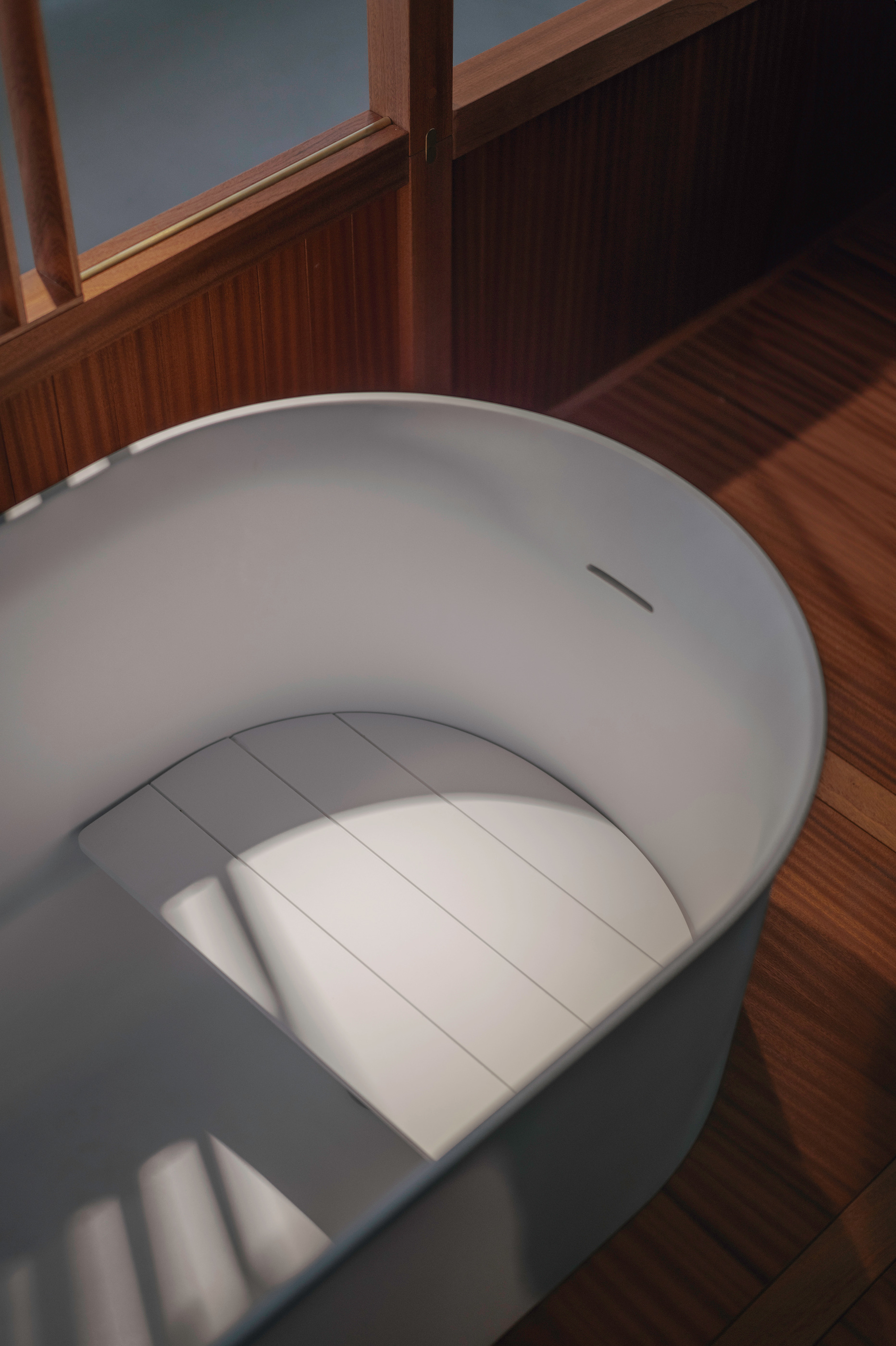
The official family page presents more than one version. The elongated vessel and the round Immersion should not be treated as interchangeable specifications, even though they share a design argument. Their proportions, seats and relationship to the surrounding floor are visibly different. A useful article must preserve those distinctions rather than merge the family into a single idealised object.
For a bathroom project, begin with the question the design poses: how does someone want to sit in water? The answer is personal. The bathing routine, ease of entry and relationship to other activities matter more than selecting a silhouette from a catalogue. The appropriate configuration needs to be assessed with the supplier and the designer for the actual user.
A circle with an interior
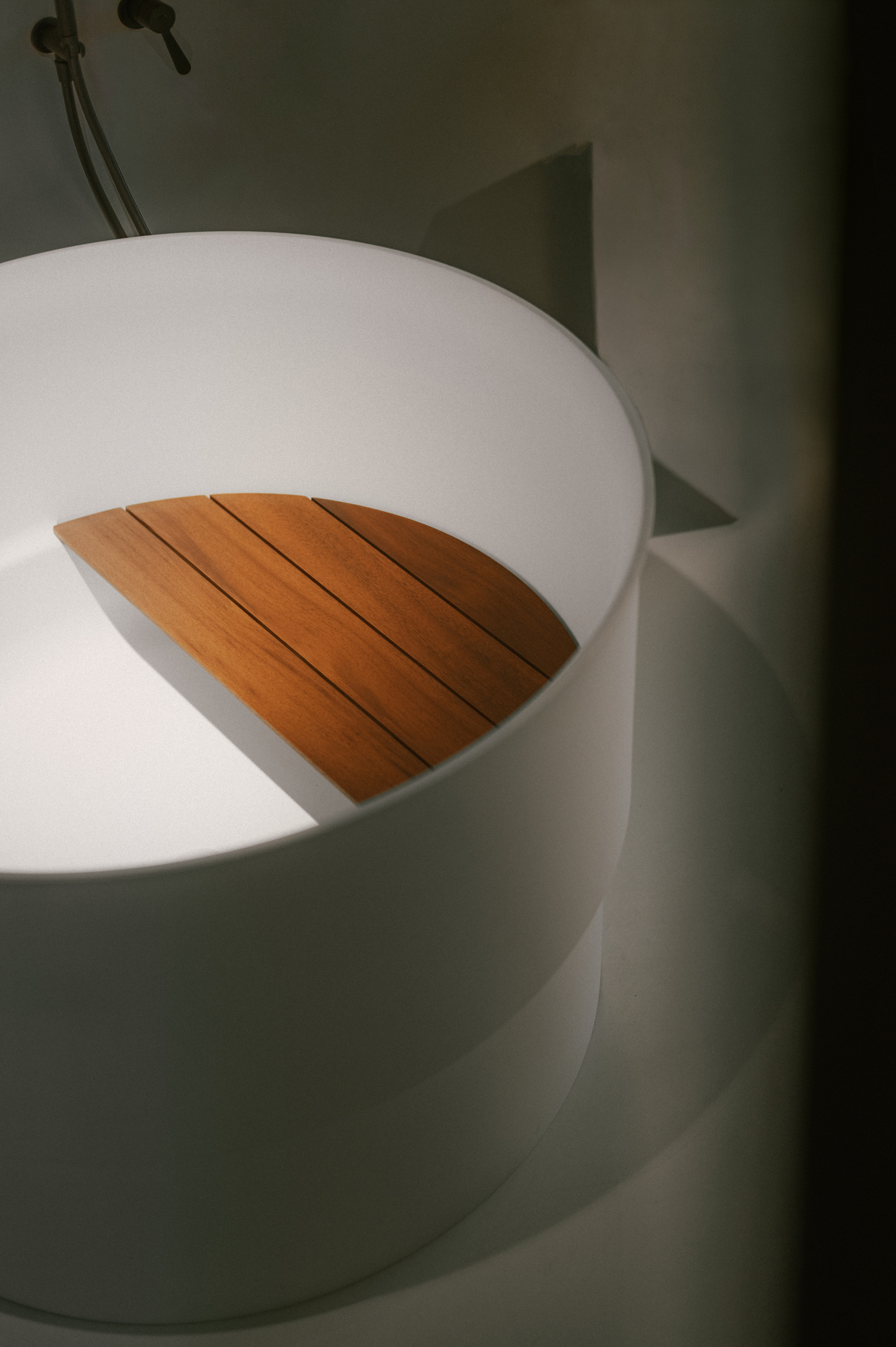
Agape’s Milan Design Week 2026 presentation identifies the round version in Cristalplant Biobased with an integrated iroko seat. The product dimension line gives a diameter of 110 centimetres and a height of 72.5 centimetres; nearby descriptive copy rounds the height to 72. A project specification should retain the precise technical record for the chosen reference rather than silently mixing those figures.
In the photographs, the timber seat is more than a warm accent against a pale surface. It makes the inside of the vessel legible. The circle contains an orientation: a place to sit and a relationship to the empty volume beside it. What might otherwise read as an abstract bowl becomes an arrangement for a body.
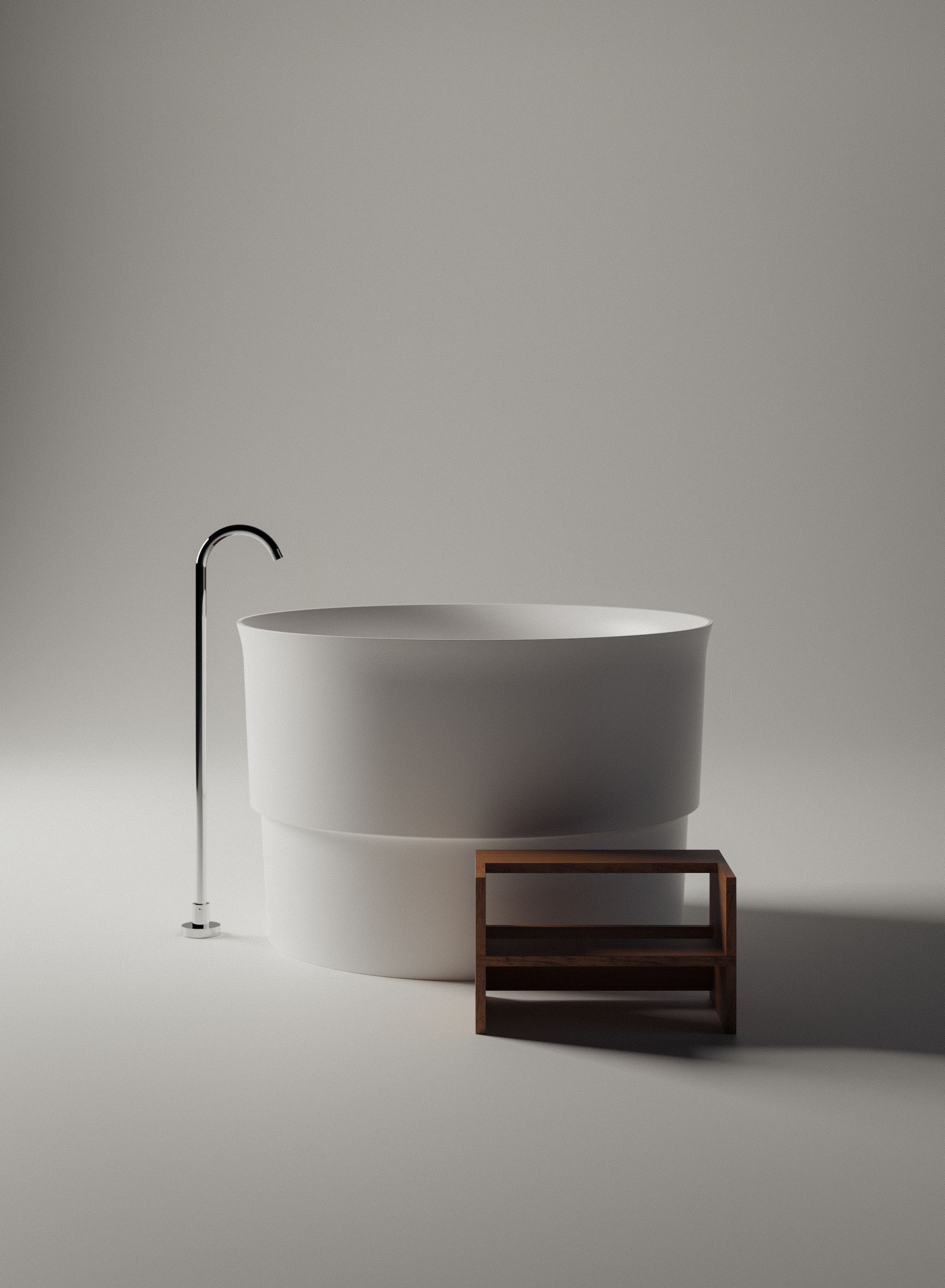
The distinction is useful beyond bathrooms. An object gains depth when its form gives an intelligible account of its use. Here the contrast between the rounded enclosure and the seat makes the bathing posture imaginable before any technical explanation. It is a particularly economical way of communicating the design, provided the image is correctly identified as the round version.
The room must keep its own space
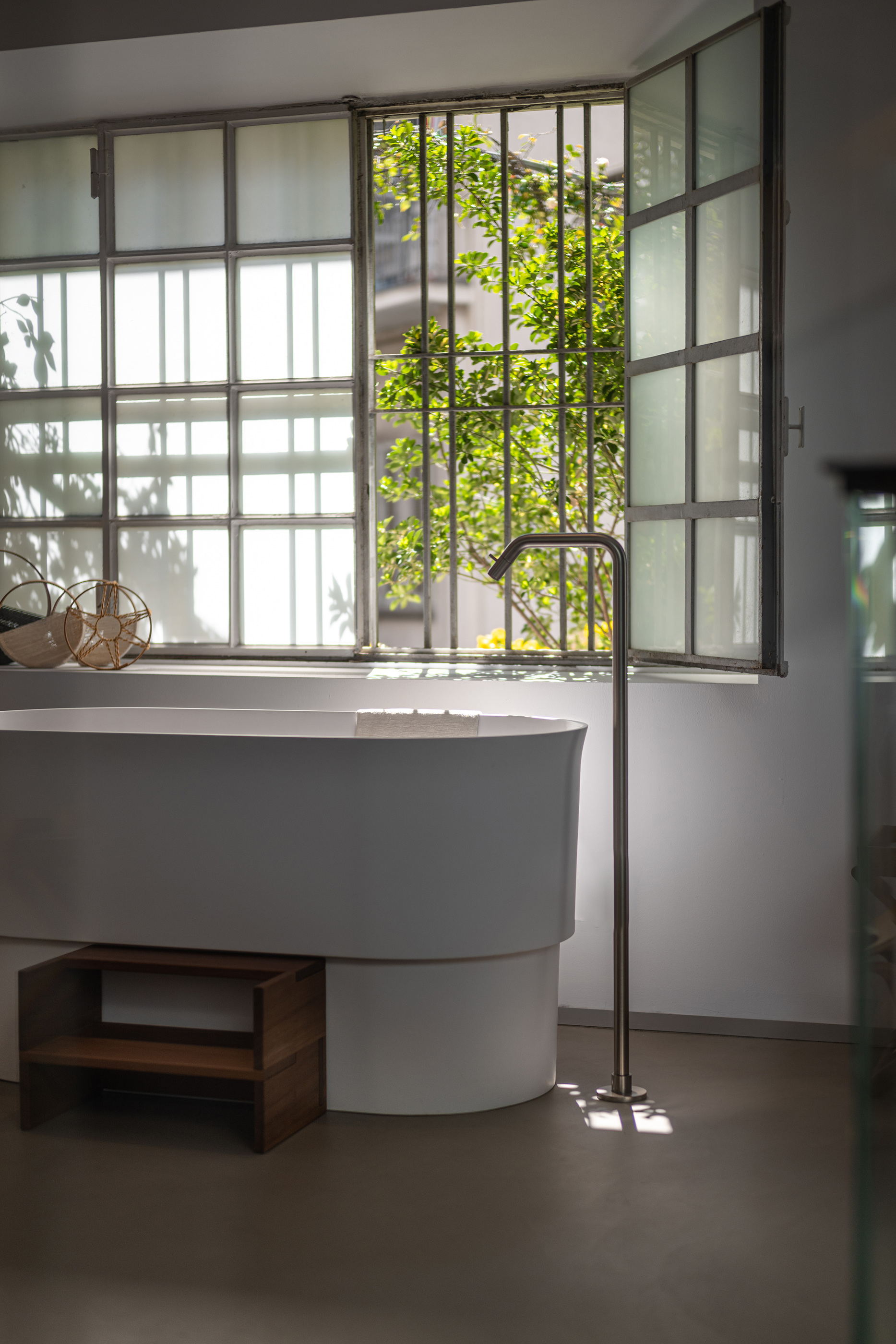
A compact footprint can be attractive, but the footprint of the object is not the whole bathroom. There must still be room to approach it, use the fittings and move between the bath and other parts of the room. The free floor around a vessel has a practical role even when the photograph treats it as generous negative space.
The round version is presented for freestanding or semi-recessed installation. Those choices produce different visual relationships. Freestanding, the outside of the vessel remains part of the room’s composition. With partial recessing, the surrounding construction helps define the threshold into it. The desired appearance needs to be coordinated with installation requirements rather than settled by the image alone.
This is where a designer can make the conversation much more useful. Ask for the bath, the approach and the adjacent fittings to be shown together at scale. Consider the position from which the object is first seen, but also the movements involved in using it. A beautifully isolated vessel may be less convincing if the rest of the plan is left unresolved.
Material warmth without visual noise
The published views juxtapose pale curved surfaces and timber. Light moves continuously around the vessel while the grain introduces a different rhythm at the seat. The palette is restrained, yet the two materials remain distinct enough to explain the construction visually. Additional decoration would contribute little to that explanation.
The family page also lists marble possibilities for particular references. That does not mean the round Cristalplant version shown in the 2026 presentation can be assigned every material listed elsewhere in the family. Request the reference-specific finish and installation information. Material names describe a starting point; the precise product code establishes what is actually being selected.
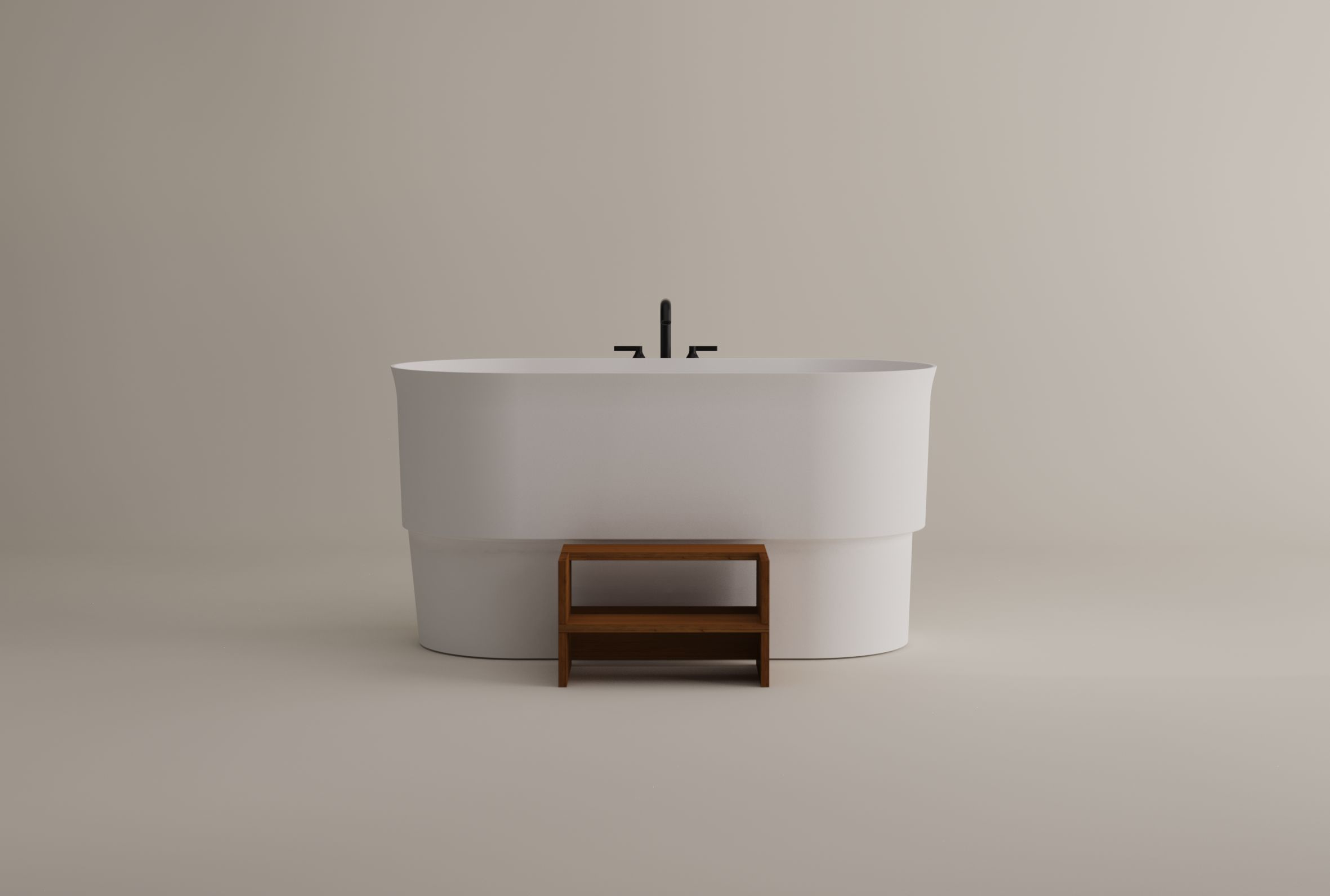
The photographs include both realised showroom scenes and official visualisations, identified in the captions. They are useful for different purposes. A photographed setting shows the object in a documented arrangement; a visualisation can make a version or composition clear. Neither establishes measured comfort, water consumption or suitability for a particular building, and this study makes none of those performance claims.
A more useful bathroom brief
Immersion rewards a discussion organised around posture, space and installation before the decorative palette. The design’s character becomes clearer when each decision has a practical counterpart. The table below is a commissioning aid, not an installation instruction or a substitute for technical assessment.
| Decision | What to keep distinct | What to confirm |
|---|---|---|
| Version | Elongated family vessel and round Immersion | Exact product reference and current drawing |
| Posture | An upright seated intention and reclining habits | Suitability for the intended user |
| Material | Family options and the round presentation | Reference-specific finish availability |
| Installation | Freestanding and semi-recessed arrangements | Coordinated technical and building requirements |
| Surrounding space | Object footprint and room to approach it | A dimensioned bathroom plan |
The most valuable showroom visit would give these questions physical scale. Examine the edge, seat and approach, and discuss how they will relate to the rest of the bathroom. That is a more exacting test than asking whether the object appears sufficiently luxurious in a photograph.
The Luxe Digital view
Immersion’s design strength is that the seat gives the vessel an interior logic. Its character comes from a relationship between posture and enclosure, with material contrast making that relationship visible. The round version sharpens the idea without erasing the distinctions within the wider family.
For a reader planning a home, it offers a useful change of emphasis: commission the ritual and the room together. The bath is only one part of the experience, however strong its sculptural presence. When its version, position and means of use are resolved coherently, the object can become the centre of a bathroom without making everything around it merely a backdrop.
Immersion’s design strength is that the seat gives the vessel an interior logic.
Sources & credits
Sources and methodology
Independent design and reference analysis of the named official records and imagery, checked on 15 October 2026. Launch specifications and later product records retain their own dates and references. Images show the identified configurations. Original visual and commissioning analysis of the exact official product/project records and identified images. No visit, interview, comfort test or performance measurement claimed. Existing projects retain their dates; product versions, showroom photographs, sample images and official visualisations are identified separately.