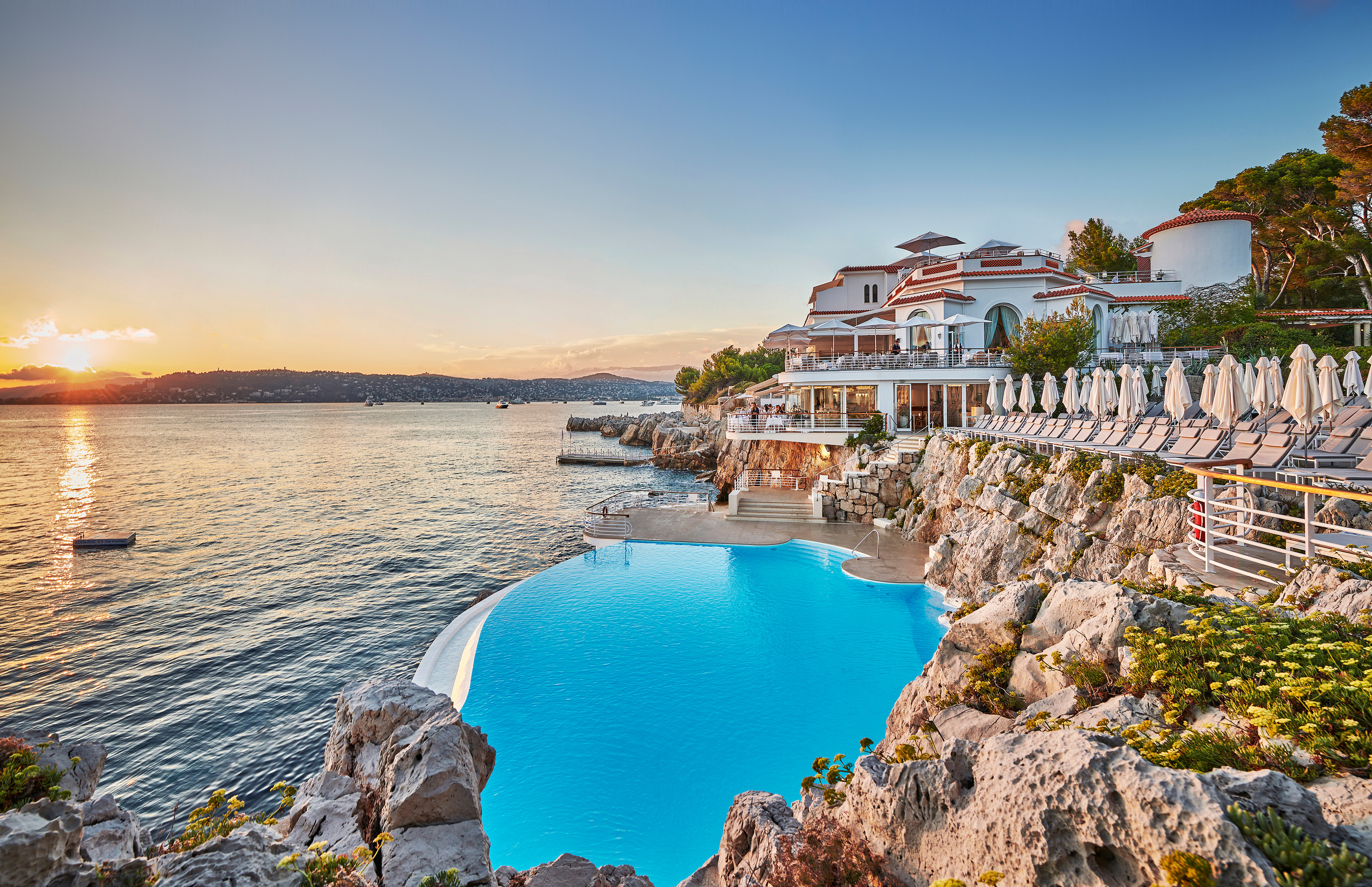
At Hôtel du Cap-Eden-Roc, the coast is more than the view beyond a room. The official photographs describe a sequence: the formal approach through the grounds, a pale building above the water, terraces and the saltwater pool cut into the rocky edge. For a Riviera journey that combines time afloat with time ashore, that sequence offers a useful question. What should a hotel contribute that another night on a yacht would not?
Two ways to arrive at the same horizon
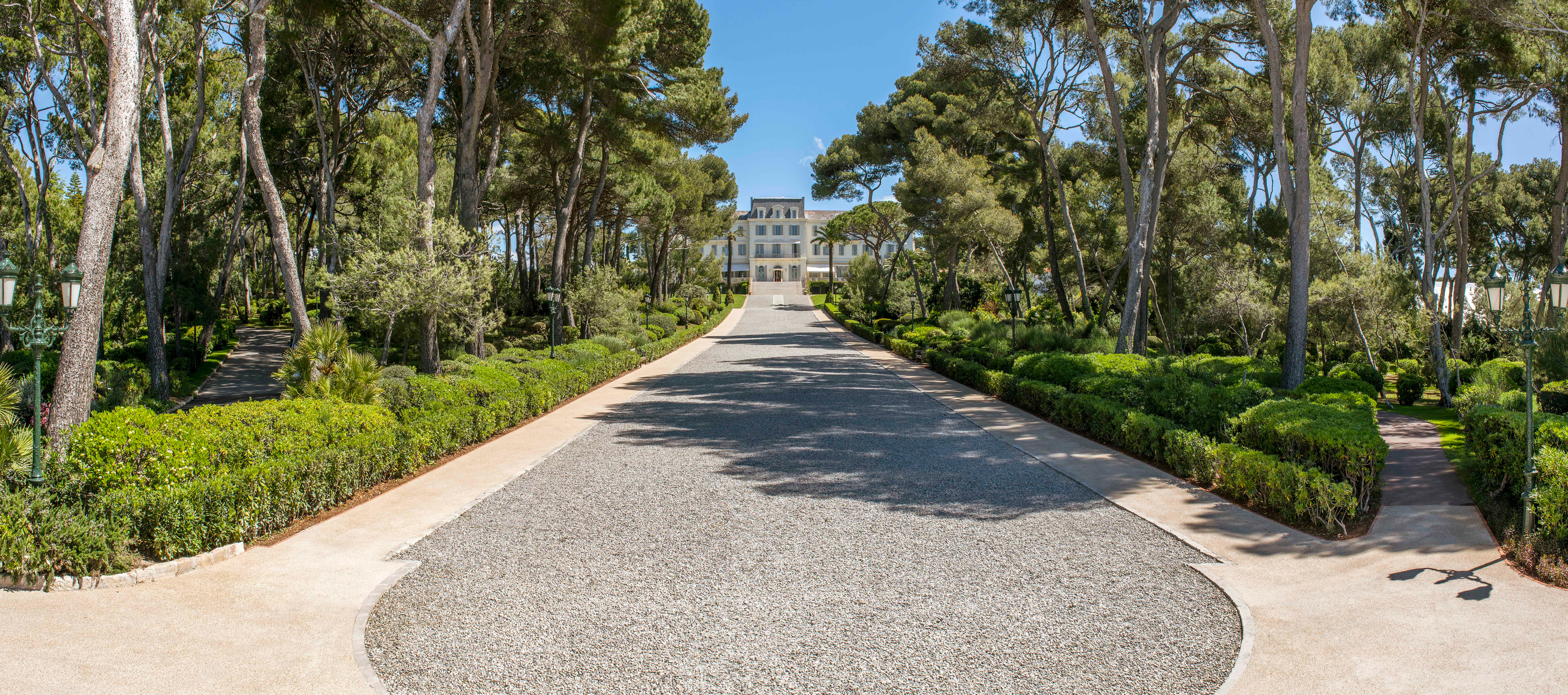
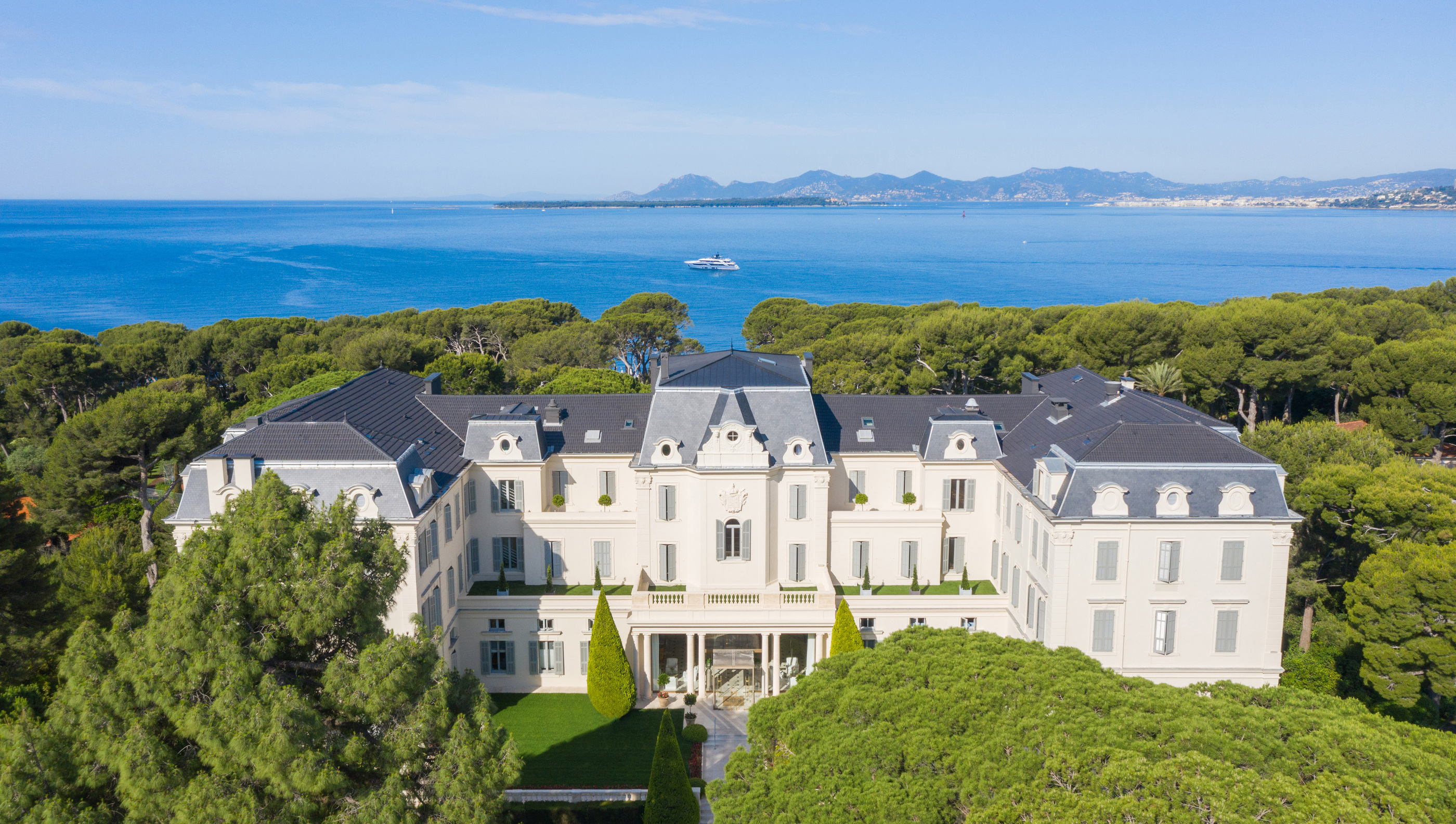
The hotel’s current account places the property at the edge of Cap d’Antibes, between private bay and parkland, and dates its hospitality history to 1870. Its interactive presentation identifies the Grande Allée as a two-hundred-metre promenade. Those facts help explain the contrast visible in the imagery: a formal landscape with a deliberate axis, followed by a much more immediate encounter with the sea.
The long approach gives the water a sense of destination. The coastal terraces reverse that relationship by making the sea the constant foreground to a meal, a swim or a quiet interval. These are complementary architectural effects. One creates anticipation through distance; the other finds variety in staying close to the same edge. The photographs are particularly effective when read in that order, rather than as a collection of unrelated Riviera views.
This is an architectural and hospitality reading of official material, not a report of a LuxeDigital stay. It does not establish a yacht transfer, a berth or a private landing arrangement. A traveller combining an independent charter with a hotel stay must have each part confirmed by the responsible operator. The visual continuity of a coastline does not make the operational arrangements continuous.
The pool is part of the shore
The hotel dates the carving of its saltwater pool to 1914. In the current photographs, its geometry sits against the irregular rock and the larger blue surface beyond. It is a clear, contained place to swim that still belongs visually to the coast. The contrast is more memorable than a generic infinity-pool image because the surrounding terrain remains legible: stone, vegetation, terraces and water occupy distinct levels.
For a reader choosing where to spend time ashore, that relationship matters. A pool with a strong sense of setting offers a different experience from another anonymous deck of loungers. The worthwhile question is how the place fits the proposed day: a stay of several nights, a meal, a treatment or a pause within a longer itinerary. Access and reservations depend on the actual arrangement, rather than an assumption that every hotel facility is available to every visitor.
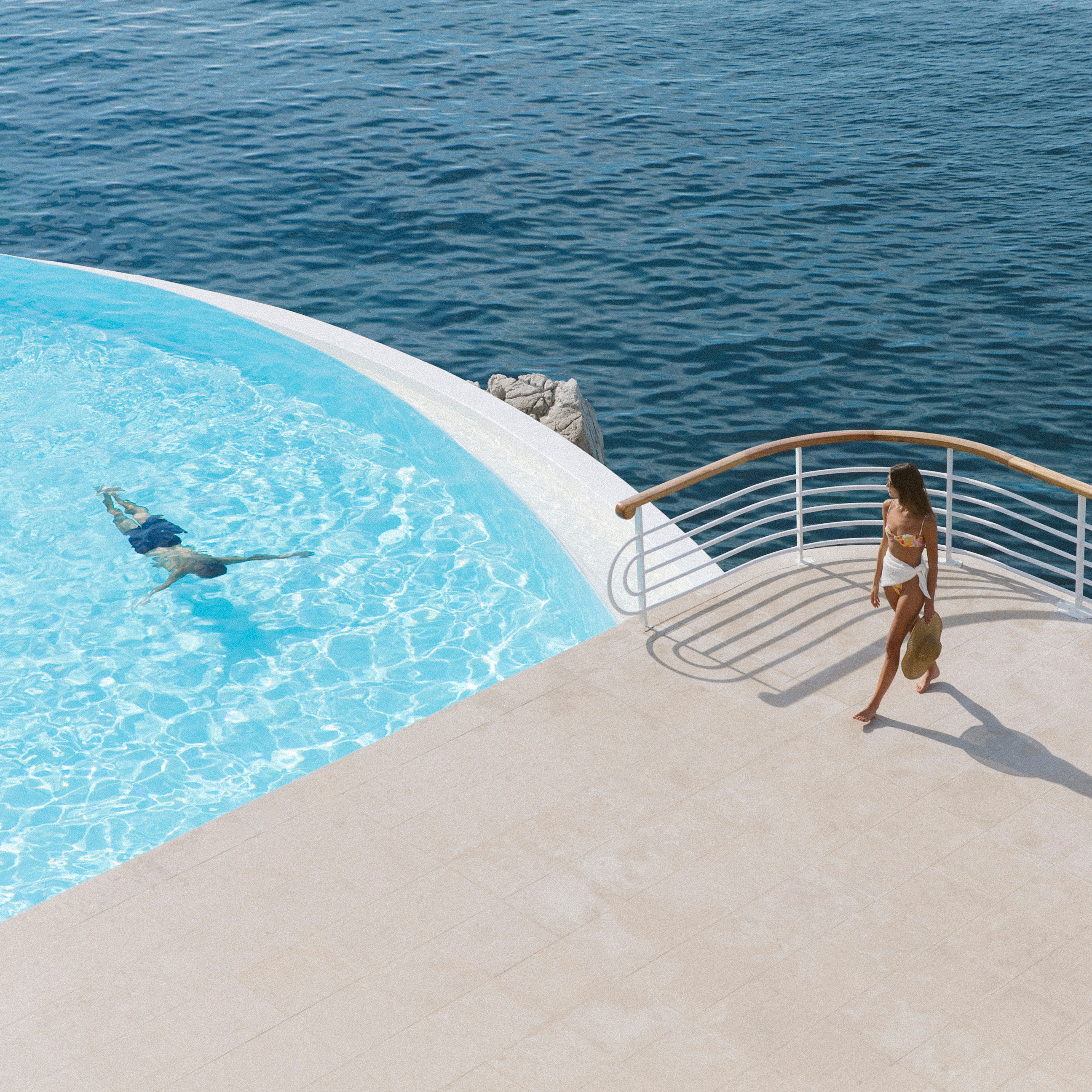
The same care applies to reading the images. An empty terrace is not a promise of seclusion at a particular hour. A staged lifestyle photograph does not demonstrate the atmosphere in every season. What it can show is the design language of the setting: the relationship of shade to open sky, the scale of furniture beside the water, and the degree to which the landscape remains visible.
Privacy in the landscape
The official hotel presentation identifies thirty-three cabanas among the pines. They introduce another scale of hospitality, more intimate than the collective terrace or the main promenade. Their significance is spatial as well as decorative. A small sheltered setting can change the pace of a day, giving a couple or a family somewhere to settle without requiring a move back to a bedroom.
The photographs suggest how landscape can do the work of separation. Trees, changes in level and the orientation towards the water establish boundaries without turning every setting into a fully enclosed room. This is a useful reference for readers interested in coastal design. Privacy need not depend only on walls; it may come from distance, screening and the way one outlook is directed away from another.
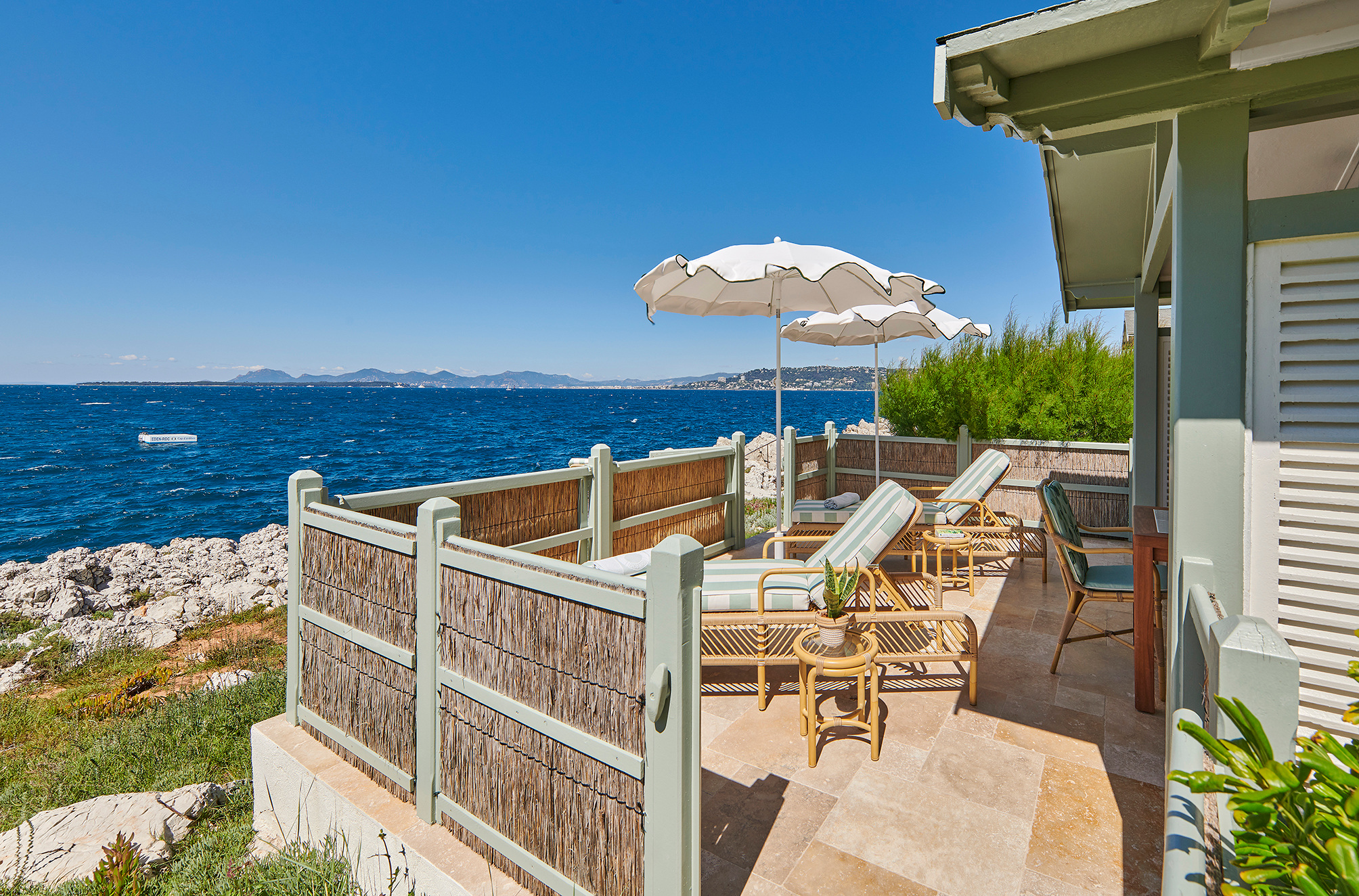
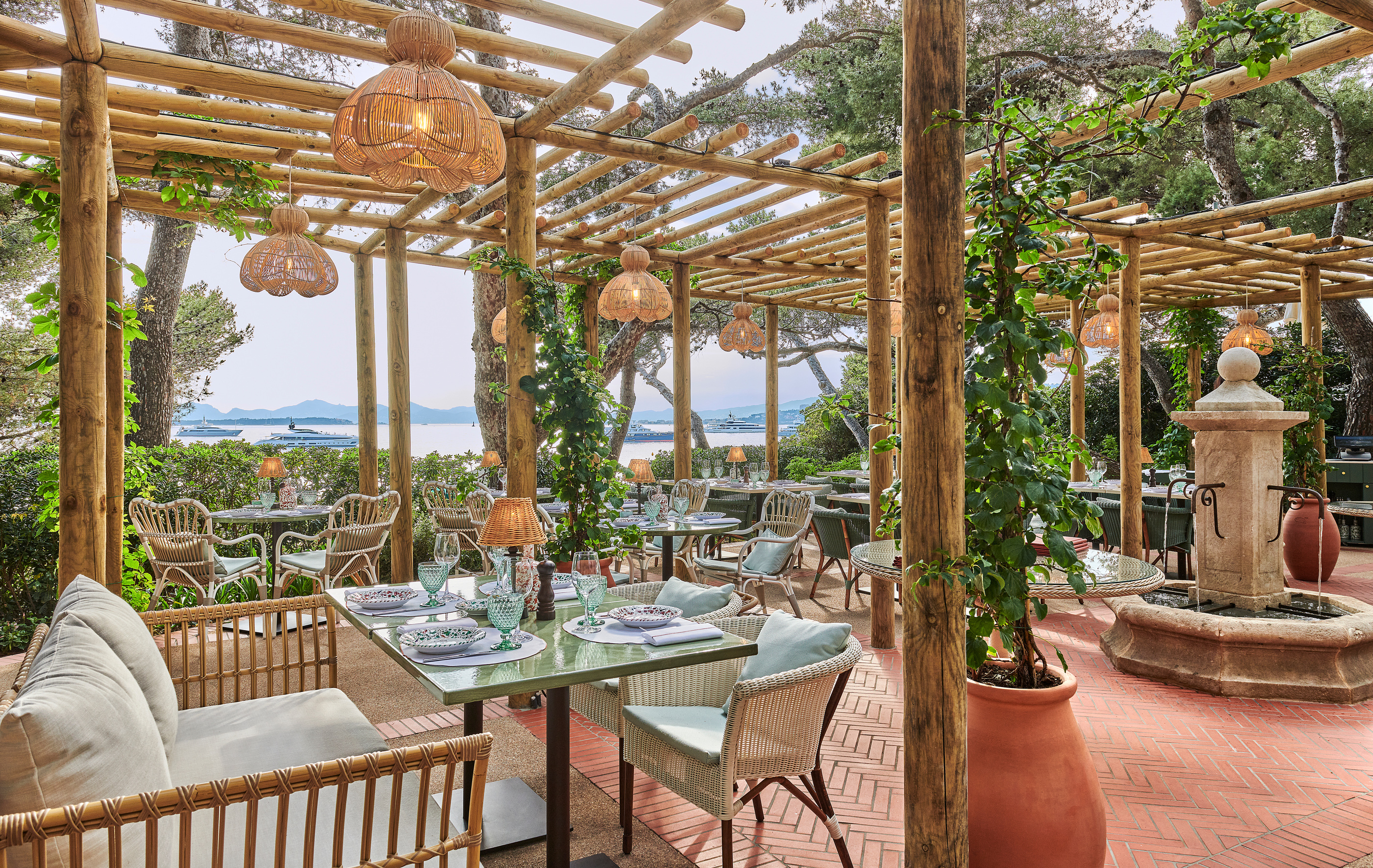
Whether a particular cabana can be reserved, what service is included and which arrangements suit a proposed visit need direct confirmation. The design observation is more durable than those details. It explains why several modestly scaled places can enrich a large property: they create reasons to move through the grounds and opportunities to choose a different degree of exposure to the social life around them.
A room should change the rhythm
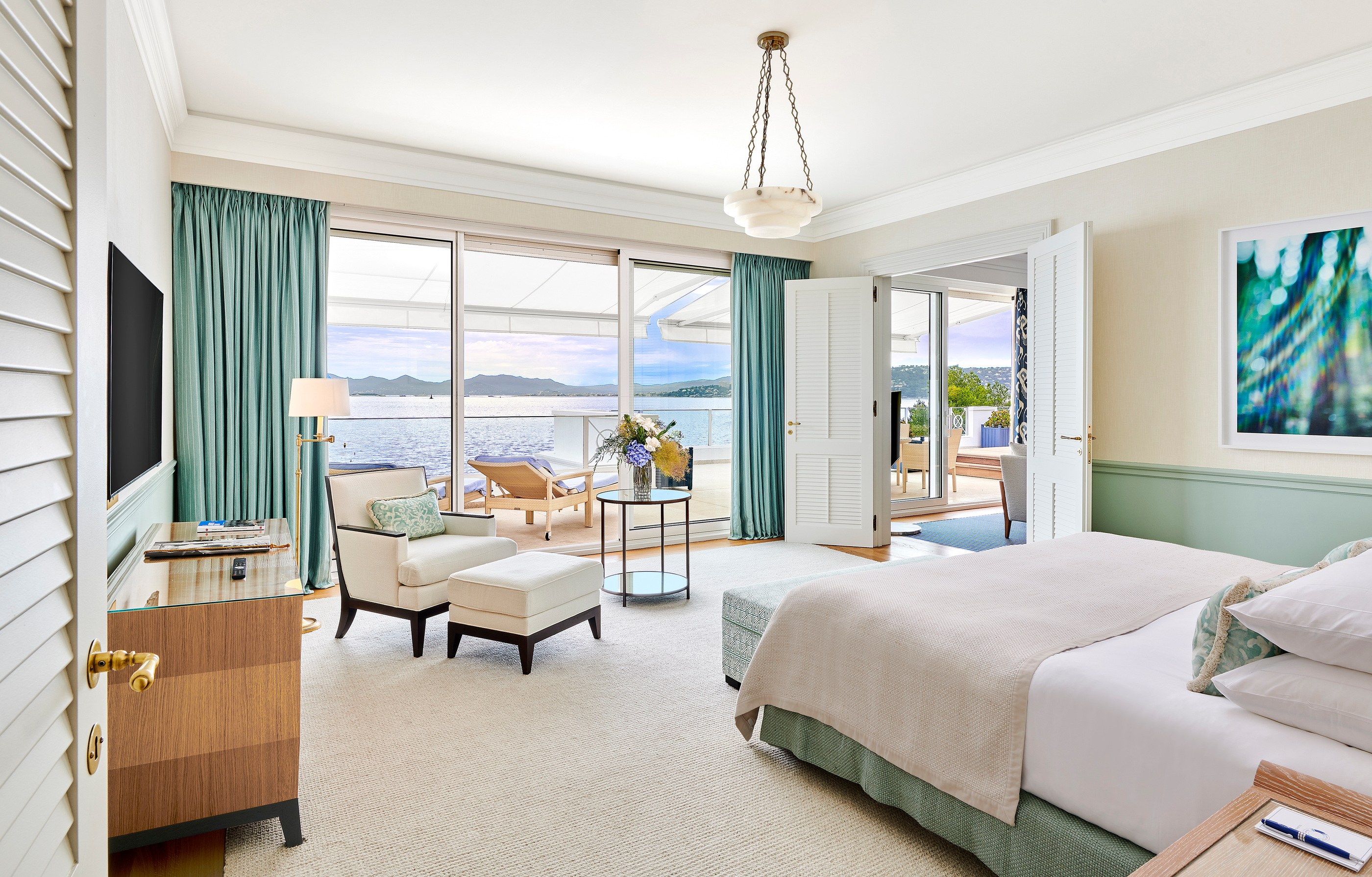
The current accommodation imagery ranges from rooms and suites to separate villas. These are alternatives, not a single standard specification. The official photographs selected here retain their stated room identity, so the reader can distinguish a Tradition Room from the Eden-Roc Suite. A suite photograph should never be allowed to imply that every room offers the same volume, terrace or outlook.
For a journey that already includes a yacht, the hotel room may have a different role from the usual holiday centre. It can provide a slower start or finish, more settled unpacking, or a base from which the group divides into different interests. Those are planning possibilities, rather than services guaranteed by the property. They become meaningful when the dates, exact accommodation and practical connections have been agreed.
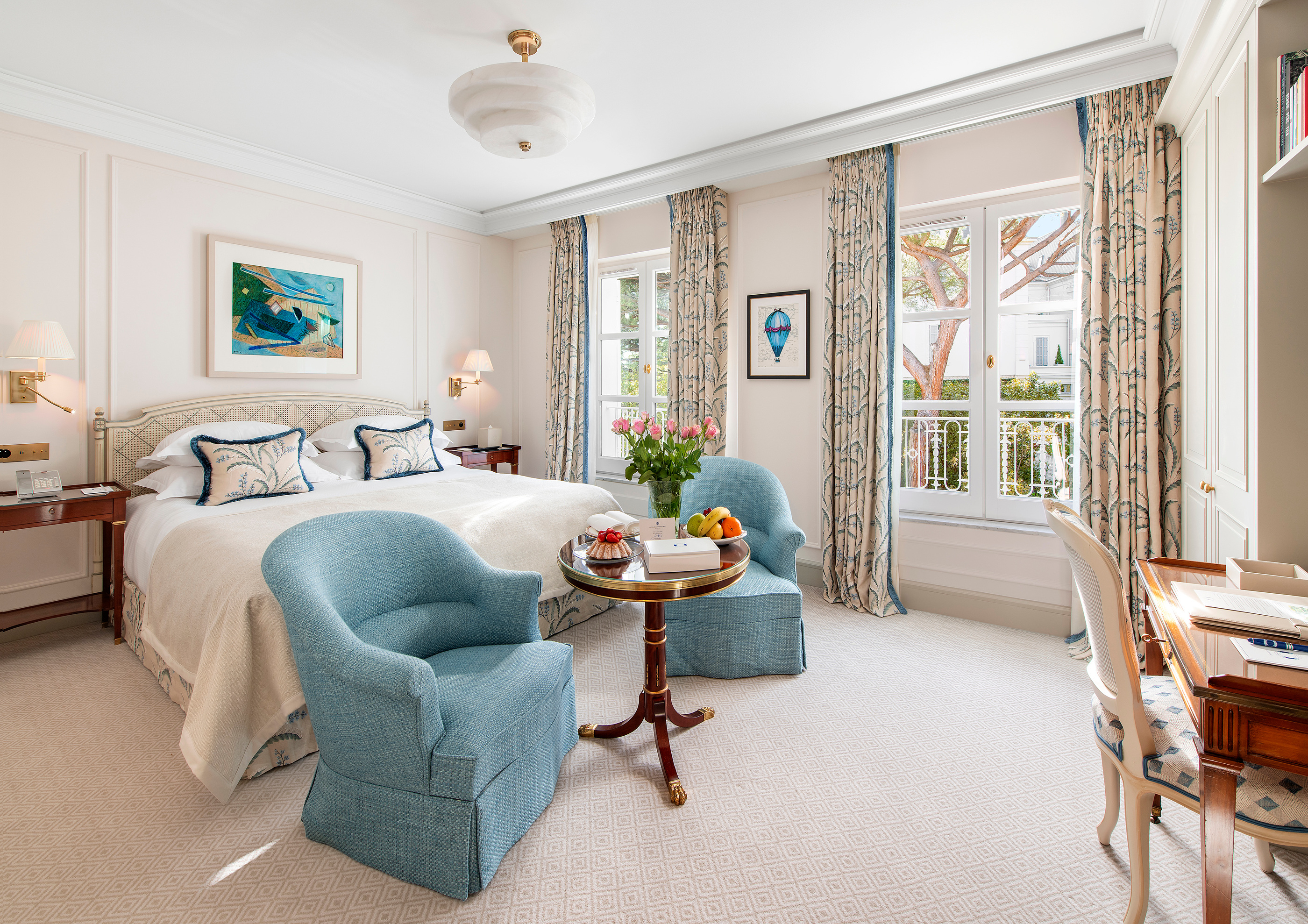
The interior reading is also worth making at a smaller scale. Look at the relationship between the bed, seating and daylight. Consider whether the room offers a place to remain comfortably during the day, rather than merely a photogenic arrangement for arrival. A convincing coastal hotel should have something to contribute when the visitor turns away from the sea as well as when looking towards it.
Making a sea-and-shore plan coherent
| Part of the setting | What to look for | What to establish before travel |
|---|---|---|
| Grande Allée and grounds | The change of pace between formal landscape and coast | The arrival route and practical timing |
| Saltwater pool and terraces | The relationship between swimming, rock and open water | Access, reservations and any operating conditions |
| Cabana settings | A more private scale within the coastal landscape | Availability, inclusions and the appropriate booking |
| Named room, suite or villa | The exact space and outlook being considered | Confirmed accommodation category and dates |
Restaurants and wellness add further reasons to spend time ashore, but they should be planned as actual appointments, with current opening and access checked. The same applies to the transition from a yacht: identify who is responsible for each transfer and allow time for changes in weather or schedule. A strong itinerary does not need every interval filled. It needs enough clarity for the spaces themselves to be enjoyed.
The Luxe Digital view
Hôtel du Cap-Eden-Roc is most persuasive as a sequence of relationships with the coast. The promenade, pool, cabanas and rooms give the same horizon several different meanings. For the sea-and-shore traveller, the appeal lies in that change of scale and rhythm. The hotel earns its place in a considered journey when it offers a way of being on land that complements time afloat, with each part chosen and confirmed on its own terms.
Hôtel du Cap-Eden-Roc is most persuasive as a sequence of relationships with the coast.
Sources & credits
Sources and methodology
Independent yacht, coastal architecture and hospitality analysis of the named official records and imagery, checked on 16 October 2026. Original build, refit and presentation dates are retained. Photographs are identified by the named yacht, hotel room or destination setting. Independent analysis of official yacht, hotel and marina records and imagery. No visit, stay, sea trial or interview is claimed. Historic refit dates and source identities remain identified. Current availability, access, prices, operational suitability and contractual inclusions are not inferred.