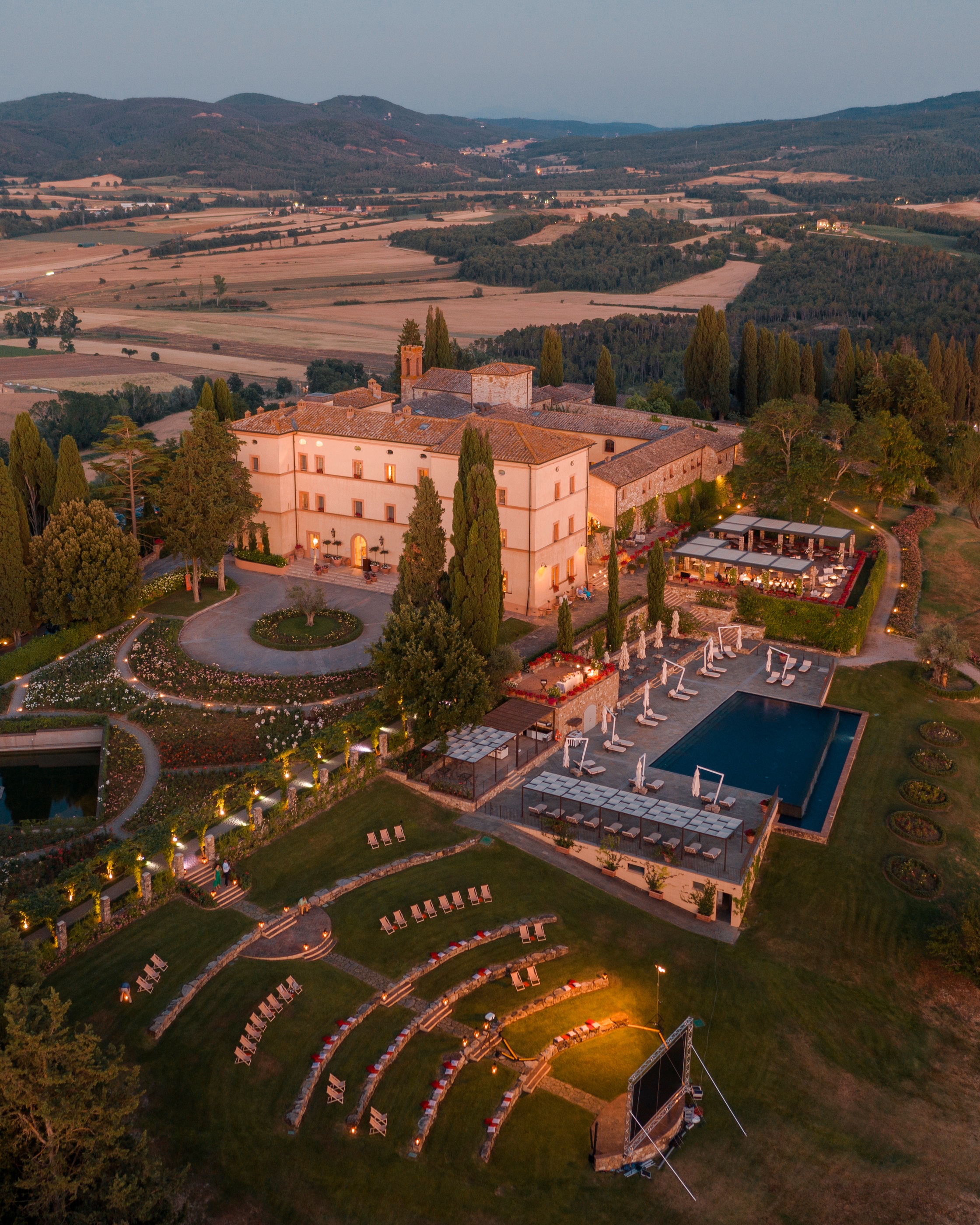
There are three useful distances from which to understand Castello di Casole: the cluster of buildings against the Tuscan hills, the room beneath its timber beams, and the small ritual that gives a morning its shape. Belmond’s official photographs move between all three. Read together, they suggest a country stay whose attraction comes from the relationship between a private interior and a much larger landscape.
A house within the landscape
Belmond places Castello di Casole in the Tuscan countryside and identifies its origins as a medieval castle. The contemporary hotel record lists 39 suites and two villas. These are useful coordinates, but the aerial photograph gives the clearest introduction: architecture, paths, planting and open ground form a legible composition, with the buildings held together rather than dispersed across the whole view.
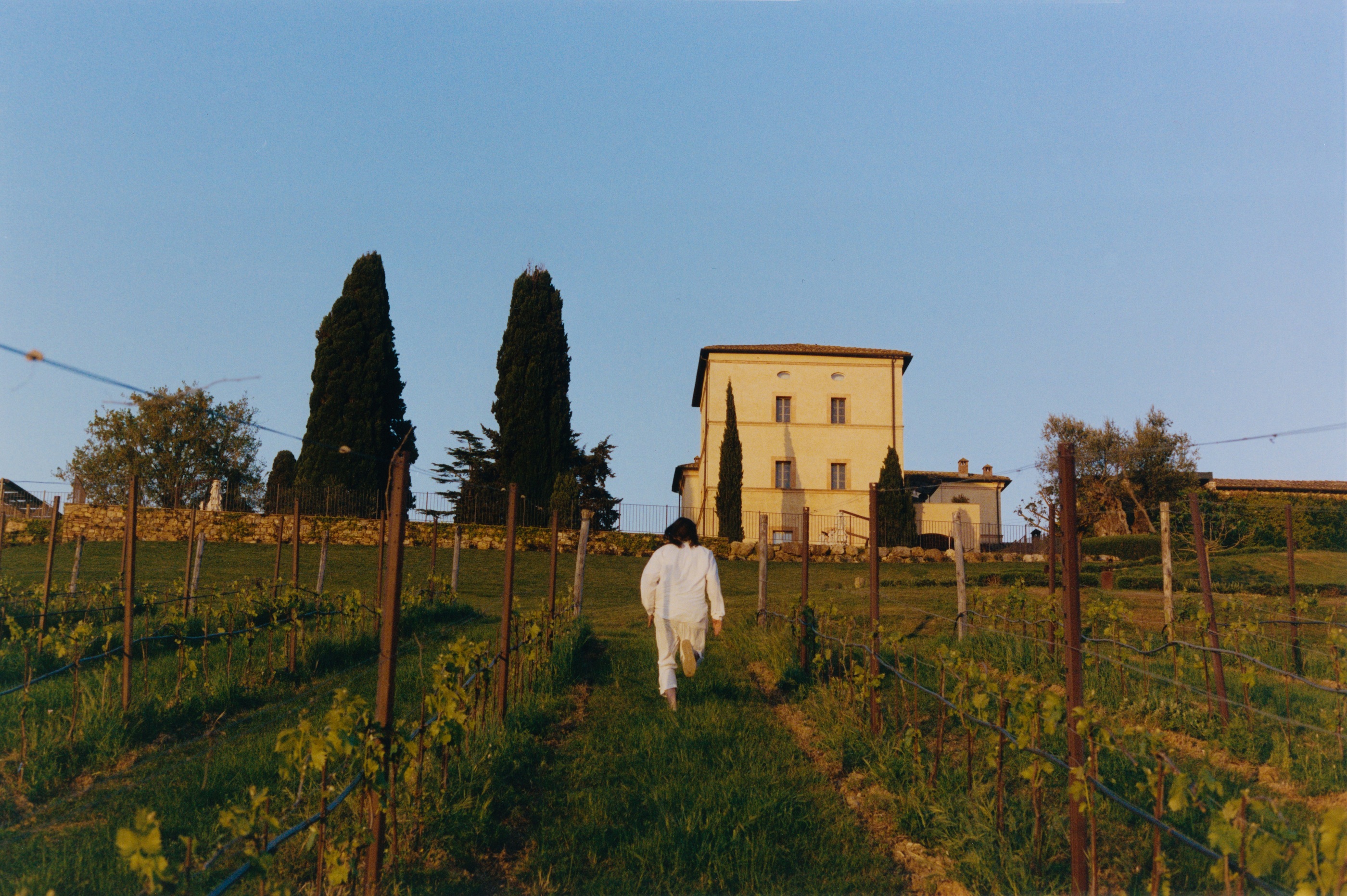
Seen from that distance, the property is as much an arrangement of outside spaces as a collection of rooms. The pool, terraces and surrounding land each create a different relationship with the horizon. The photograph taken towards the building across the landscape then brings the scale down. Cypress trees become markers; the facade becomes a destination within the scene.
For someone choosing a Tuscan hotel, this distinction matters. A property can be a base for repeated excursions or the place around which the days are organised. The images make a persuasive case for leaving time to remain on the estate, with an afternoon allowed to unfold around the landscape and the room.
The character of a particular room
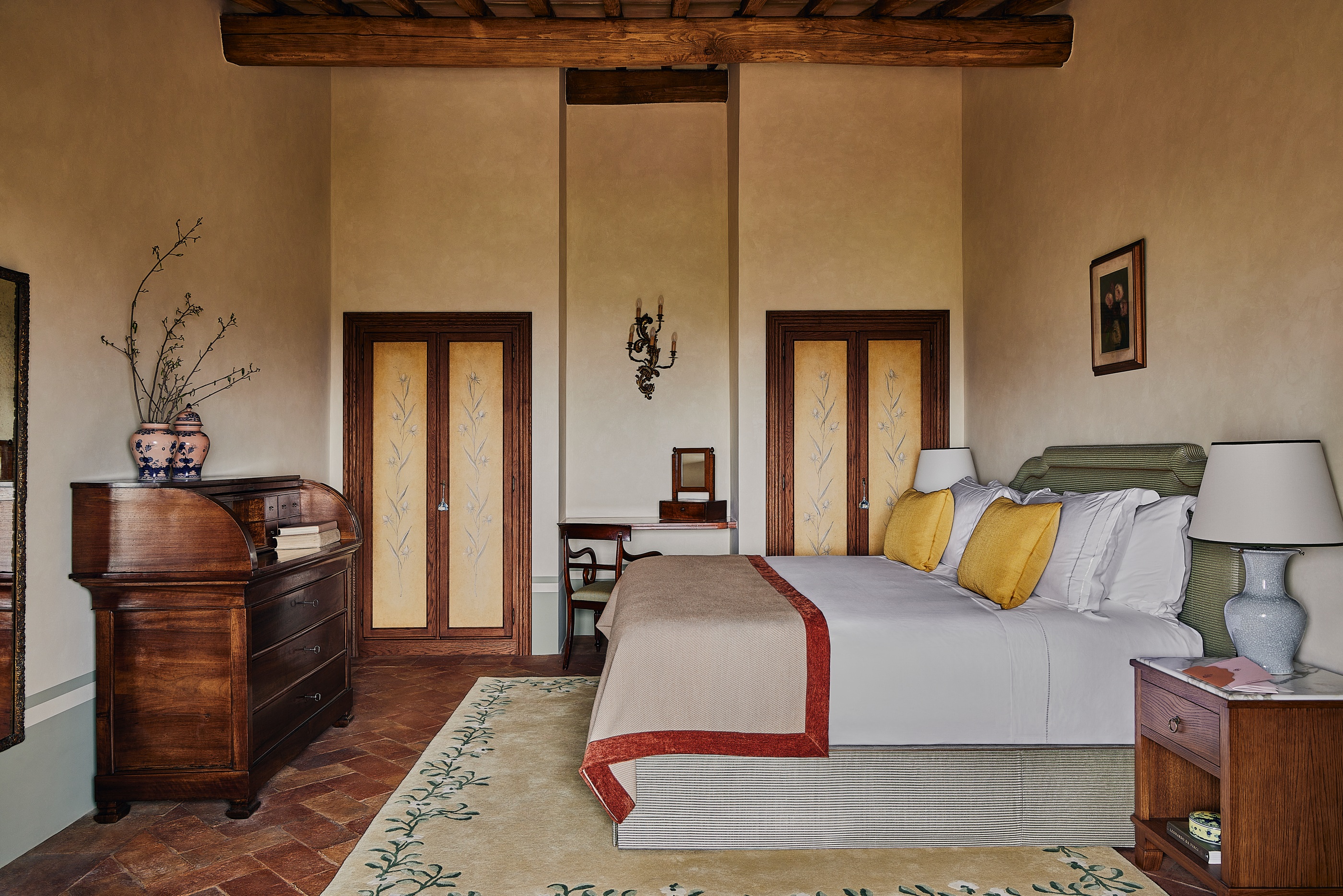
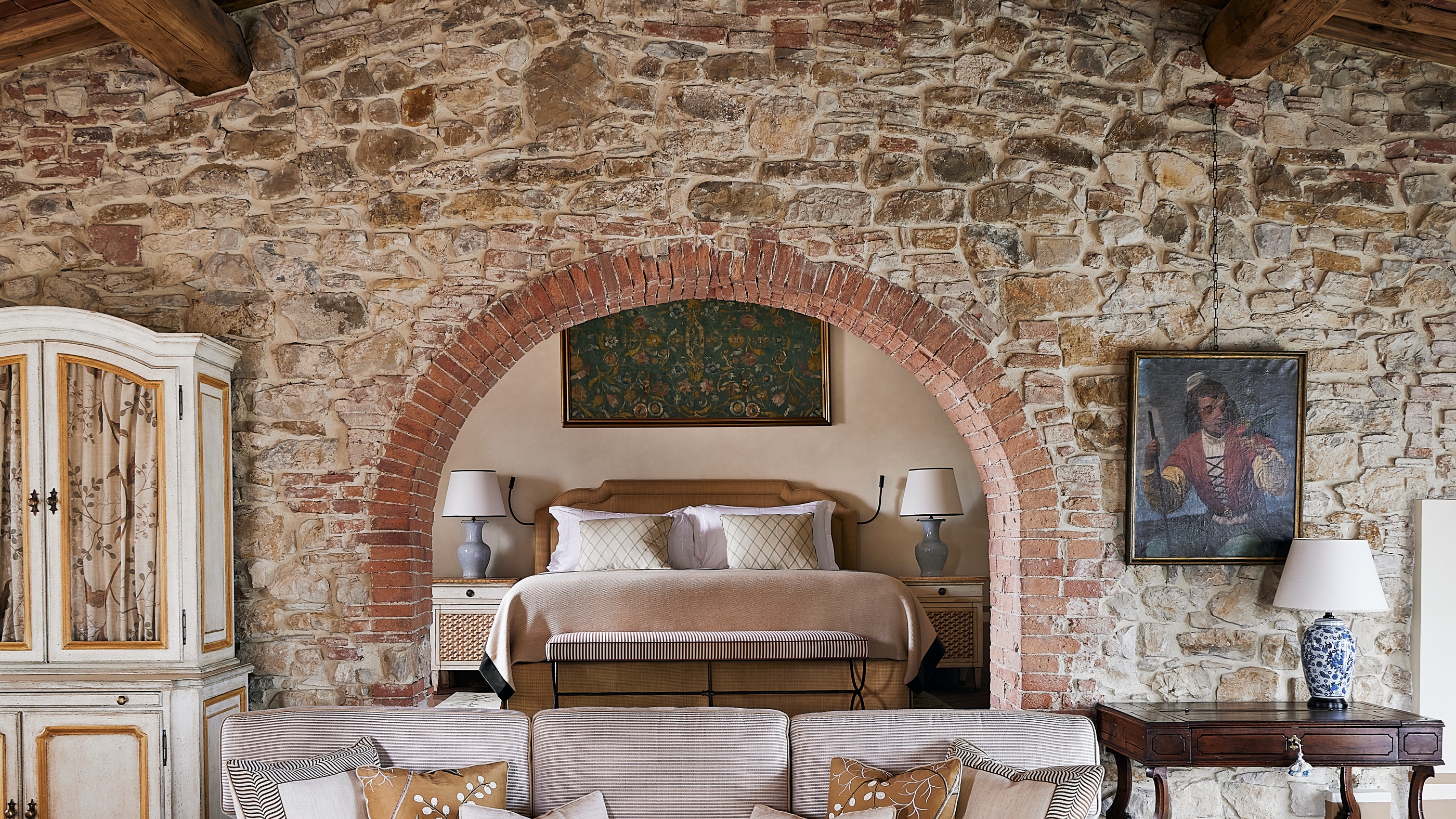
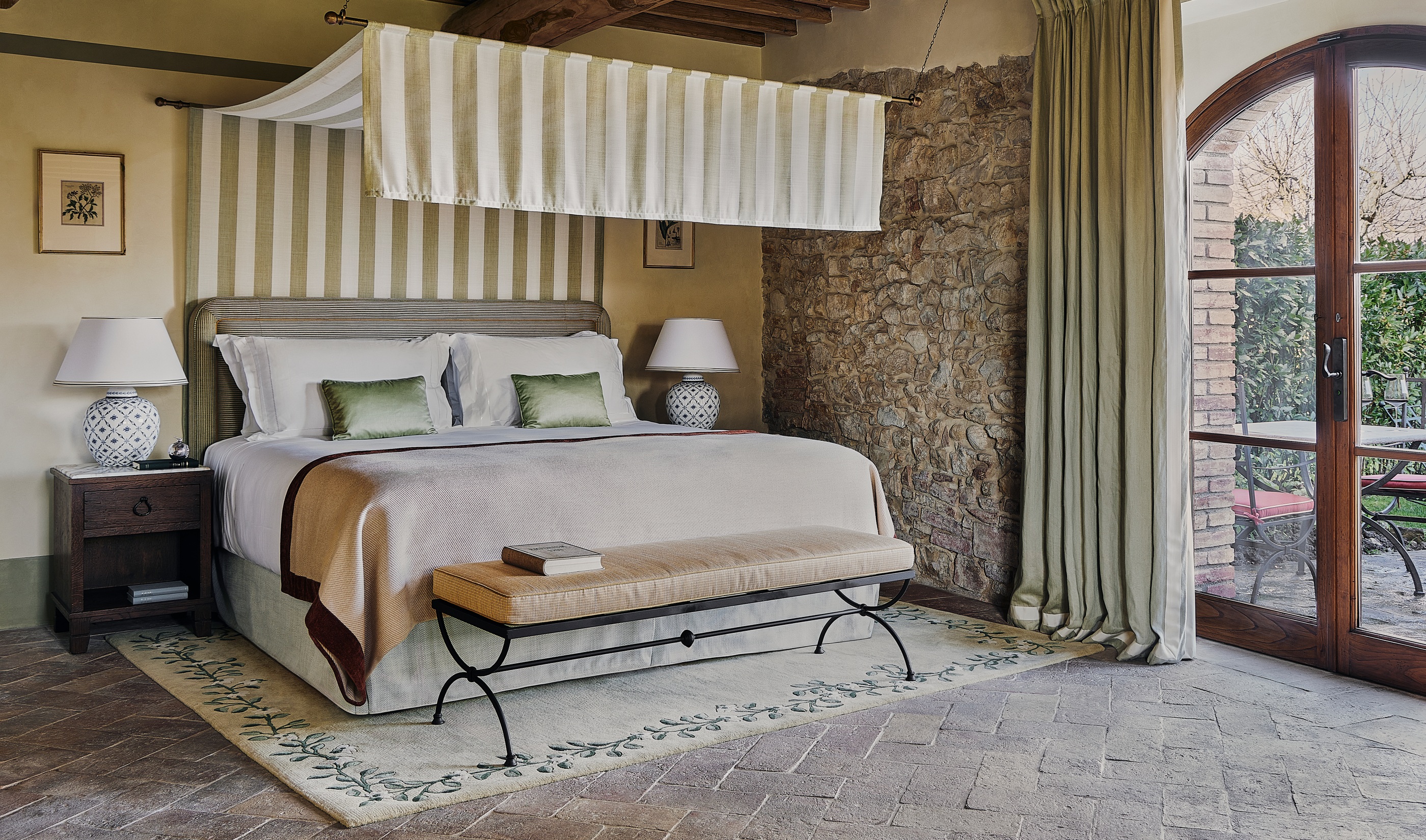
The accommodation record describes individually designed suites, with different styles and some gardens or patios. Its selected photographs support that emphasis on variation. A bedroom beneath substantial timber beams, a living room with pale upholstery and patterned chairs, and a bed framed by a stone arch offer different readings of the same country-house setting.
The stone-arched room is especially instructive. The architecture is not reduced to a decorative background: the opening defines where the bed belongs, while furniture and textiles occupy the space around it. The eye moves between rough masonry, a smoother wall surface and the smaller scale of objects. The result depends on their relationship, rather than on every element matching.
Choose a suite accordingly. Ask about the specific arrangement, where its windows look and whether any outdoor space is private to that accommodation. A beautiful photograph of another room can be a useful introduction to the property, but the booking should ultimately refer to a clearly identified category and configuration. Individuality is most valuable when it helps the guest make a precise choice.
A country interior needs a horizon
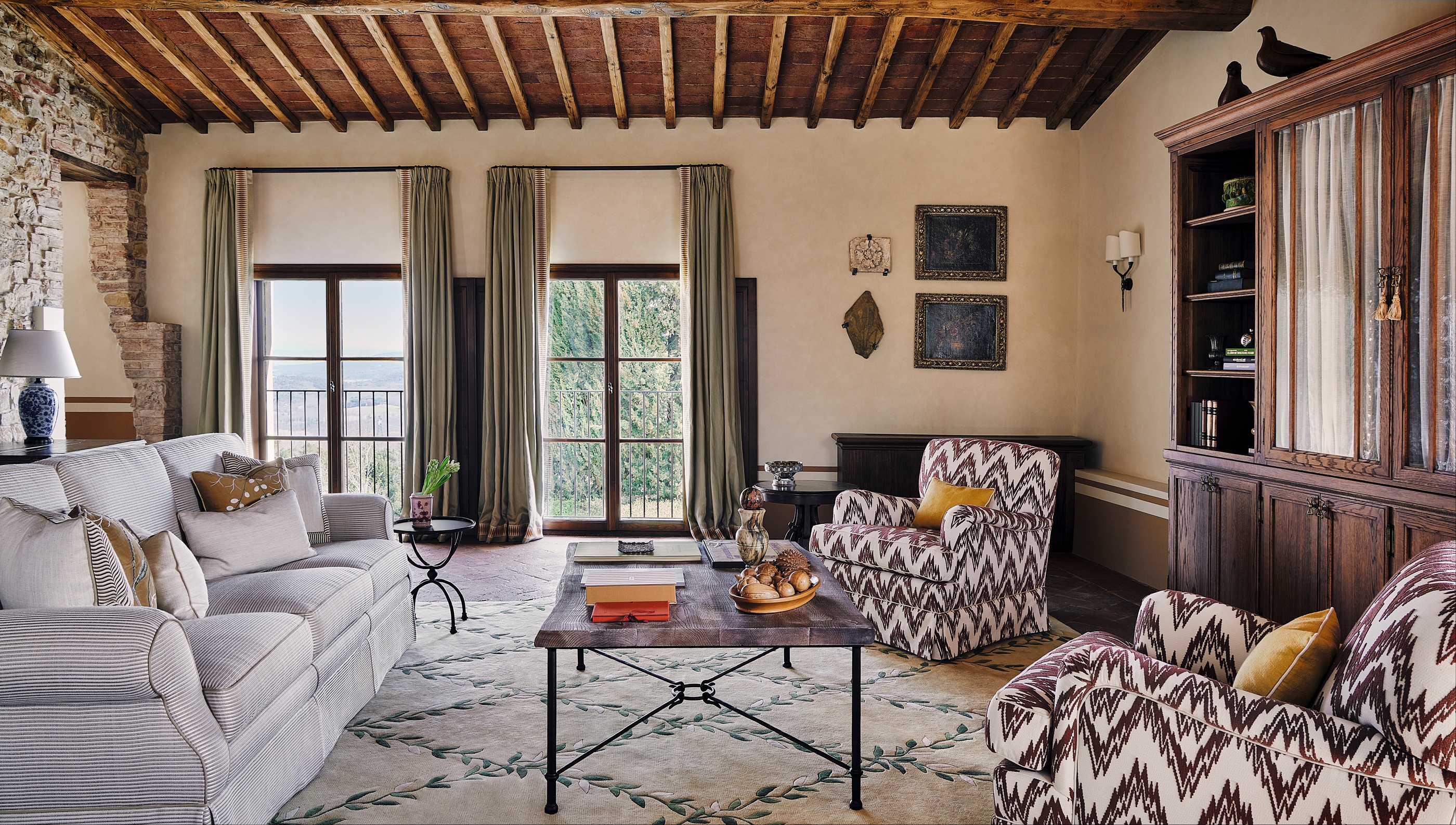
In the living-room photograph, the glazing and doors sit at the far end of a composition of sofas, tables and reading chairs. The view is part of the room’s structure. Timber overhead introduces a strong horizontal rhythm; the furniture gives that rhythm a domestic scale. The photograph feels spacious because several places to sit remain distinct within one interior.
That is worth considering for a stay shared by people with different routines. A room can support an early reader and a late breakfast, or a quiet hour before dinner, when its sitting areas are more than a route to the bedroom. The relevant measure is the ease with which those activities coexist, not simply the total area printed beside the category name.
Colour performs a similar task. Pale fabric gives the light somewhere to settle, while smaller patterned pieces keep the scene from becoming uniform. These are observations of the published interior, not a claim about the provenance of each furnishing. Their travel value is direct: they help a prospective guest decide whether the atmosphere is one they would enjoy returning to each evening.
From the room to the day
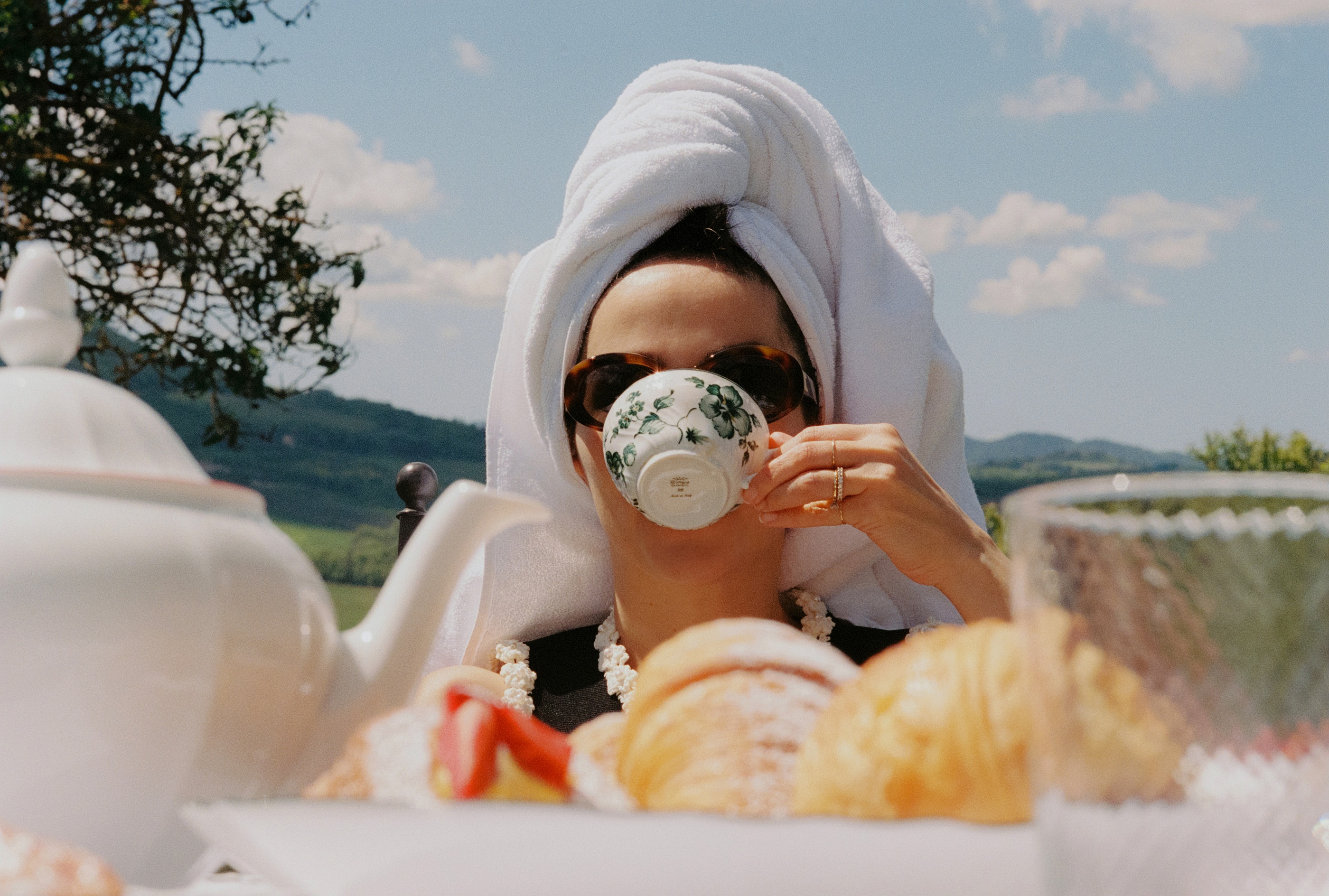
Belmond’s official campaign image of breakfast brings the edit close to the person. A cup, a pastry and the hills beyond describe a moment at a different scale from the aerial view. It is an arranged photographic scene, rather than evidence of our own breakfast, yet it usefully connects the broader landscape to an ordinary act of staying somewhere.
The temptation in a country-hotel story is to turn every image into a promise of permanent stillness. A more interesting reading leaves room for choice. One guest may want a full day away; another may prefer an unhurried meal, a swim and time with a book. The architecture and grounds become the setting for those decisions, without needing a tightly scripted version of the visit.
The same care applies to planning. Establish what will be operating on the intended dates and which experiences need advance arrangements. Seasonal hotel life can differ substantially from a campaign photograph. A well-chosen stay begins when the actual rhythm of the property corresponds with the rhythm the traveller has in mind.
Stone, water and enclosure
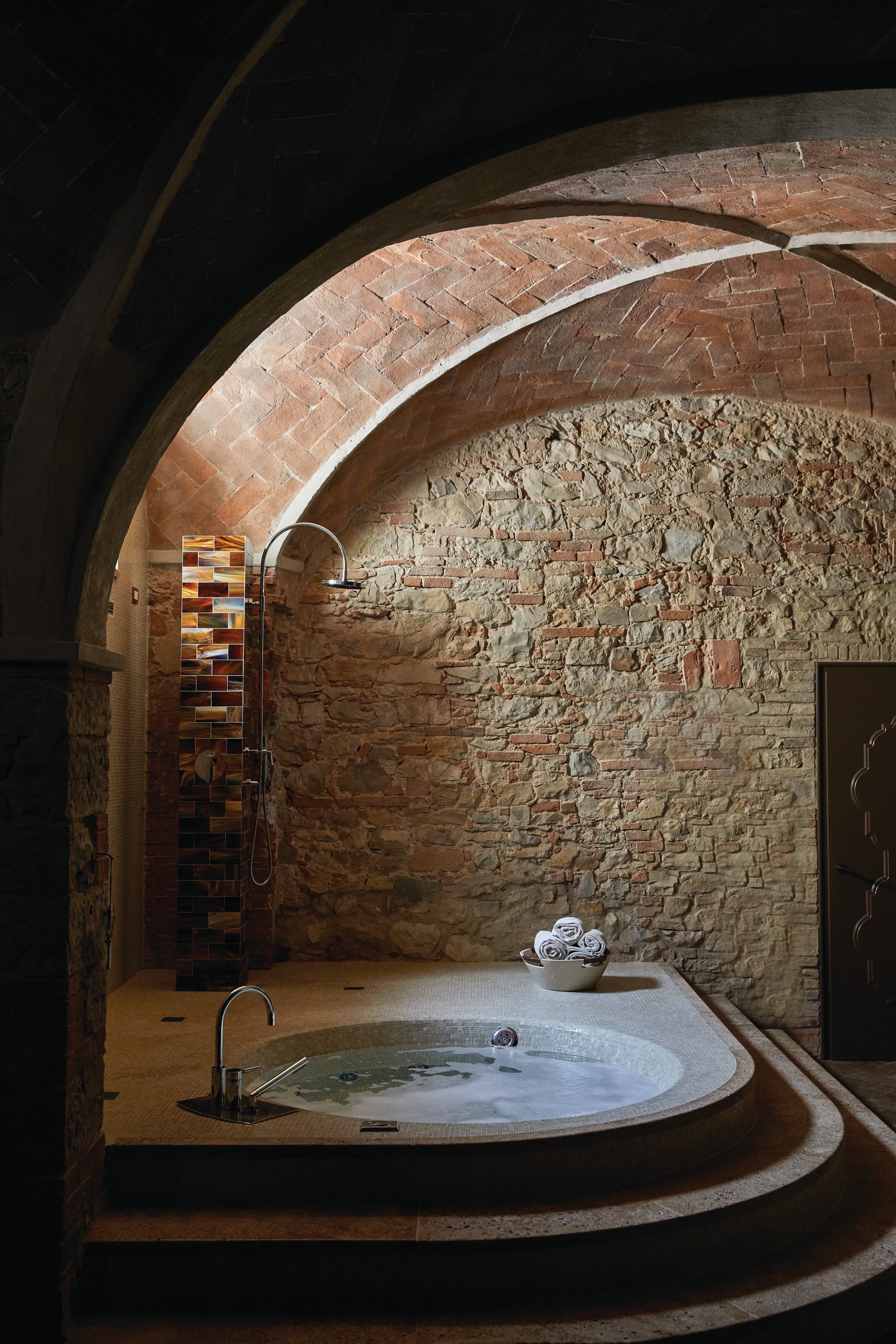
The Essere Spa image places water beneath a sequence of masonry arches. Its impact comes from enclosure: a low, protected interior after the breadth of the landscape outside. The stone remains visually active, while the water and lighting introduce more continuous surfaces. It gives the photographic story a useful pause, both in scale and in brightness.
This is an architectural observation, not a statement about the effect of a treatment. For the guest, it suggests another way to divide a day between the room, the grounds and an interior with a different atmosphere. Confirm current facilities and booking requirements if they are central to the stay. Their value lies in fitting the visit, rather than adding an obligatory item to the programme.
Before choosing a suite
| Priority | Read in the photographs | Confirm for the actual booking |
|---|---|---|
| A particular atmosphere | Stone, beams, textiles and furniture | Exact suite category and arrangement |
| Time indoors | Separate sitting and sleeping areas | The configuration and outlook of the allocated accommodation |
| Life outside | Terraces, paths and landscape | Private outdoor space and access arrangements |
| A slower day | Pool and spa settings | Seasonal operation and any reservation requirements |
The point is to turn an evocative image into a useful preference. Tell the hotel which relationship matters: an outdoor seat, a separate sitting room or the particular character of a historic interior. A short, specific brief is more informative than asking for the most impressive room.
The pleasure of staying put
Castello di Casole is most convincing when its pictures are allowed to change distance. The aerial view establishes a place in the hills; the room gives the stay a private centre; the closer scene makes the day imaginable. None needs to carry the entire argument alone.
Together they present a compelling reason to choose a country hotel with some time left unassigned. The landscape remains available, but so does the chair beside the window. A memorable stay can accommodate both scales, with room for the guest to decide which one matters that day.
Sources & credits
Methodology and sources
Independent interpretation of Belmond’s property and accommodation records and official photographs, including campaign scenes. No personal stay, meal, treatment or service assessment is claimed. Photographs depict particular spaces; current dates, facilities and booking configurations should be confirmed directly.