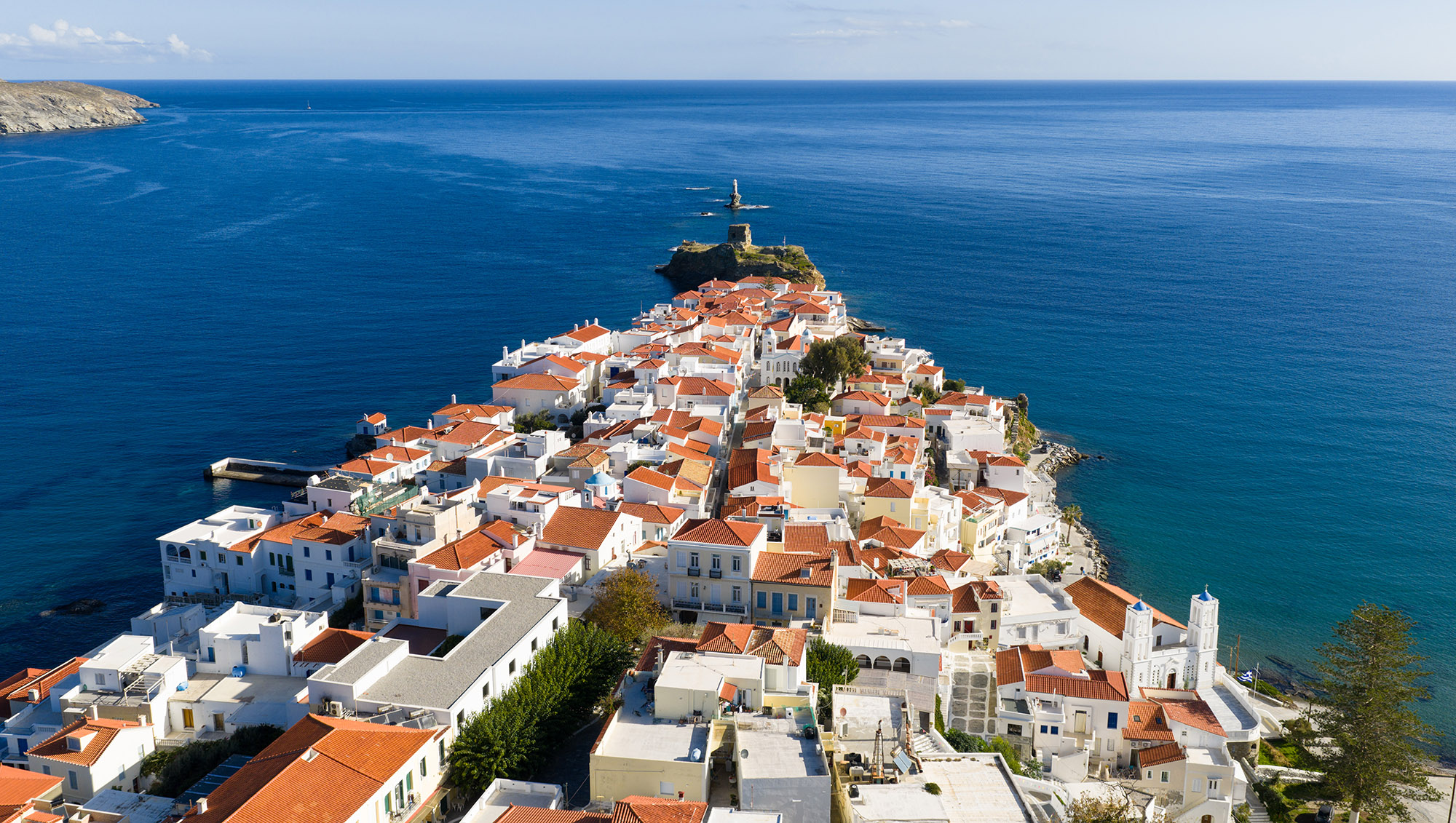
Choose the Cyclades for a visually stark Aegean island sequence and an itinerary designed around exposure and route flexibility. Choose the Ionian for a greener western setting and a different pattern of sheltered cruising and shore access. Neither archipelago is categorically better; the decision should follow travel dates, embarkation, motion sensitivity and the experiences guests value.
Decision fact unit
- Cyclades: a central Aegean network that rewards geographic clustering.
- Ionian: a western Greek network with its own island and mainland gateway logic.
- Route choice: begin with dates, entry point, duration and acceptable passage time.
- Yacht legality: a current vessel-specific charter permission is separate from destination appeal.
- Evidence boundary: official destination and licensing context; no weather, shelter, timetable or availability promise.
Cyclades: route discipline
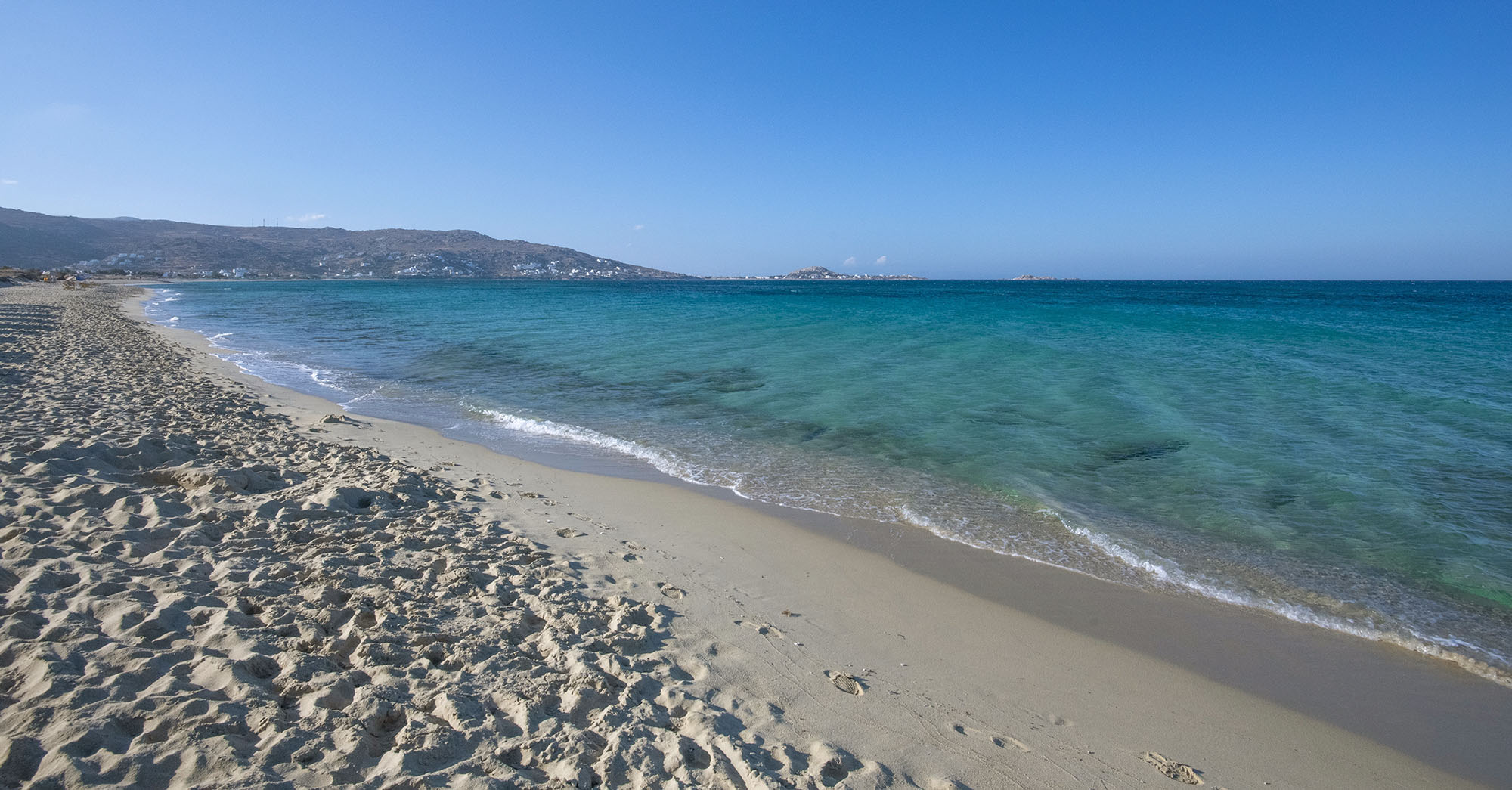


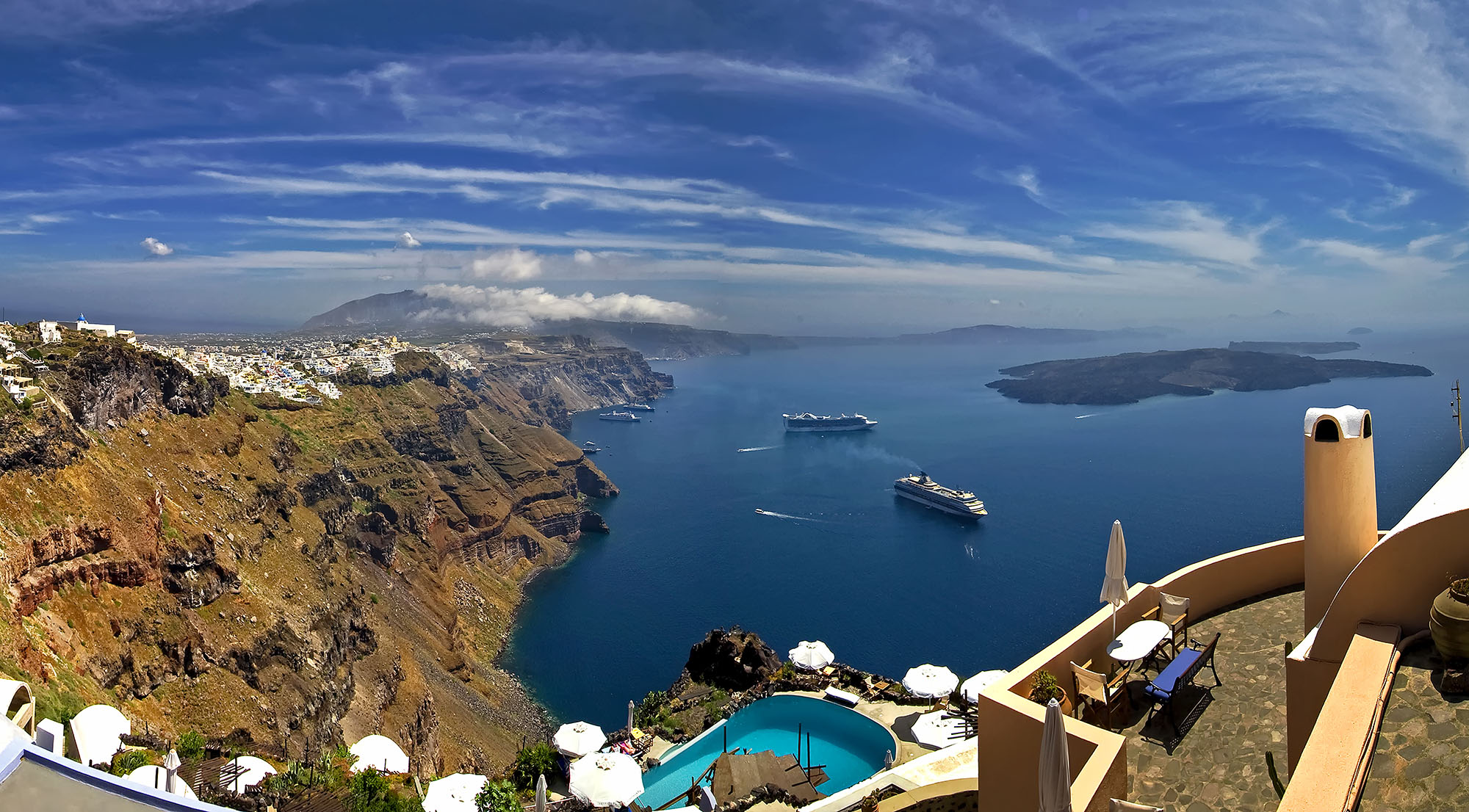
The Cyclades spread across the central Aegean. Their geography rewards clustering islands instead of pursuing a greatest-hits list. Summer wind can materially affect passages, comfort and port choices. A yacht or ferry itinerary needs alternatives and time margin.
The visual identity—white settlements, dry terrain and open sea—is strong, but the practical proposition changes by island. Some offer airports and developed services; others depend on ferries and limited local transport. “Cyclades” is not one transfer model.
Ionian: a western sequence
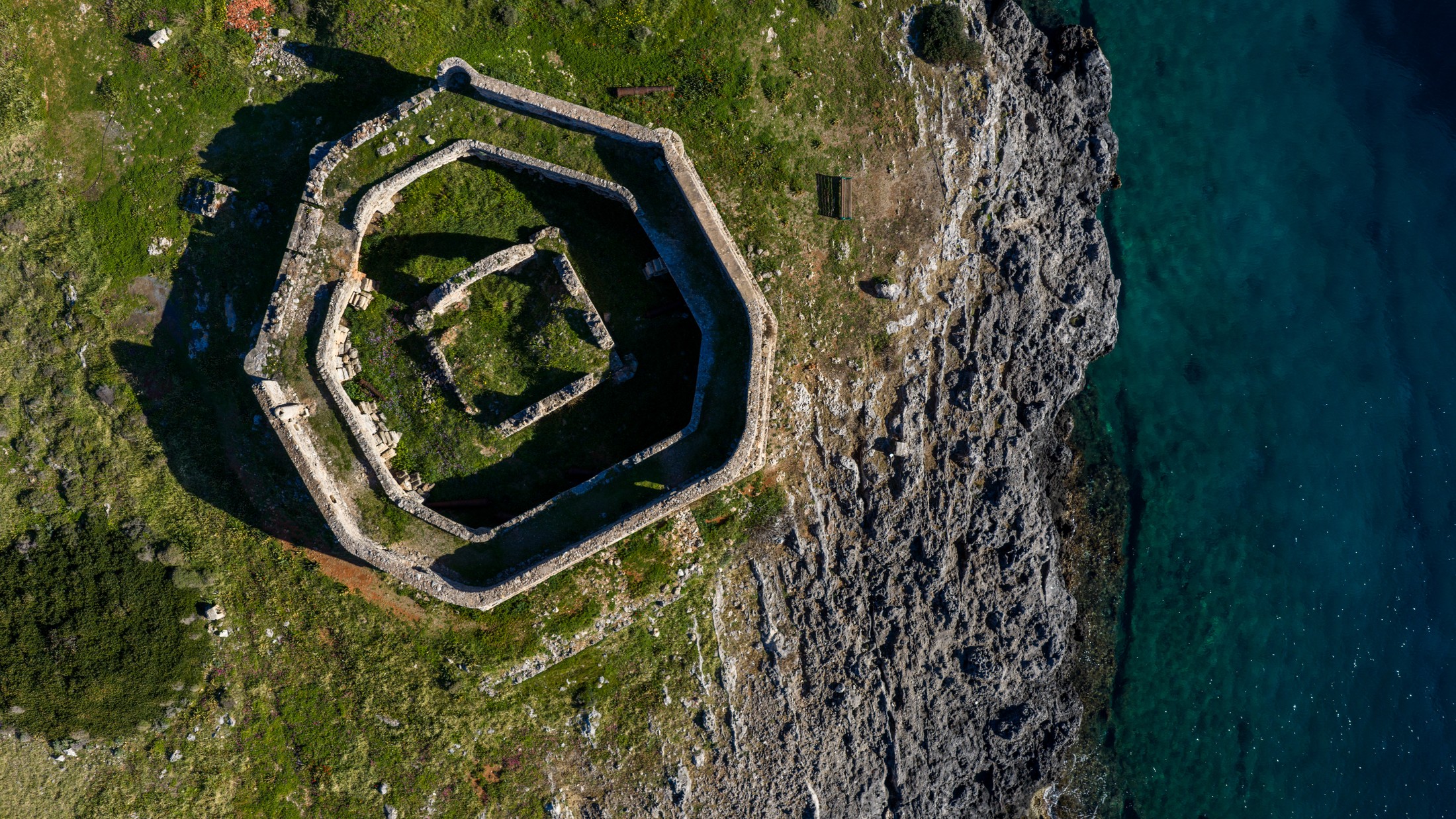
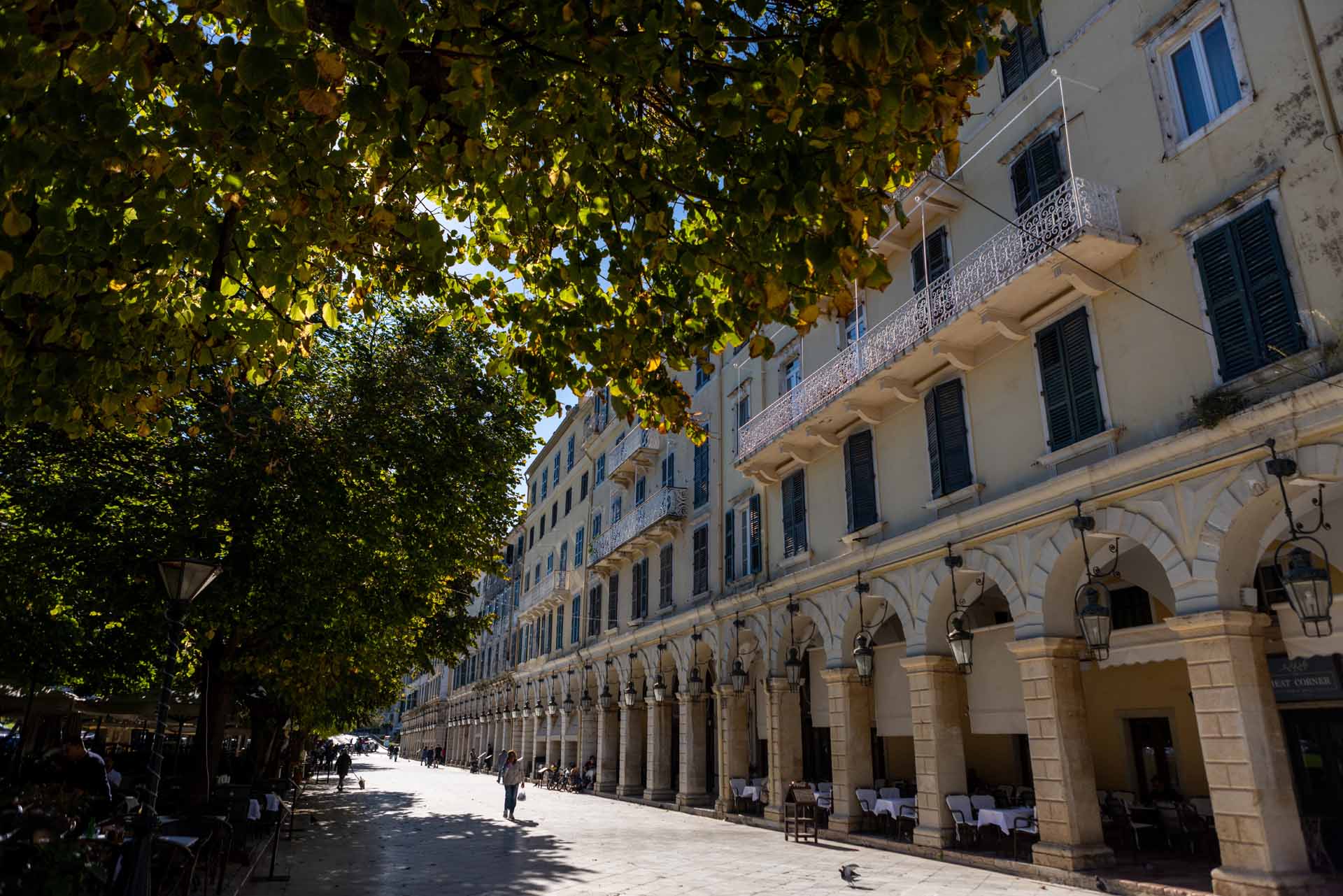
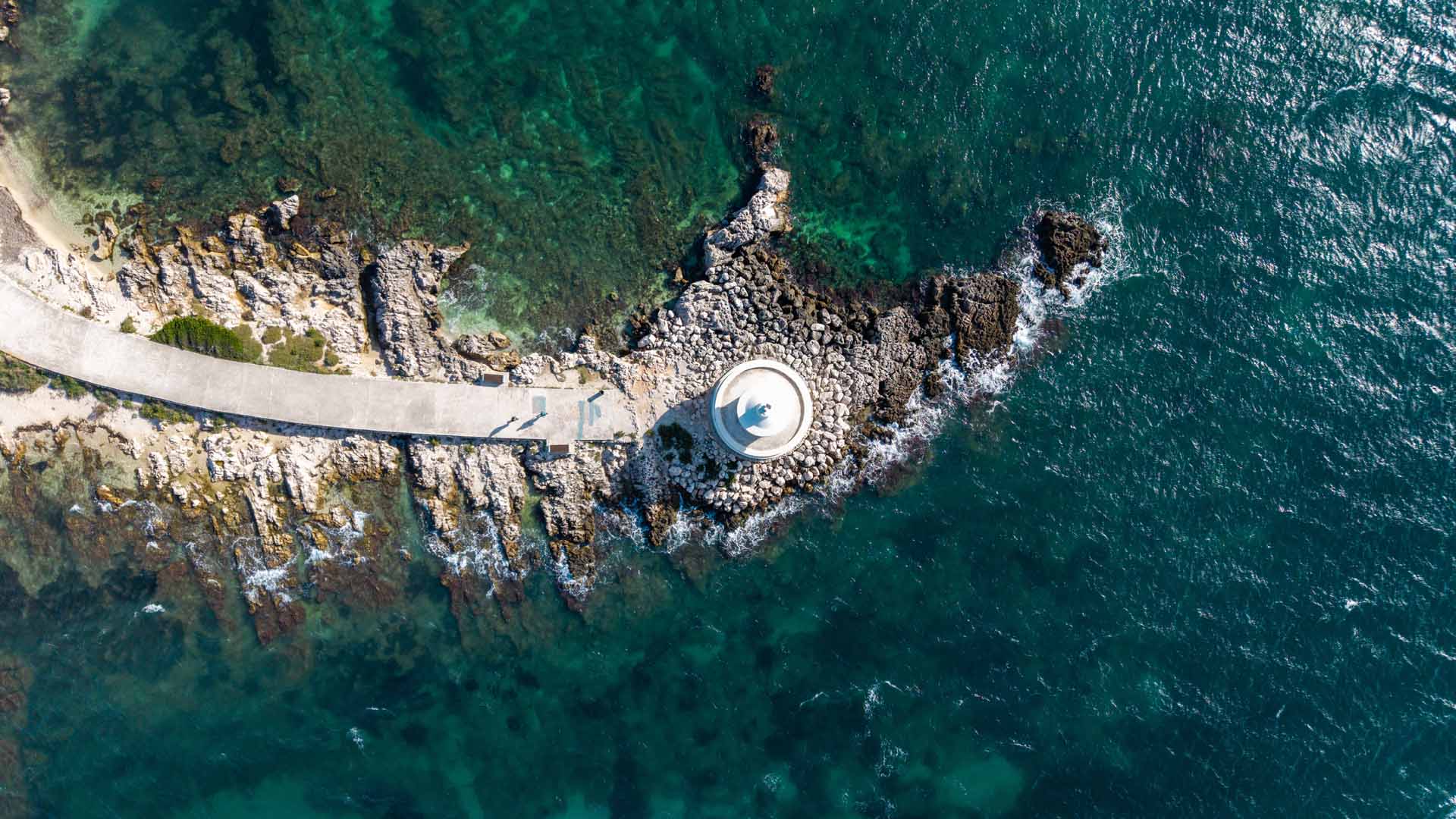
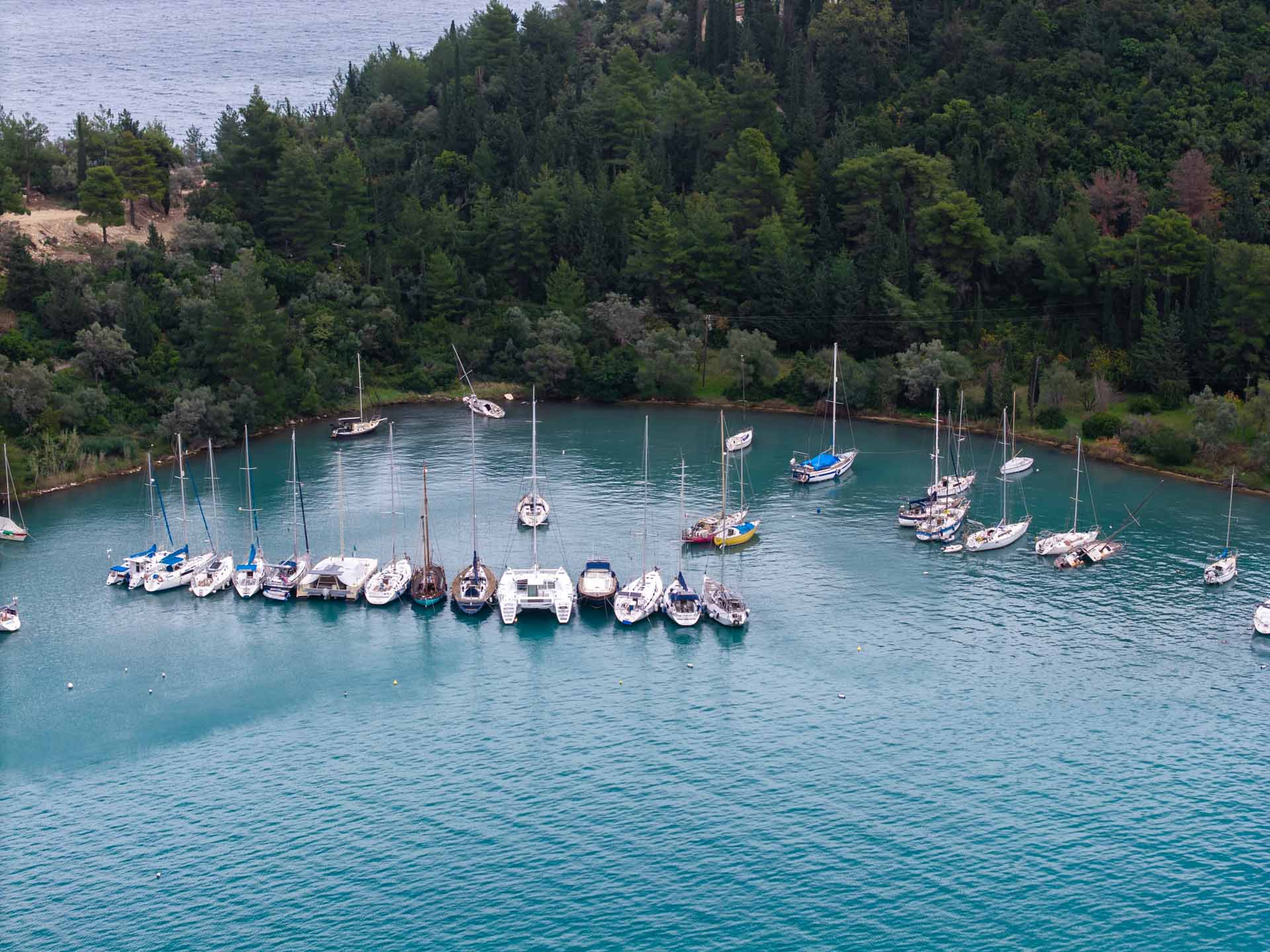
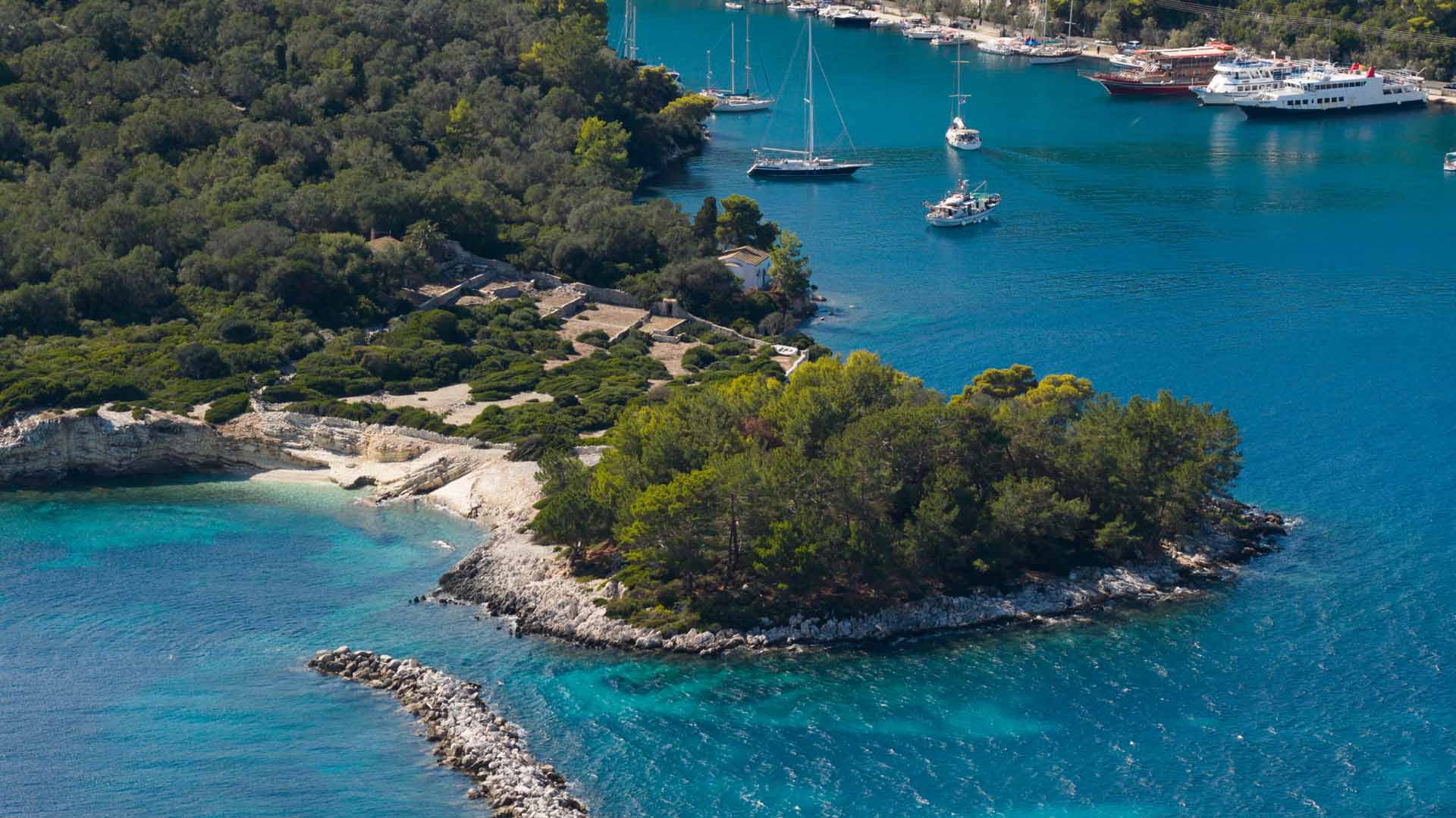
The Ionian Islands lie west of mainland Greece. The official Greek destination portal presents a greener island group with its own cultural and coastal character. Routes can combine islands and mainland access, but flights, ferries and yacht embarkation still need date-specific planning.
Shelter should not be overstated. The captain uses current marine forecasts, and thunderstorms or local winds can affect operation. The comparison is relative, not a weather guarantee.
Match the traveller
Motion-sensitive guests should discuss passage lengths and exposure before booking. Travellers prioritising architecture and a specific Aegean aesthetic may prefer the Cyclades even with more route constraints. Those seeking a softer landscape and a western Greece itinerary may prefer the Ionian.
Flight access can decide the answer. A short trip should not spend its first and last days in complex transfers to reach a fashionable island. Start with available gateways, then compare coherent routes of equivalent length.
Compare like with like
Do not compare one Cycladic hotel with an entire Ionian yacht route. Hold duration, accommodation level, transport and season constant. Record what is included. A more expensive route may simply contain private transfers or a different charter basis.
The same discipline applies to island count. A route with four close stops can provide more shore time than one with three distant names. Compare passage hours, packing, ferry dependencies and usable days. The luxurious option is not the itinerary with the greatest number of pins; it is the one with the least avoidable friction.
For mixed-age groups, document swimming access, gradients and local transport rather than assuming every island village has the same physical demands.
Gateway first, famous island second
A short Greek-island trip can lose much of its value in the first and final transfer. Begin with the international arrival, feasible domestic connection and actual embarkation or hotel check-in point. Only then decide which island names fit.
Athens can support several Cycladic entry patterns, but not every island has the same air or ferry access. The Ionian system can be approached through different western gateways and mainland links. Availability changes by date, so an official destination overview establishes geography, not a guaranteed connection.
For five nights, a direct route with two coherent bases often outperforms a celebrated island that requires an extra overnight and uncertain connection. For ten or fourteen nights, the acceptable transfer budget changes. Compare usable destination hours, not the number of map pins.
Build equivalent sample journeys
The fairest comparison holds duration, accommodation type and transport level constant. Build one plausible Cyclades sequence and one plausible Ionian sequence from the actual available gateway. Record each transfer, its operating dependency and the alternative if it fails.
For a hotel itinerary, count packing, check-out, port or airport waiting and last-mile access. For a yacht itinerary, count embarkation location, passage range, guest comfort, port or anchorage strategy and the return requirement. A private aircraft or tender does not remove wind, berth or marine-condition constraints.
Do not use an exceptional one-off connection to represent the normal route. The primary plan should be repeatable on the intended dates; a chartered solution is an option layer with its own permissions, costs and fallback.
Wind and shelter language
The Cyclades are often discussed through summer Aegean wind, while the Ionian is often marketed as gentler. Both simplifications can become unsafe when turned into promises. A destination guide can describe relative route character; only current forecasts, local notices and the captain determine operation.
Shelter is location-, direction- and condition-specific. An anchorage protected from one wind can be exposed to another. A port can have berth constraints or local effects. Motion-sensitive guests need a conversation about expected passage length, vessel type and rerouting policy rather than a brochure adjective.
The editorial record should therefore say exposure and flexibility, not guaranteed calm. It should also state whether the itinerary can lose an island without losing its central purpose.
Hotel, ferry and yacht are different products
A ferry-linked hotel circuit gives travellers direct time in communities but introduces luggage and timetable transitions. A yacht can connect coves and islands while adding marine-operation, charter-contract and weather dependencies. A single-resort stay offers depth and fewer transitions but less geographic variety.
These modes should not be ranked in one cost table without normalisation. A yacht charter may include accommodation and crew while excluding fuel, provisioning or other charges under the relevant contract. Hotel pricing may exclude transfers, boats and local logistics. The comparison must record inclusions before it discusses value.
Greek E-CharterPermission is a current public administrative service for defined professional pleasure-vessel charter permission. Its existence does not prove that a particular yacht, operator or itinerary is compliant. Before contracting, verify the exact vessel, operator, charter basis, cruising plan and current documentation with qualified parties.
Match the archipelago to the group
For travellers led by architecture, a dry Aegean visual identity and specific islands, the Cyclades can justify greater exposure or transfer complexity. For travellers led by green landscape, western Greece and a different cruising rhythm, the Ionian can be the more coherent choice. Neither preference is universal.
Families need age-appropriate swimming access, shade and transfer timing. Multigenerational groups need gradients, steps, tender boarding and local vehicle availability documented. Guests who value late dining and nightlife need a different sequence from those prioritising quiet anchorages and early cultural visits.
The route should also reflect how the group makes decisions. If losing one named island would invalidate the holiday, build more margin around it. If the experience is the sequence itself, retain multiple equivalent alternatives.
A ten-question route gate
- What are the actual international arrival and departure flights?
- How many nights remain after required gateway overnights?
- Which island or experience is truly non-negotiable?
- What passage or transfer time is acceptable to every guest?
- Is motion sensitivity relevant, and how can the route contract?
- What happens if wind or a transport change removes one stop?
- Are the compared accommodation and transport inclusions equivalent?
- Does a yacht proposal identify the exact vessel and current permission basis?
- Are shore access, gradients and swimming arrangements appropriate?
- Is the last night protected from ferry or marine disruption before the flight?
Editorial verdict
The Cyclades and Ionian Islands answer different route briefs. The Cyclades reward a disciplined Aegean cluster and tolerance for exposure and flexibility. The Ionian rewards a western sequence shaped by its own gateways, landscapes and shore relationships. The better choice is the itinerary that preserves useful time, remains satisfying after a change and fits the guests—not the archipelago with the stronger generic reputation.
Key takeaways
- Cyclades and Ionian are route systems, not interchangeable island collections.
- Exposure, gateway and motion sensitivity can matter more than a visual preference.
- Neither region carries a weather or shelter guarantee.
- Compare equivalent itineraries before drawing a cost or value conclusion.
Sources & credits
Methodology and sources
Ten official Greek National Tourism Organisation images are governed for the featured treatment and the two regional visual dossiers. They establish place and landscape only; schedules, weather, access and operating conditions remain subject to the source and verification boundaries stated above.