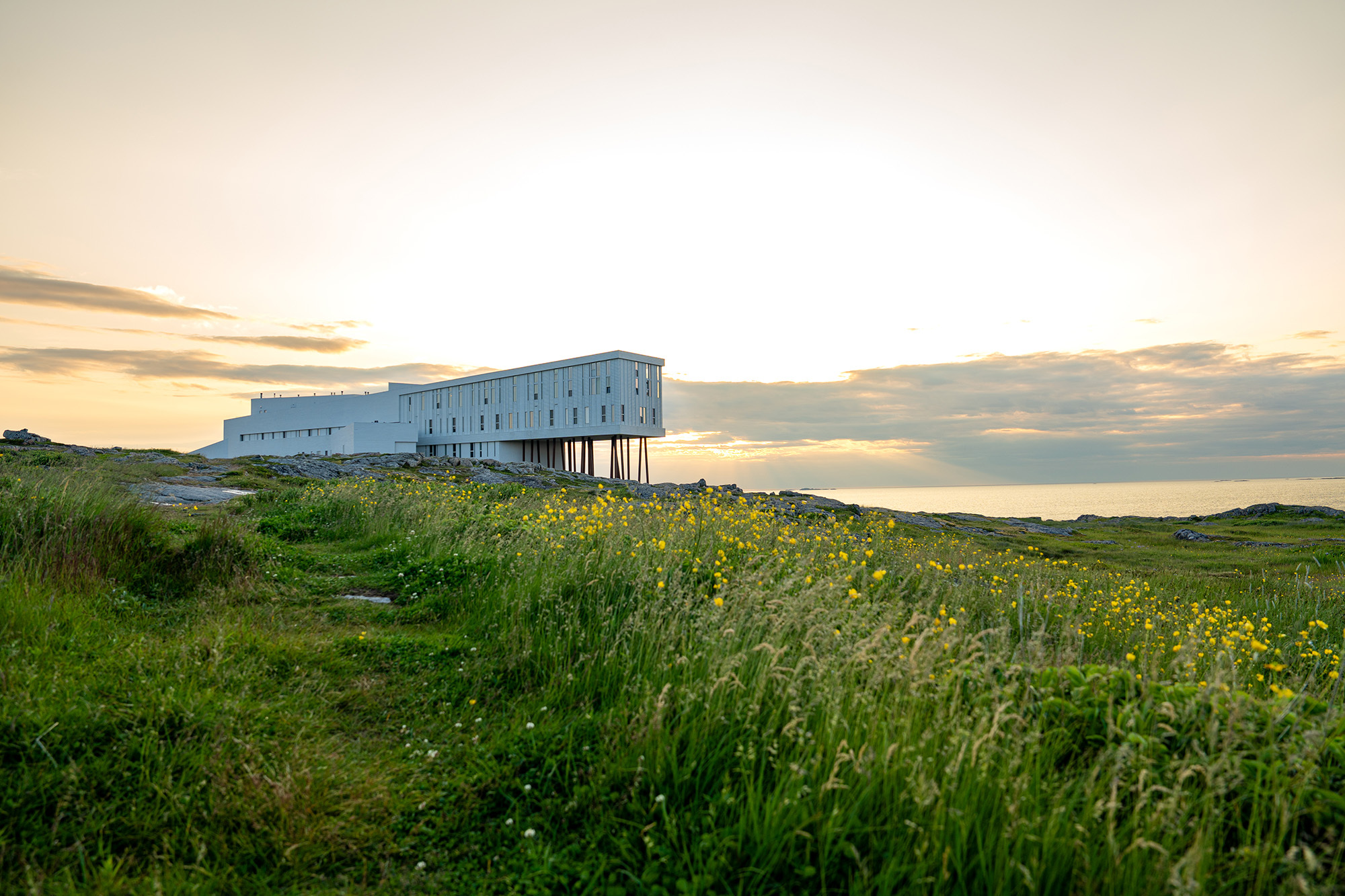
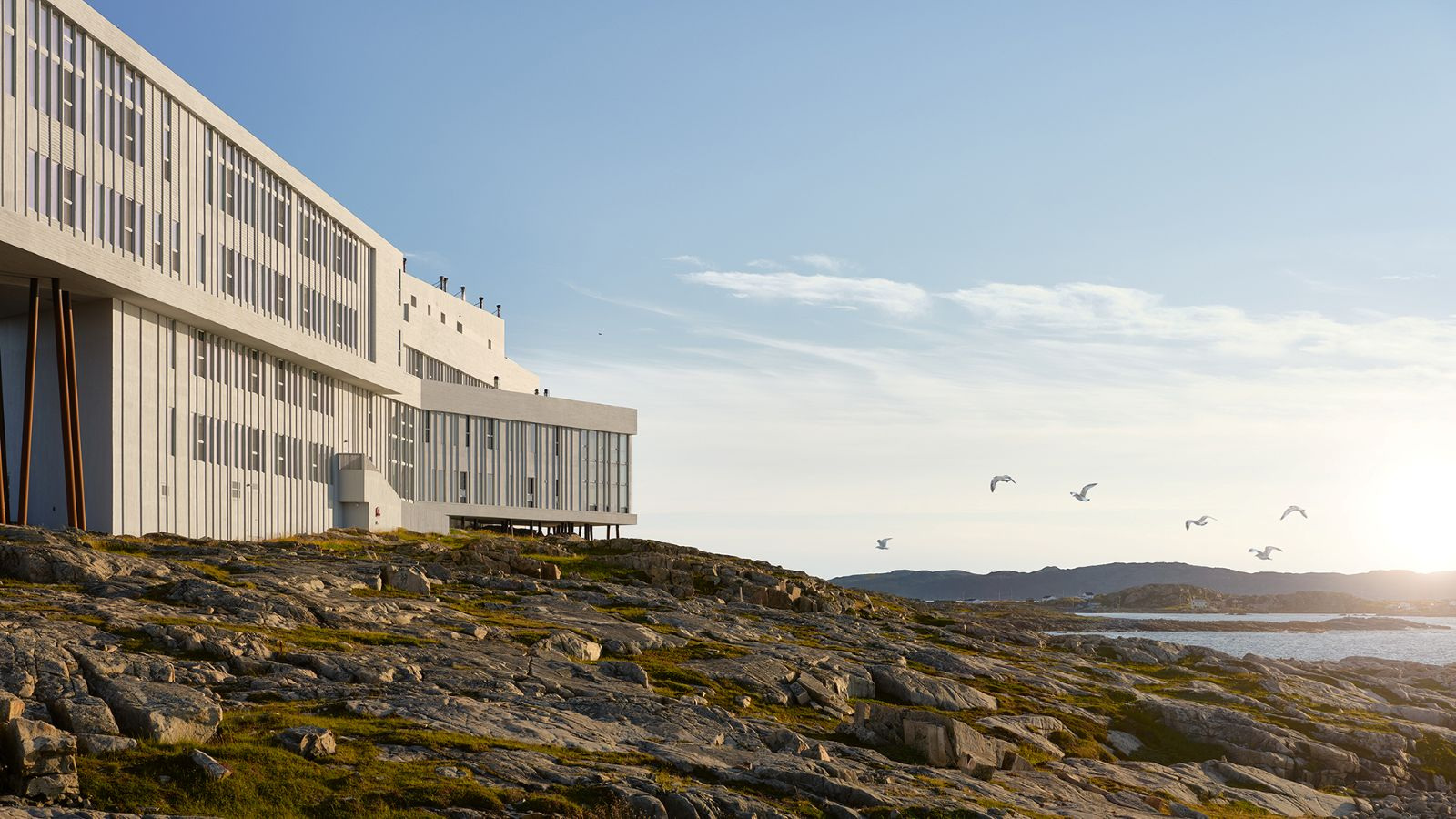
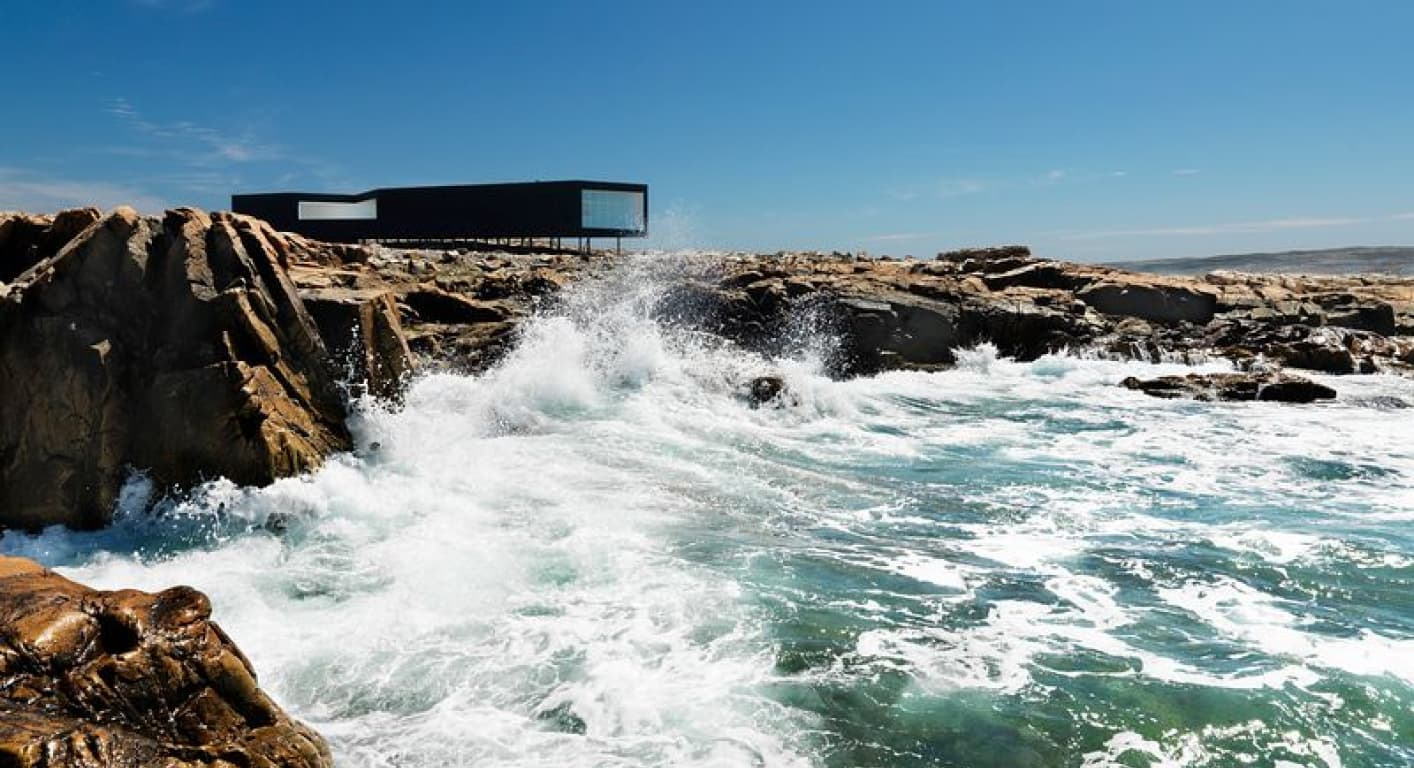
Fogo Island Inn is often reduced to a striking silhouette: a long white building raised above a rocky Atlantic shore. The more useful question is what happens around it. A journey here depends on the relationship between an island’s seasonal life, a hotel’s actual operating calendar and the time allowed to reach both. The architecture makes an extraordinary invitation; the itinerary determines whether a traveller can accept it on the right terms.
Two calendars, one journey
The Inn’s current FAQ describes a seasonal operation, typically from 1 April to 1 November, with exact dates and availability to be checked in its booking calendar. That matters because descriptions of Fogo Island’s winter landscape do not establish that the Inn is open for a winter stay. A snow scene can be an accurate image of the place and still be the wrong basis for a reservation.
The distinction changes how to read a destination website. Separate the natural calendar, the visitor’s preferred experience and the accommodation’s confirmed dates. Their overlap is the relevant travel window. There is little value in naming an objectively best month without first knowing whether the traveller wants long days outdoors, autumn colour, time with makers or the possibility of seeing ice offshore.
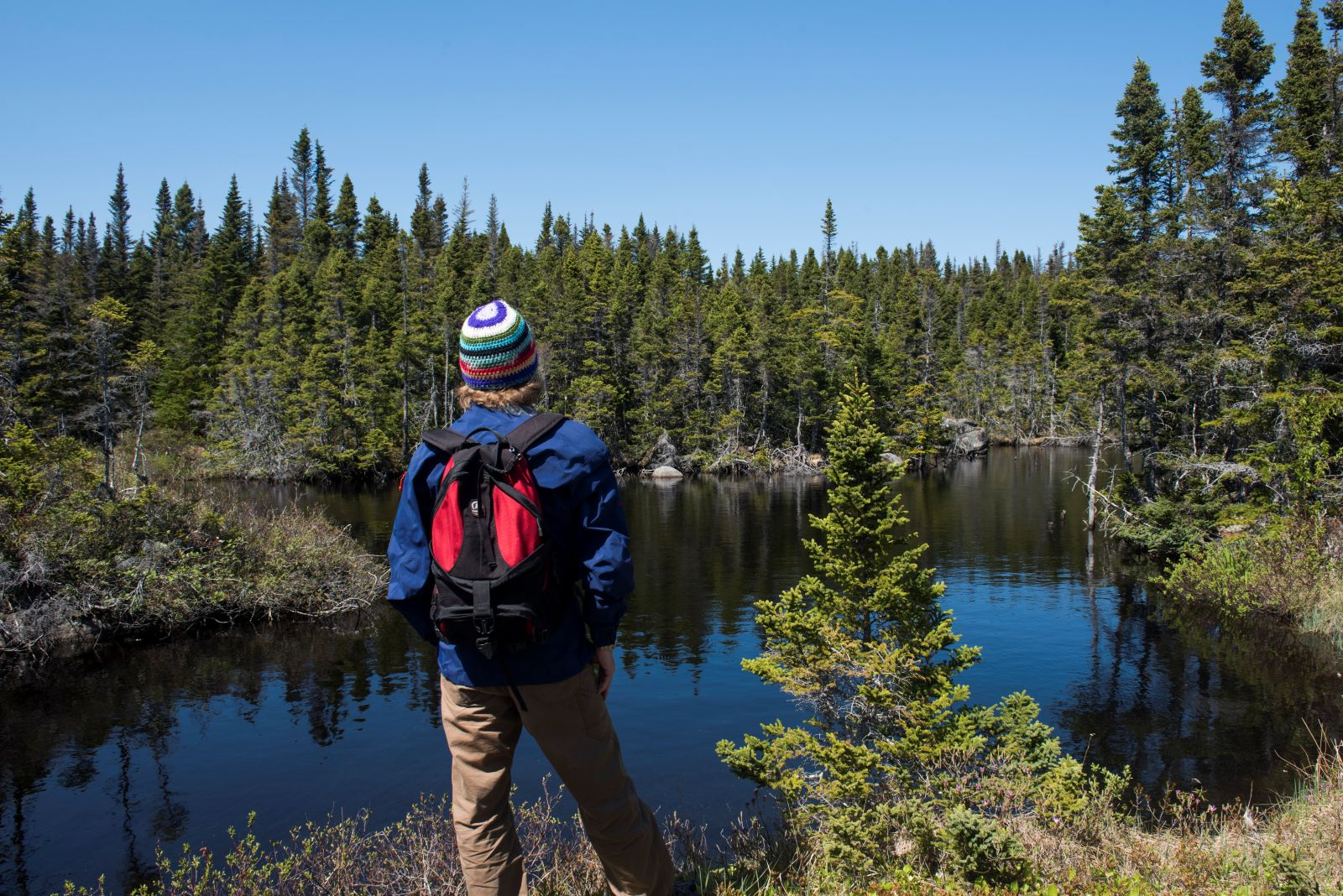
The Inn’s seasonal descriptions are invitations, not guarantees. Wildlife, floating ice, sky conditions and weather remain variable. A good itinerary should still feel worthwhile if its most photogenic possibility fails to appear. Here, architecture, local craft and the view from a room offer a stronger foundation than a single anticipated sighting.
The ocean is the common room
The official accommodation record lists 29 rooms and suites, with the Atlantic as the shared orientation. It also distinguishes floors and particular configurations: Newfoundland and Labrador rooms, loft suites, and family suites with different arrangements and outlook descriptions. These are useful distinctions within an otherwise coherent building. An ocean-facing hotel does not make every room interchangeable.
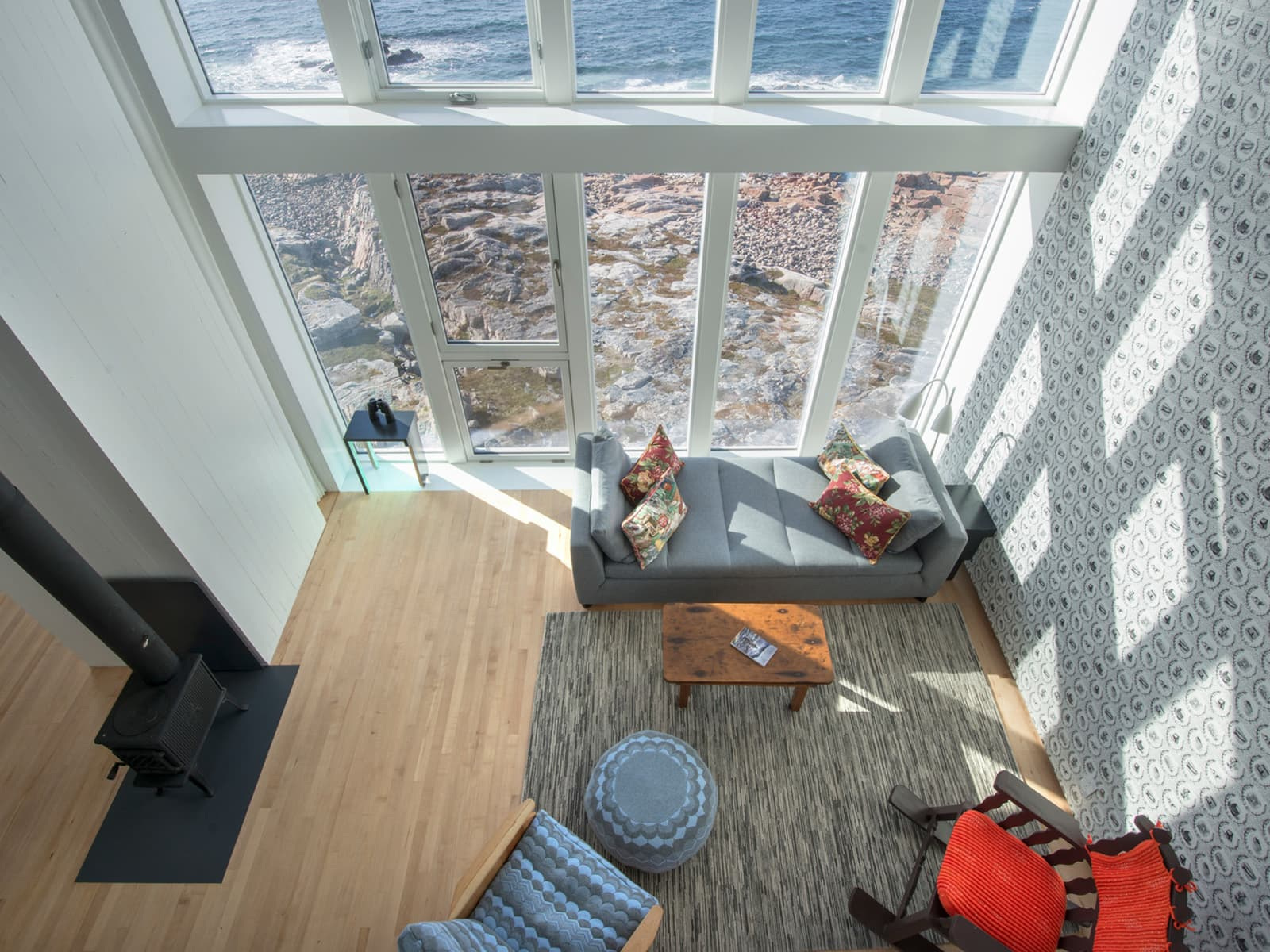
In the published interior photography, the view is framed by domestic-scale furniture, textiles and window divisions. Chairs have somewhere to stand; a quilt has visual weight; the horizon enters a room already equipped for ordinary time. The attraction is less an empty glass box than the meeting of a large landscape with objects close enough to touch. This is an observation of the official images, not a report from a stay.
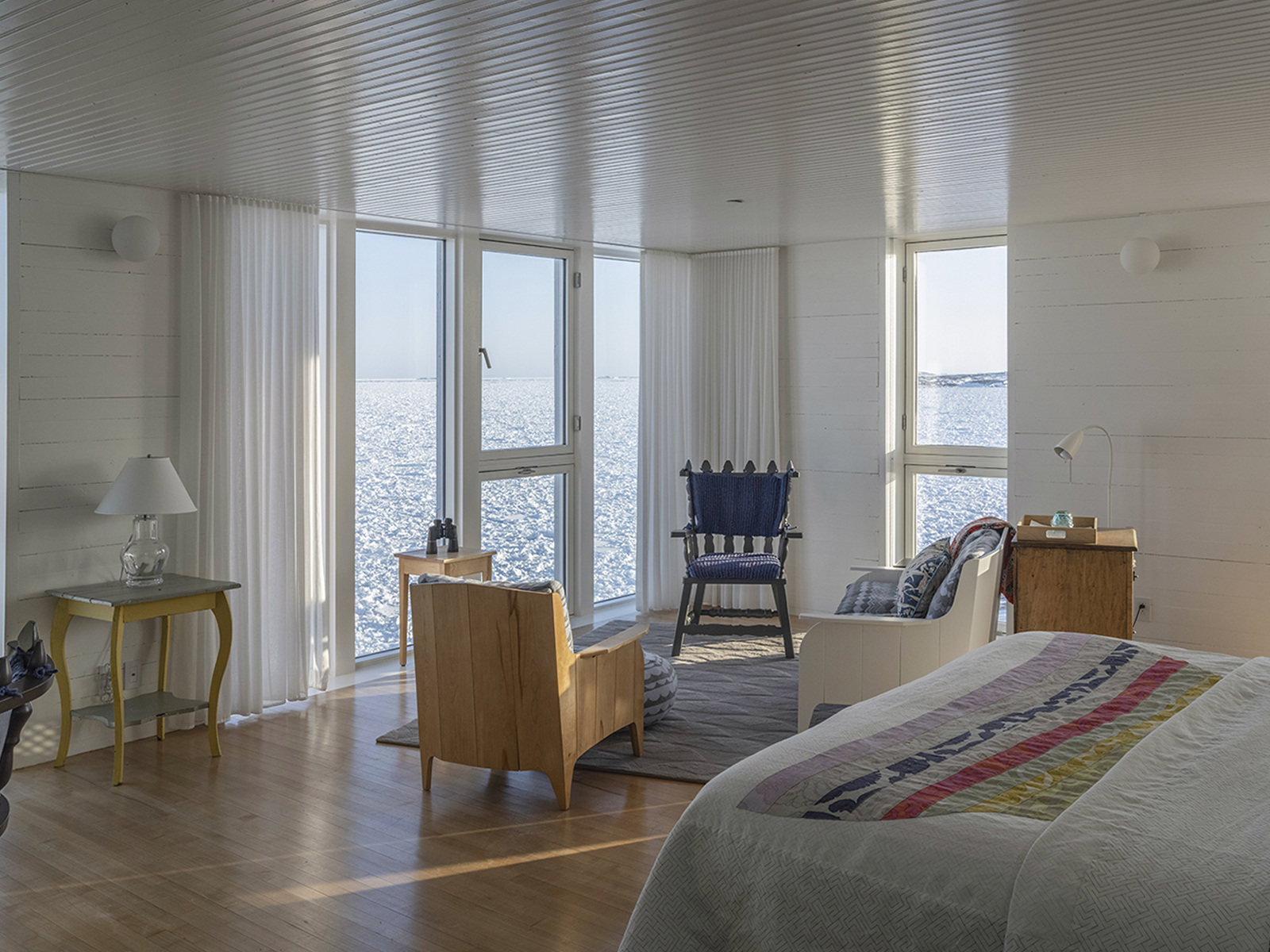
Room selection should start with the way a party will occupy that setting. Ask about beds, internal levels, bathroom access and the exact outlook of the proposed category. A family loft and a room on a lower floor can answer different needs even when both belong to the same architectural idea. A published photograph represents its identified setting, not every room available on the requested dates.
Arrival deserves its own day
The Inn identifies Gander and St John’s as Newfoundland gateways. Its FAQ gives indicative onward stages from Gander via the Farewell ferry terminal, followed by the crossing to Fogo Island. Those separate stages should remain separate in a plan. Adding published drive and crossing estimates does not produce a reliable door-to-door arrival time: flight connections, ferry schedules, waiting and the final transfer still matter.
The practical approach is to work backwards from a confirmed island arrival with the Inn’s itinerary advisors. Establish the flight, ground connection, ferry arrangement and who monitors disruption. For an air charter or helicopter proposal, ask for the actual routing, luggage conditions, weather alternatives and price. The existence of an arrangement service is not evidence that any particular connection is available.
An unhurried arrival also protects the first evening. A late itinerary with no recovery space can turn a remote setting into a sequence of missed appointments. Leave the arrival meal and any activity flexible until the transport chain is agreed. The additional margin is part of choosing this kind of destination, rather than an administrative inconvenience to remove from the holiday.
A stay that belongs to the island
The Inn describes itself as a Shorefast social enterprise and says its operating surpluses are reinvested in the island community. That is an organisational statement, distinct from a measured claim about the impact of an individual booking. For a reader, its immediate relevance is the relationship between the hotel and the people, workshops and cultural life around it.
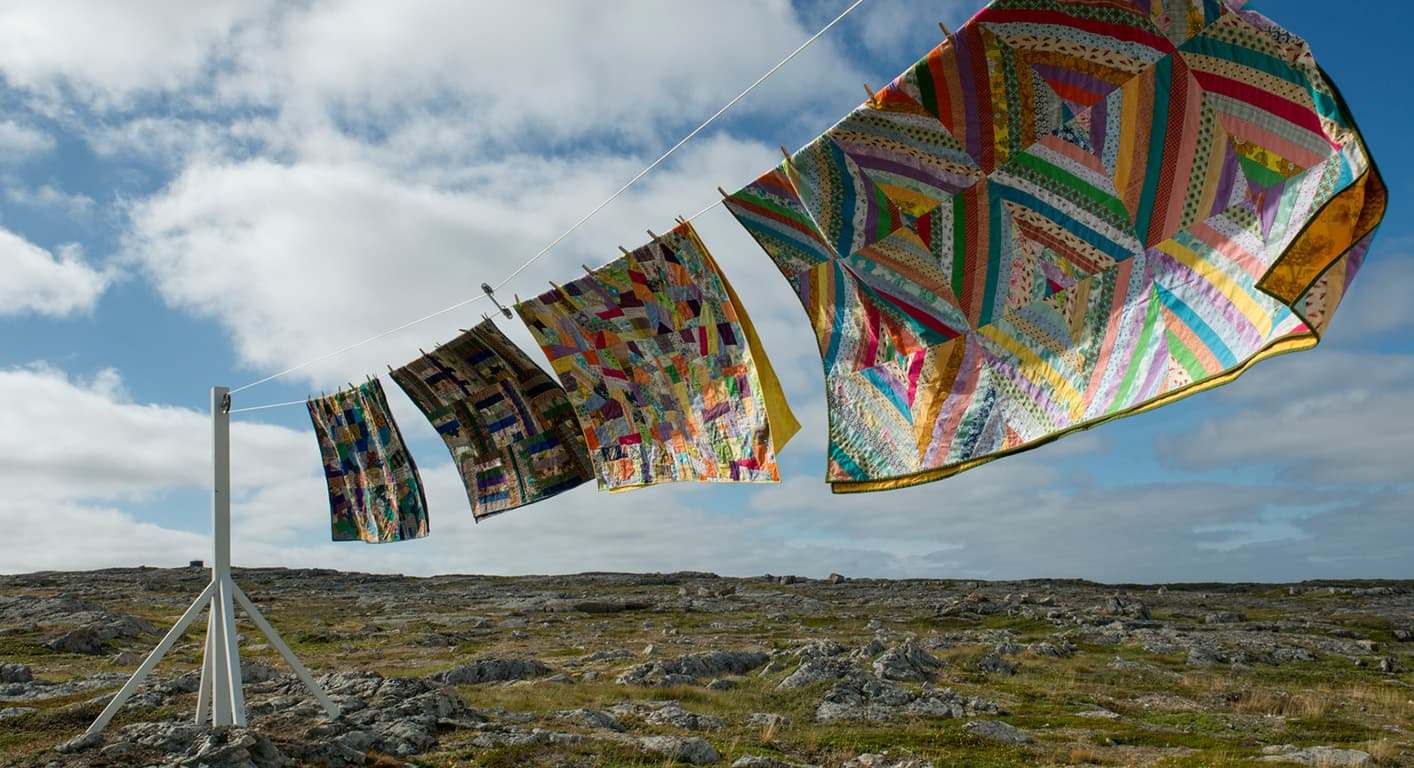
The textiles shown in the official imagery help make that relationship visible. A quilt is both a useful room object and a way for local making to enter the traveller’s attention. It invites questions about materials, authorship and continuing craft rather than treating the island as scenery viewed exclusively from the building. Those conversations deserve space in a schedule alongside walks and time by the water.
The current FAQ describes full-board stays, excluding alcohol, and most land-based excursions, while the rooms page uses broader all-inclusive language. Readers should rely on a written, dated reservation proposal for exact inclusions. Clarify boat-based activities, private arrangements, transfers and any exceptions individually. A generous hospitality model still needs a precise booking agreement; the terms should support the experience rather than require interpretation during it.
The planning notebook
The following is a decision framework, not a forecast or a live quotation. Confirm the actual operating dates and arrangements before committing connecting travel. The current FAQ specifies a three-night minimum; longer or special requests need their own confirmation.
| Decision | What the official record establishes | What to settle for your stay |
|---|---|---|
| Travel window | The FAQ describes typical April–November operation | Exact open dates and room availability |
| Seasonal interest | Activities and landscapes vary through the year | An enjoyable alternative if weather changes |
| Room choice | Categories differ by floor and configuration | Beds, levels, bathroom access and actual outlook |
| Arrival | Mainland, ground and island connections are distinct | The full chain, waiting time and disruption contact |
| Inclusions | Full board and many activities are described | Written exceptions, transfers and private experiences |
| Party needs | The FAQ invites direct discussion of accessibility | The specific route and room arrangements required |
Avoid turning this notebook into a tightly timed programme. A useful plan reserves what must be fixed and leaves room for what makes the place particular. Agree the transport and accommodation first; then choose a few experiences that reward local knowledge. The remaining time should be allowed to feel like a stay, rather than a list of deliverables.
The Luxe Digital view
The strongest reason to travel to Fogo Island Inn is the relationship between a remarkable building and the island life it allows a guest to notice. That relationship needs time and a suitable travel window. It does not become more convincing through an exaggerated promise of icebergs, aurora or perfect solitude.
For a design-minded traveller, the enduring image may be the chair beside the window as much as the building on the rocks. Choose the room and the season with equal care, and make the arrival realistic. The architecture can then be read as somewhere to live for a few days, with an island beyond it, rather than a landmark briefly collected between connections.
The strongest reason to travel to Fogo Island Inn is the relationship between a remarkable building and the island life it allows a guest to notice.
Sources & credits
Sources and methodology
Independent travel and accommodation analysis of the named official records and imagery, checked on 15 October 2026. Operating details retain their date of verification. Images show the identified configurations. Original visual and practical analysis of identified official property records and photography. No stay, boat passage, flight, tasting, treatment, interview or service test claimed. Seasonal images do not establish conditions or availability for future dates. Exact access, opening, inclusions, room configuration and activity arrangements require date-specific confirmation.