At Cheval Blanc Seychelles, choosing a villa begins with a position in the landscape. The beach and hillside arrangements meet the same bay in different ways: one places the shore close to daily movement, while the other lifts the terrace above the vegetation. Jean-Michel Gathy’s architecture gives those positions distinct forms, with shade, planting and water mediating the passage between room and sea.
The bay establishes the first scale
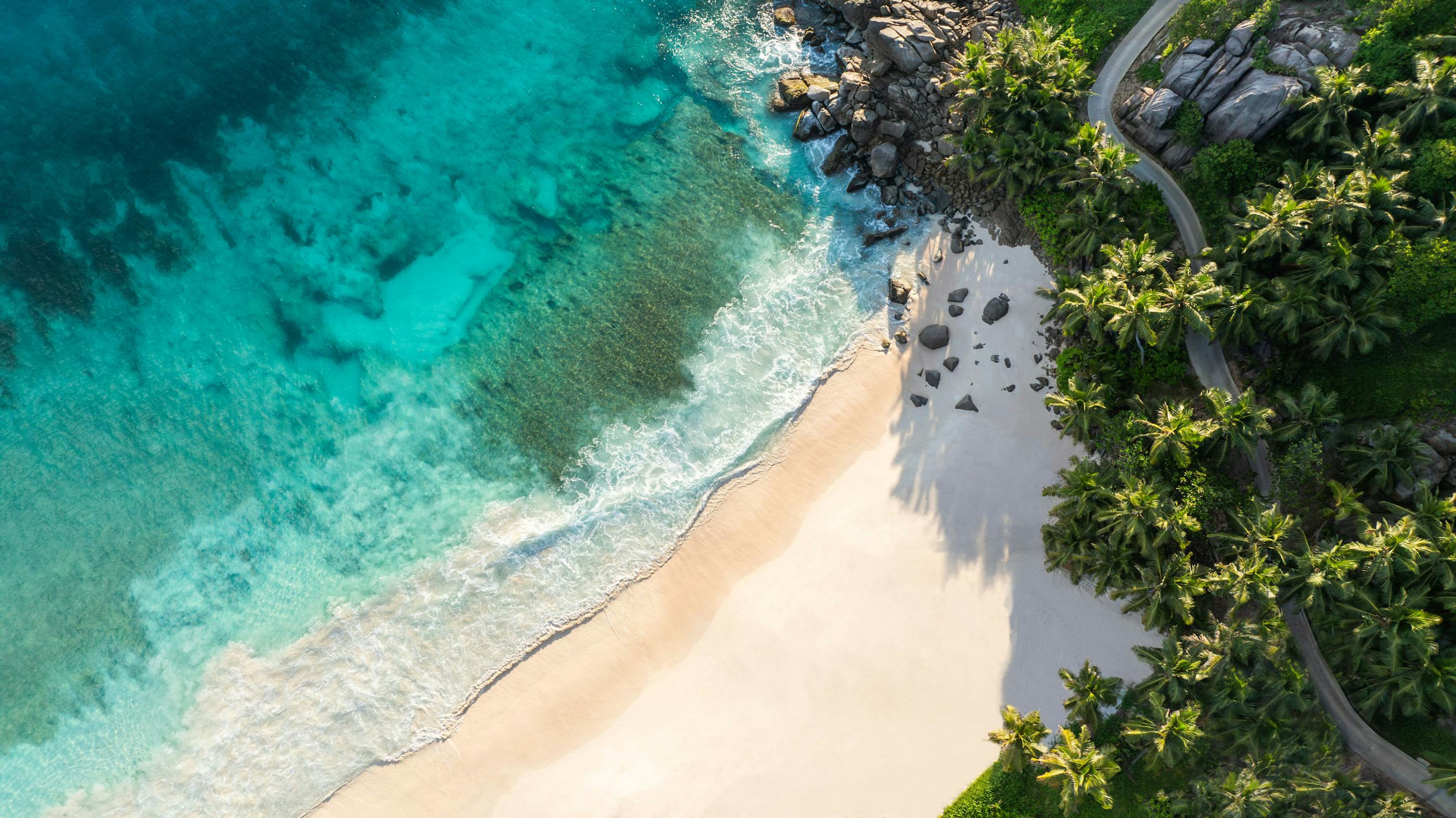
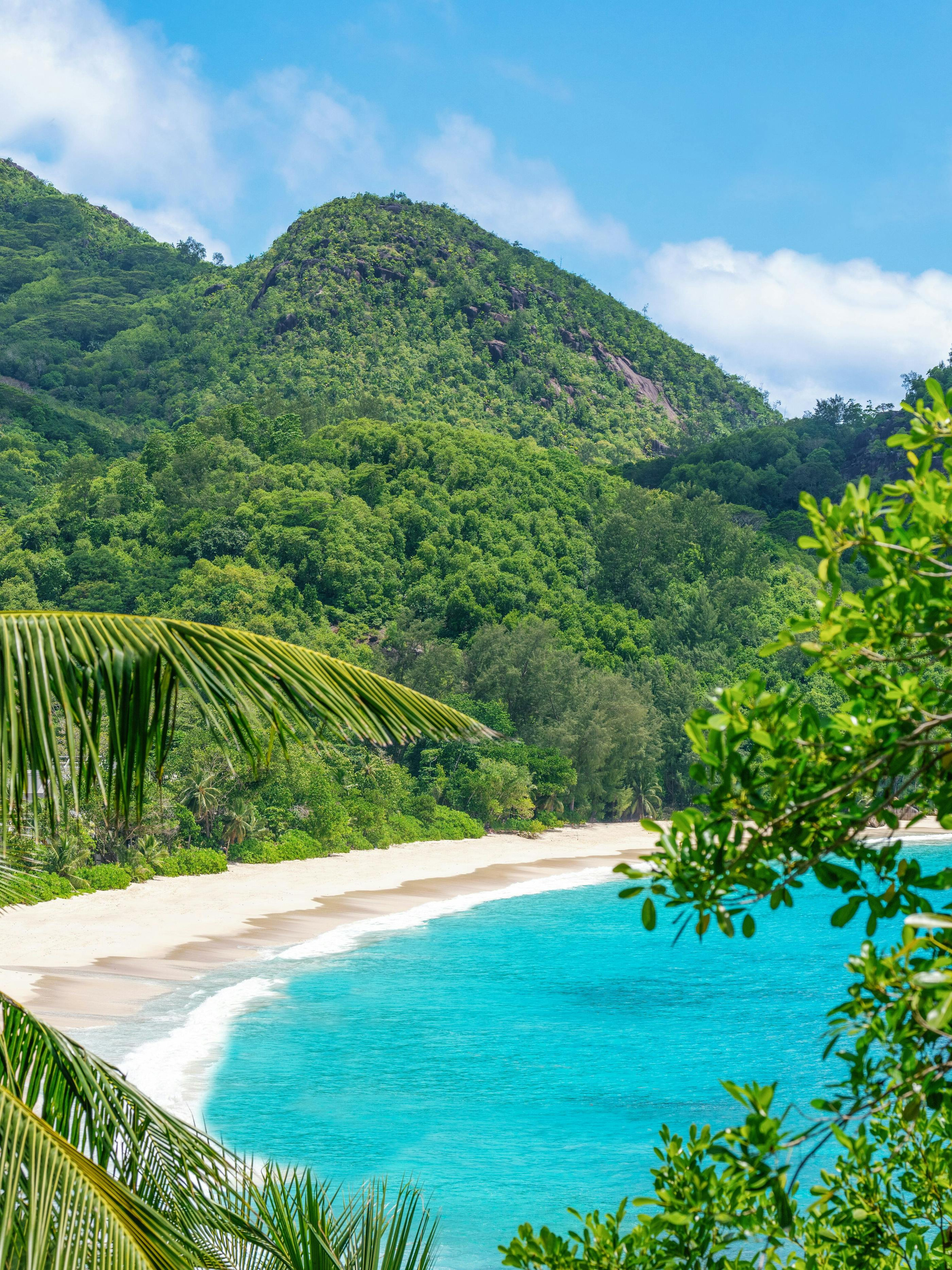
The aerial view of Anse Intendance makes the property’s setting understandable before individual villas appear. Beach, granite and vegetation form a much larger composition than any one room. The photograph explains why location within the estate is a meaningful part of an accommodation choice.
Cheval Blanc’s current account identifies 52 villas and credits architect Jean-Michel Gathy. It describes the architecture in relation to Creole traditions and the surrounding natural setting. The result is best considered through the actual forms visible in the imagery: a gabled beach volume, a framed garden opening and terraces held at different heights above the shore.
The architecture does not offer a single relationship with the view. Some settings are more closely connected to the beach; others use elevation to make the horizon dominant. A guest can prefer either, but the preference should begin with that physical distinction rather than a general impression that every villa is interchangeable.
The beach villa has a garden between its rooms and the sea
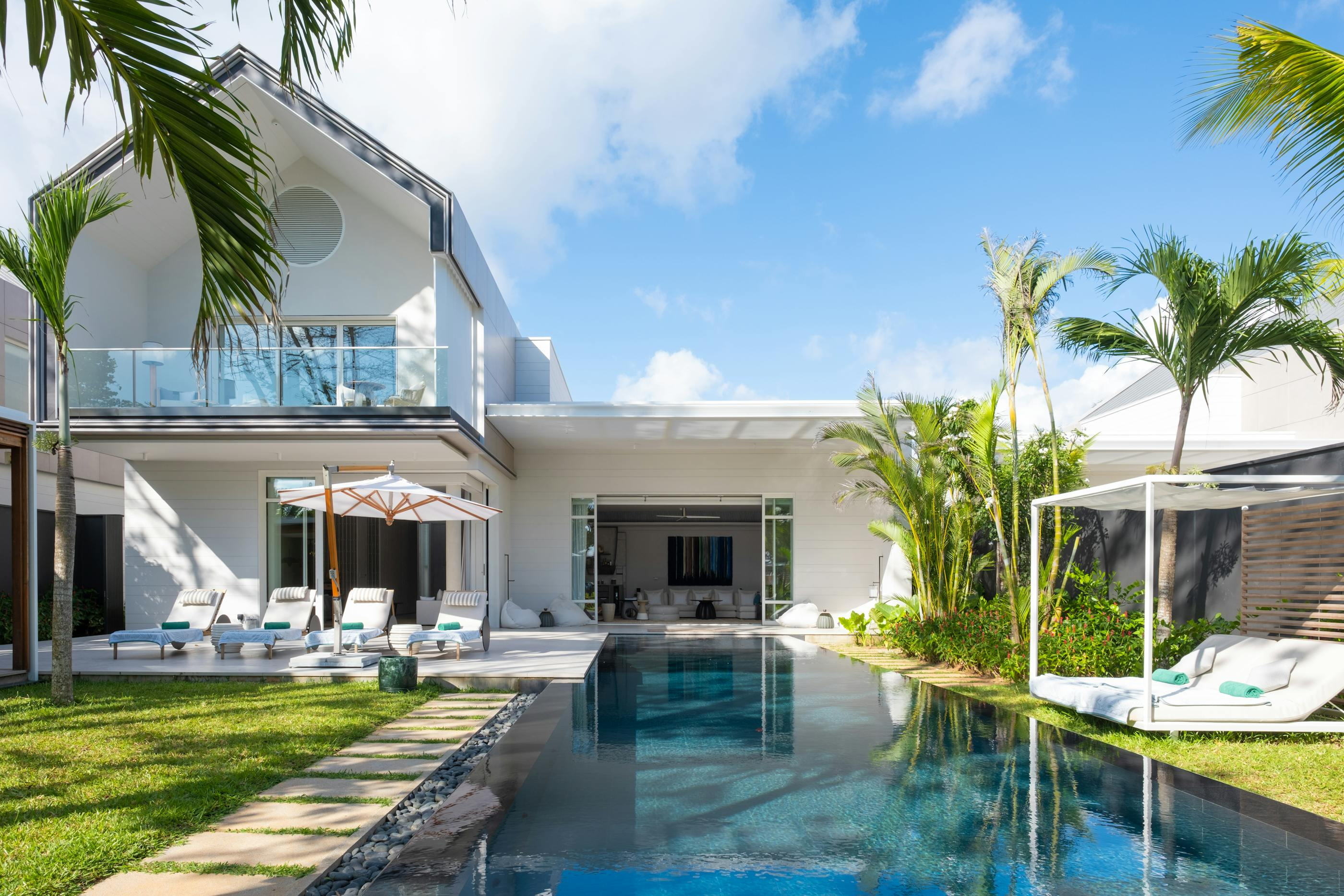
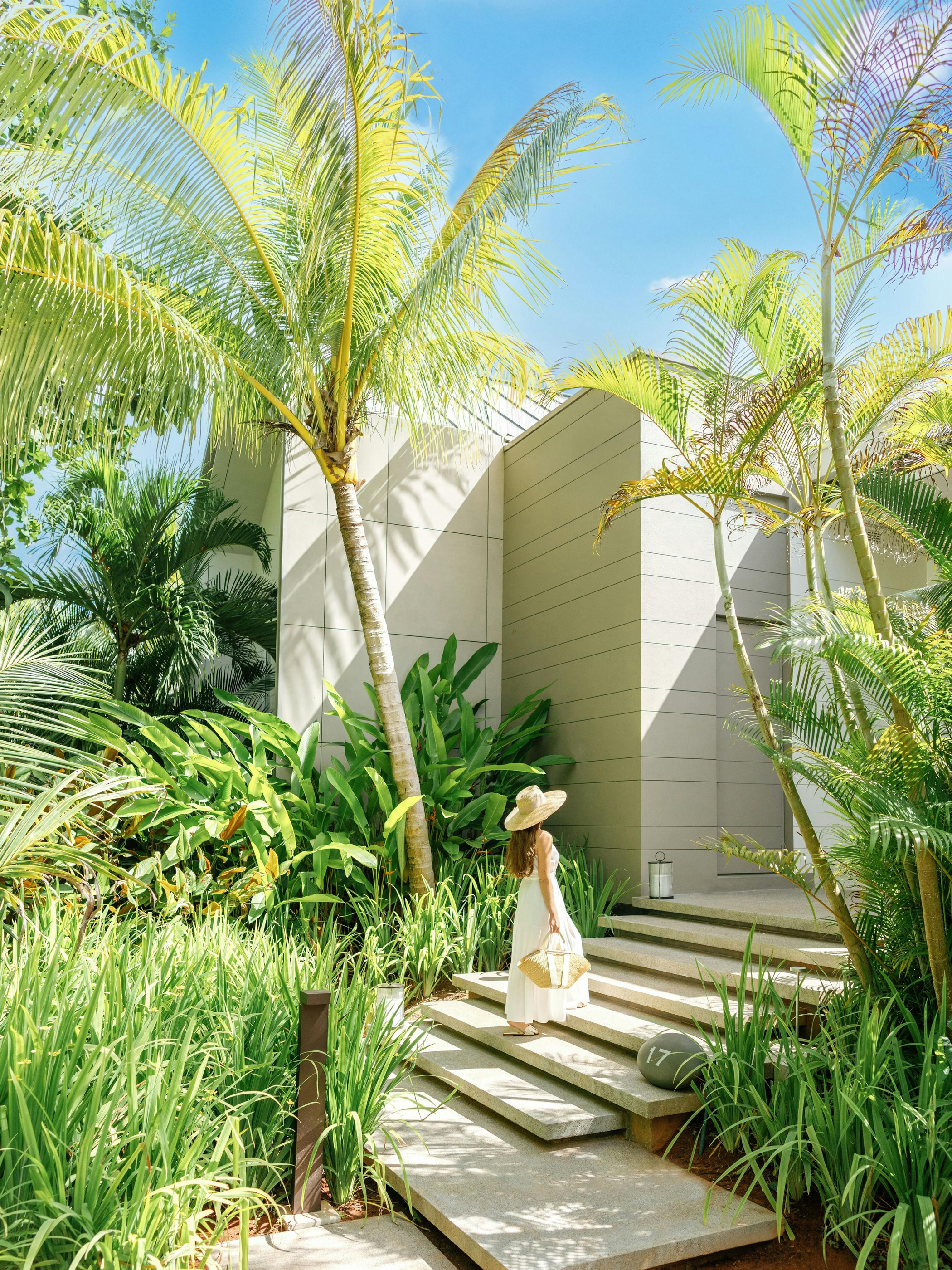
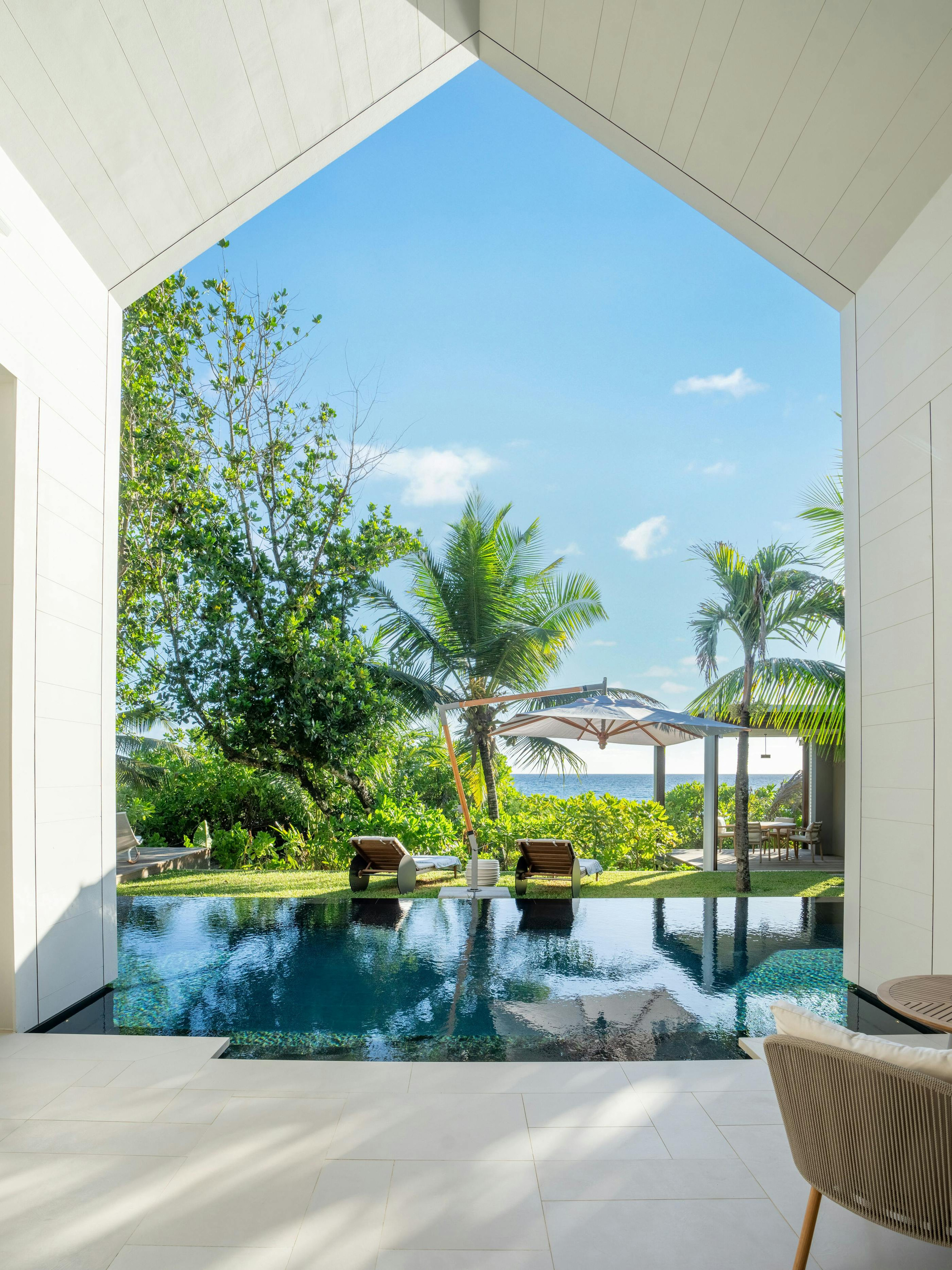
In the official beach-villa imagery, the path towards the shore is layered. A room opens towards water, planting and outdoor furniture, with the sea beyond. The villa’s immediate landscape becomes part of the accommodation rather than simply a strip of ground separating it from the beach.
The gabled form gives the interior a recognisable centre. A broad opening then directs attention outwards, establishing a clear relationship between shelter and exposure. The pool sits within that sequence as another surface catching the light, distinct from the moving water further away.
This is an important distinction for a stay. A beach setting can support easy changes between indoors and outdoors, but the actual path, thresholds and privacy depend on the selected villa. The sensible question is how that particular accommodation connects its sleeping room, terrace and shore, not whether a single hero image looks sufficiently tropical.
The hillside changes the horizon
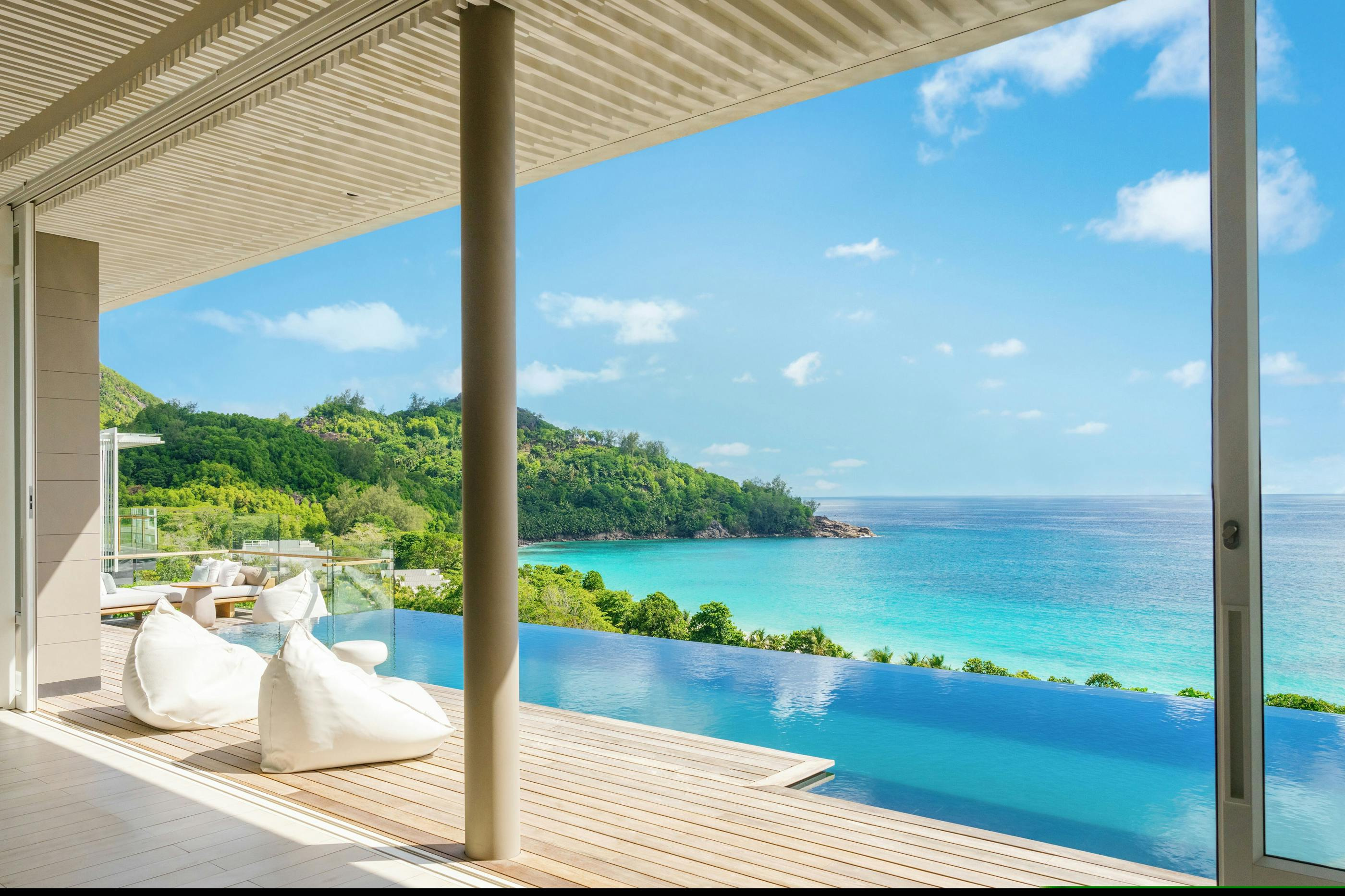
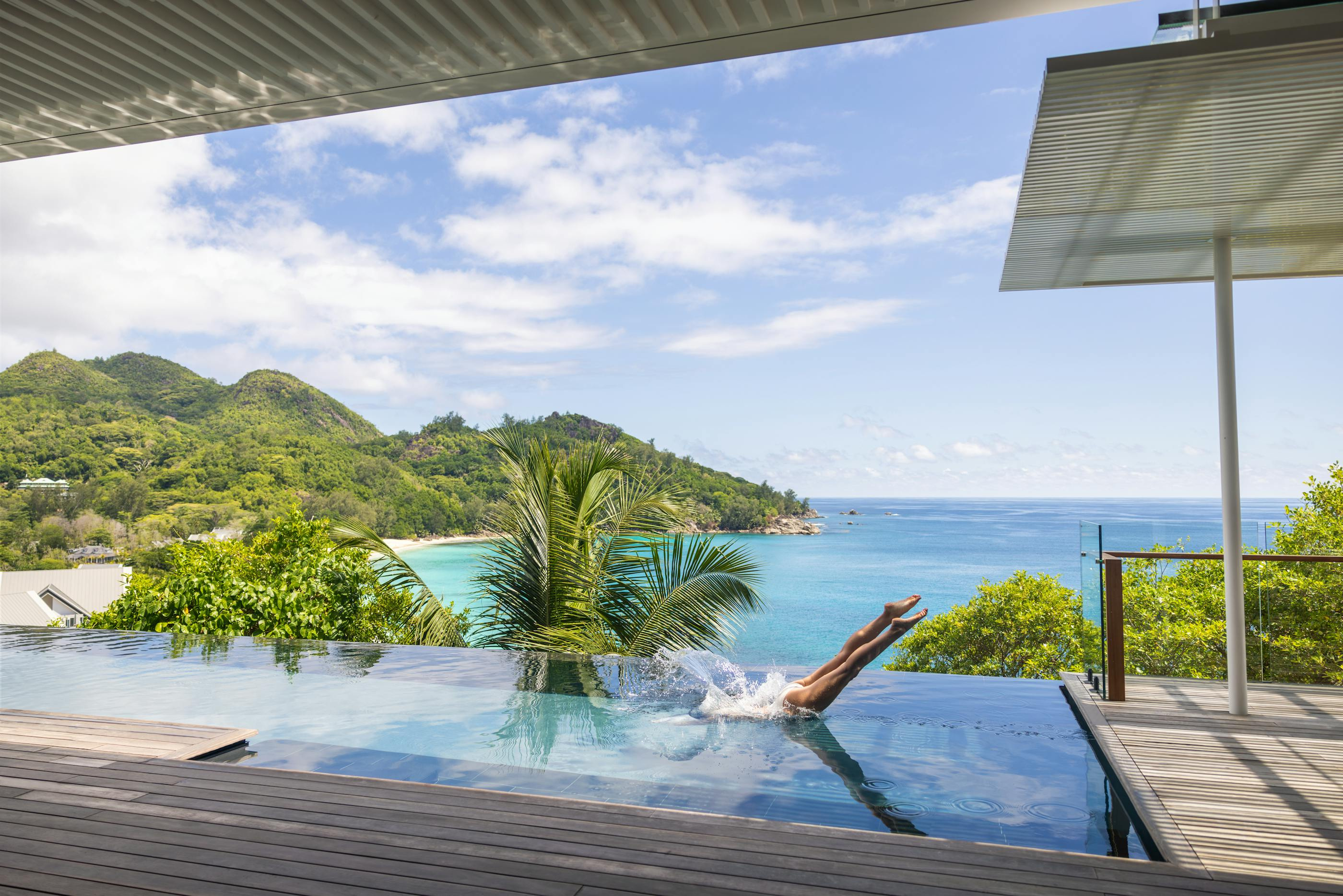
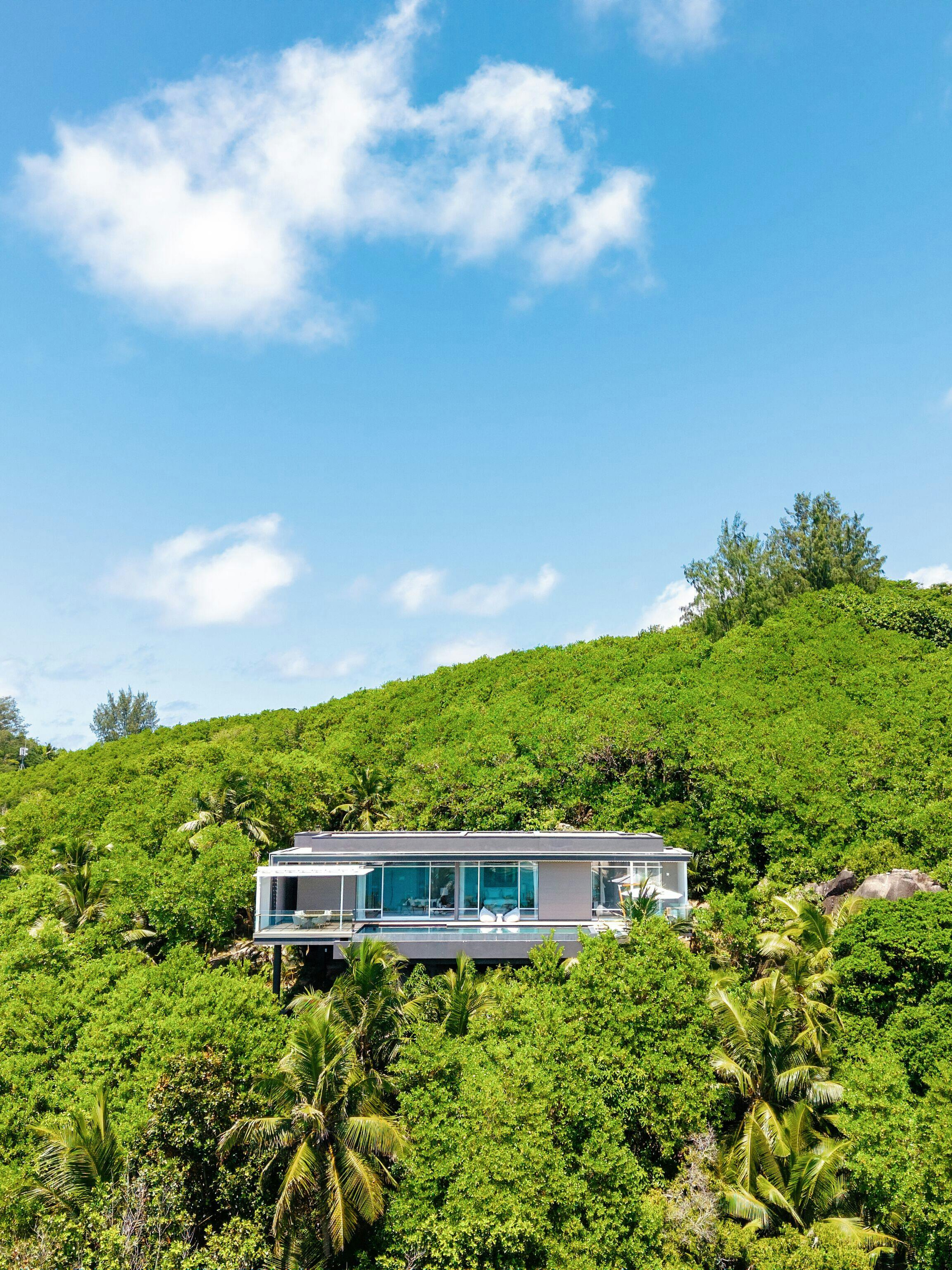
The elevated terrace photograph provides a different account. The pool edge and roof frame a broad sweep of bay, while the vegetation becomes a foreground layer beneath the view. The architecture’s position is more apparent than its full outline.
That arrangement changes how the outdoor room may be occupied. A terrace can become a place from which to remain above the wider landscape, with dining or sitting organised around the horizon. The relationship is distinct from a beach villa where movement towards the shore is a more immediate part of the experience.
Elevation also gives practical questions more weight. Access between villa and shared facilities, the route to the beach and the detailed arrangement of steps should be confirmed for the exact category. A photograph can explain the appeal of a position while leaving those operational details to the property’s current accommodation information.
Shade gives the terrace its usable depth
The strongest architectural images show more than open sky and water. Roof overhangs, covered seating and the transition through a doorway give the terrace depth. They make it possible to imagine different places to sit as light moves across the day.
A view through a beach-villa opening is particularly revealing. The frame of the building remains visible, so the eye can understand where the sheltered room ends and the garden begins. The composition offers several distances at once: interior edge, pool, planting and horizon.
That is a more substantial form of outdoor living than placing furniture in an exposed panorama. Shade and enclosure give the view a usable setting. Their exact effect will depend on orientation and conditions, but their presence can already be read in the architecture and discussed when selecting a villa.
Choosing between positions
The current accommodation overview distinguishes beach and hillside categories. Those labels are useful beginnings, while the detail page for the selected category remains the place to confirm bedrooms, guest capacity and the configuration being offered for particular dates.
| Position or feature | What it changes in the design | What to establish before booking |
|---|---|---|
| Beach setting | Brings garden and shore into a closer sequence | The actual route from the villa to the beach |
| Hillside setting | Makes elevation and the bay’s outline more prominent | Steps, internal transfers and access arrangements |
| Covered terrace | Adds a sheltered outdoor room | Orientation and the areas provided for sitting or dining |
| Private pool | Creates another edge between building and landscape | Pool configuration and suitability for the party |
| Bedroom arrangement | Determines how the villa is shared | Exact bedroom count, occupancy and privacy relationships |
For a family or a group, relationships between rooms may be more important than a total area. For a couple, the position of a single sitting place may carry more weight. The value of the published imagery is that it can prompt those precise questions before a category is chosen.
The Luxe Digital view
Cheval Blanc Seychelles is most interesting as a set of different relationships with one landscape. The bay gives the property a strong common setting, but the architecture makes room for distinct ways of occupying it. A beach villa and an elevated terrace can share a visual language while offering different patterns of movement and attention.
The most persuasive details lie at the thresholds. A gable, a shaded opening, a planted path and a pool edge determine how the guest passes from room to view. They turn a broad destination image into a more intimate architectural experience.
The better accommodation choice therefore starts with a simple question: where would you like to spend an ordinary hour? Close to the garden and shore, or held above the bay with the horizon in front of you? The answer gives the subsequent questions about bedrooms, access and outdoor space a clear purpose.
Cheval Blanc Seychelles is most interesting as a set of different relationships with one landscape.
Sources & credits
Sources and methodology
Independent design and reference analysis of the named official records and imagery, checked on 15 October 2026. Launch specifications and later product records retain their own dates and references. Images show the identified configurations. This is an accommodation and architecture study, without a claimed visit. The current category record remains the basis for a booking.