



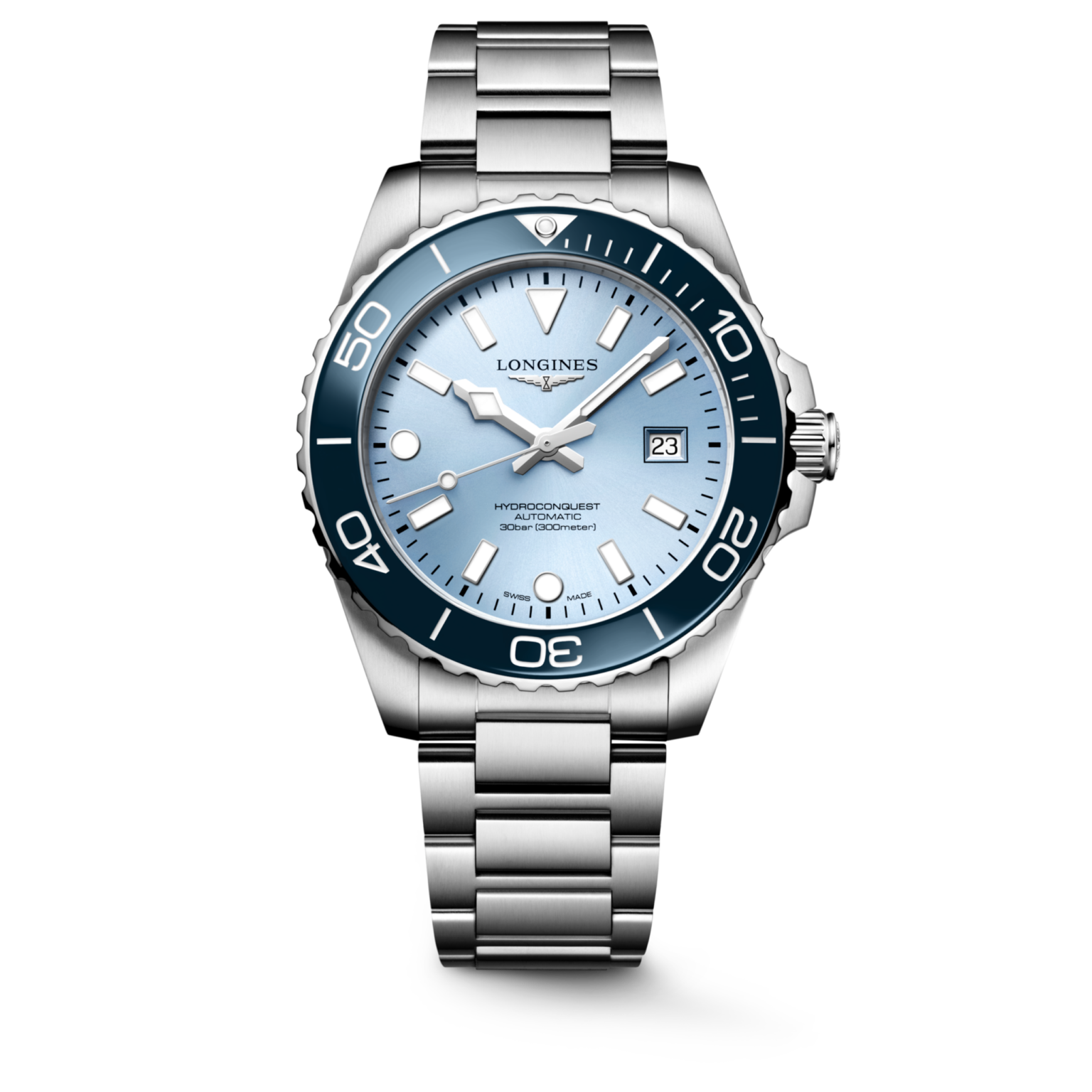
| Founded | 1832 — Saint-Imier, Switzerland |
|---|---|
| Founder(s) | Auguste Agassiz, Ernest Francillon |
| Headquarters | Saint-Imier, Switzerland |
| Parent Group | The Swatch Group |
| Known For | Pilot watches, chronographs, equestrian timing |
| Price Range | £800 to £25,000, 2024 |
| Revenue / Production | CHF 1.11 billion (2023) |
| Official Website | longines.com |
Compagnie des Montres Longines, Francillon S.A., commonly known as Longines, is a Swiss watch manufacturer based in Saint-Imier, Switzerland. Founded in 1832, the company has established a reputation for producing timepieces that blend elegance, tradition, and performance, with a strong historical association with aviation, equestrian sports, and exploration.
History and Founding
Longines’ origins trace back to 1832 when Auguste Agassiz, a watch trader, joined Raiguel Jeune, a watchmaking establishment in Saint-Imier, Switzerland (Wikipedia). The company initially operated under the name Agassiz & Compagnie. Agassiz’s business acumen and focus on établissage, a system where watch components were manufactured by outworkers and then assembled in-house, laid the foundation for future growth.
In the 1850s, Ernest Francillon, Agassiz’s nephew, took over the business. Recognising the potential of industrialising watch production, Francillon sought to consolidate the various stages of watchmaking under one roof. In 1866, he acquired a plot of land known locally as “Les Longines” (the long meadows) near the river Suze and established a factory. This marked a pivotal moment, as the company officially registered the Longines name in 1867 (Wikipedia). The winged hourglass logo, also registered at this time, is the oldest registered trademark for a watchmaker still in use (Longines).
Francillon’s vision of mechanised production was realised with the introduction of machines that automated many aspects of watch component manufacturing. This innovation allowed Longines to produce watches on a larger scale and with greater precision, setting the stage for its expansion into international markets.
Historical Timeline
| Year | Event |
|---|---|
| 1832 | Auguste Agassiz joins Raiguel Jeune, forming Agassiz & Compagnie. |
| 1866 | Ernest Francillon establishes the Longines factory in Saint-Imier. |
| 1867 | The Longines name and winged hourglass logo are officially registered. |
| 1878 | Longines develops its first chronograph movement, Calibre 20A. |
| 1889 | Longines registers a patent for a mechanism that synchronises time for all watches at the Universal Exposition in Paris. |
| 1912 | Longines serves as the official timekeeper for the first international equestrian competition in Portugal. |
| 1919 | Longines becomes the official supplier of the International Aeronautical Federation. |
| 1927 | Charles Lindbergh flies solo across the Atlantic, navigating with a Longines timepiece. |
| 1931 | Longines develops the Lindbergh Hour Angle watch in collaboration with Charles Lindbergh. |
| 1945 | Longines introduces its first self-winding movement, Calibre 22A. |
| 1954 | Longines patents its first electronic quartz clock. |
| 1960 | The company develops the thinnest electromagnetic watch. |
| 1969 | Longines presents the Ultra-Quartz, the first quartz wristwatch. |
| 1972 | Longines becomes the official timekeeper for the Olympic Games in Munich. |
| 1983 | Longines becomes part of the Swatch Group. |
| 2009 | The Longines Museum is inaugurated at the company’s headquarters in Saint-Imier. |
| 2012 | Longines celebrates its 180th anniversary. |
| 2023 | Longines reports revenue of CHF 1.11 billion (Wikipedia). |
Key Collections and Iconic References
Longines boasts a diverse portfolio of collections, each with its distinct character and historical inspiration. These collections cater to a wide range of tastes, from classic dress watches to robust sports models.
-
The Longines Master Collection: This collection embodies Longines’ watchmaking expertise and classic design principles. It features automatic movements, refined dials, and a variety of complications, including chronographs, moon phase indicators, and GMT functions (Longines). The Master Collection is characterised by its understated elegance and versatility, making it suitable for both formal and everyday wear.
-
Longines Spirit: The Spirit collection pays homage to the pioneering spirit of aviators and explorers who relied on Longines timepieces during their adventures (Longines). These watches feature robust construction, legible dials, and COSC-certified chronometer movements. The Spirit collection includes models with GMT functions, chronographs, and flyback complications, appealing to those who appreciate both functionality and historical significance. The Longines Spirit Zulu Time is a notable model within this collection, featuring a distinctive GMT function that allows the wearer to track multiple time zones.
-
Longines Heritage Collection: This collection revives iconic designs from Longines’ rich history, offering modern interpretations of vintage timepieces (Longines). The Heritage collection includes models inspired by pilot watches, dive watches, and dress watches from the 20th century. These watches often feature vintage-inspired details such as domed crystals, aged dials, and retro logos. The Longines Legend Diver, a re-edition of a 1960s dive watch, is a particularly popular model within this collection.
-
Longines Conquest: The Conquest collection represents Longines’ commitment to sports timekeeping and performance (Longines). These watches are designed for active lifestyles and feature robust construction, water resistance, and a range of functions suitable for various sports. The Conquest collection includes models with chronographs, GMT functions, and dive watch features. The HydroConquest line, a sub-collection within Conquest, is specifically designed for diving enthusiasts.
-
Longines DolceVita: The DolceVita collection embodies Italian elegance and sophistication (Longines). These watches feature rectangular cases, clean lines, and a variety of dial options, often adorned with diamonds. The DolceVita collection is designed for women who appreciate timeless style and refined aesthetics. The Mini DolceVita is a smaller, more delicate version of the classic DolceVita design.
-
Longines Elegance Collection: This collection encompasses various models that showcase Longines’ dedication to refined design and timeless appeal. Models like the Flagship Classic and La Grande Classique de Longines exemplify this commitment, offering understated elegance and versatility (Longines).
Technical Heritage and Innovation
Longines has a long history of technical innovation in watchmaking, marked by numerous patents and groundbreaking achievements.
-
Chronographs: Longines developed its first chronograph movement, Calibre 20A, in 1878 (Longines). This marked the beginning of the company’s association with sports timekeeping. Longines has continued to develop and refine its chronograph movements over the years, producing a wide range of models with various complications and features.
-
Automatic Movements: In 1945, Longines introduced its first self-winding movement, Calibre 22A (Longines). This marked a significant step forward in watchmaking technology, as automatic movements eliminated the need for manual winding. Longines has continued to develop and improve its automatic movements, incorporating advanced features such as silicon balance springs and extended power reserves.
-
Quartz Technology: Longines was at the forefront of quartz technology in the 1950s and 1960s. In 1954, the company patented its first electronic quartz clock (Longines). In 1969, Longines presented the Ultra-Quartz, one of the first quartz wristwatches. These innovations helped to revolutionise the watch industry and paved the way for the widespread adoption of quartz technology.
-
High-Frequency Movements: Longines has also experimented with high-frequency movements, which offer improved accuracy and stability. In 1966, the company introduced the Ultra-Chron, a watch with a high-frequency movement that vibrated at 36,000 beats per hour (Longines). The modern Ultra-Chron collection revives this technology, offering enhanced precision and performance.
Ownership and Corporate Structure
Longines has been part of the Swatch Group since 1983 (Wikipedia). The Swatch Group is the world’s largest watchmaking conglomerate, owning a portfolio of brands that includes Breguet, Omega, Tissot, and many others. As part of the Swatch Group, Longines benefits from access to advanced technology, shared resources, and a global distribution network.
Despite being part of a large corporate group, Longines maintains its own identity and brand values. The company continues to operate from its headquarters in Saint-Imier, Switzerland, and retains its focus on producing high-quality timepieces that blend tradition and innovation.
Key Figures
-
Auguste Agassiz: The founder of Agassiz & Compagnie, the predecessor to Longines. Agassiz’s business acumen and focus on établissage laid the foundation for the company’s future success (Wikipedia).
-
Ernest Francillon: Agassiz’s nephew, who took over the business in the 1850s and transformed it into a modern watch manufacturer. Francillon’s vision of mechanised production and his decision to establish the Longines factory were pivotal moments in the company’s history (Wikipedia).
-
Charles Lindbergh: The famous aviator who collaborated with Longines to develop the Lindbergh Hour Angle watch in 1931. Lindbergh’s transatlantic flight in 1927, during which he used a Longines timepiece for navigation, cemented the company’s association with aviation (Longines).
-
Patrick Aoun: The current President and CEO of Longines (Wikipedia). Aoun is responsible for overseeing the company’s global operations and ensuring that it remains true to its brand values.
Auction Records
Longines watches have achieved notable results at auction, reflecting their historical significance and collectibility. Vintage Longines chronographs, pilot watches, and dress watches are particularly sought after by collectors.
While specific auction records vary depending on the model and condition of the watch, some notable examples include:
-
Longines Chronographs: Vintage Longines chronographs from the 1940s and 1950s, particularly those with rare dial configurations or complications, have fetched high prices at auction. These watches are prized for their historical significance and their association with sports timekeeping.
-
Longines Pilot Watches: Longines pilot watches from the early 20th century, especially those with military provenance, are highly collectible. These watches are valued for their robust construction, legible dials, and their association with aviation history.
-
Longines Lindbergh Hour Angle Watches: Original examples of the Lindbergh Hour Angle watch, produced in the 1930s, are highly sought after by collectors. These watches are prized for their historical significance and their innovative design.
Cultural Legacy and Influence
Longines has had a significant cultural impact, particularly in the fields of aviation, sports, and exploration.
-
Aviation: Longines has a long and storied association with aviation, dating back to the early days of flight. The company’s timepieces were used by pioneering aviators such as Charles Lindbergh, Amelia Earhart, and Howard Hughes. Longines served as the official timekeeper for numerous aviation events and organisations, including the International Aeronautical Federation.
-
Sports Timekeeping: Longines has been involved in sports timekeeping for over a century, serving as the official timekeeper for numerous Olympic Games, World Championships, and other major sporting events. The company has developed specialised timing equipment for a wide range of sports, including equestrian events, skiing, and gymnastics.
-
Exploration: Longines timepieces have accompanied explorers on expeditions to some of the most remote and challenging environments on Earth. The company’s watches have been used in polar expeditions, mountaineering expeditions, and underwater explorations.
-
Equestrian Sports: Longines’ involvement in equestrian sports dates back to 1912, when it first served as the official timekeeper for an international equestrian competition in Portugal (Longines). Today, Longines is a major sponsor of equestrian events around the world, including show jumping, dressage, and racing.
Legacy and Significance
Longines has established itself as a prominent Swiss watch manufacturer with a rich history and a strong reputation for producing elegant, reliable, and technically advanced timepieces. Its historical ties to aviation, sports, and exploration have solidified its brand image and appeal to a broad audience.
The brand’s commitment to preserving its heritage is evident in its Heritage collection, which revives iconic designs from its past. At the same time, Longines continues to innovate, incorporating new technologies and materials into its watches.
Longines’ position within the Swatch Group provides it with the resources and infrastructure to compete effectively in the global watch market. The brand’s diverse portfolio of collections, ranging from classic dress watches to robust sports models, caters to a wide range of tastes and preferences.
With its long history, technical expertise, and commitment to quality, Longines is poised to remain a significant player in the watch industry for years to come. Its watches are not only timekeeping instruments but also symbols of Swiss watchmaking tradition and the spirit of adventure.