



| Founded | 1874 — La Côte-aux-Fées, Switzerland |
|---|---|
| Founder(s) | Georges-Édouard Piaget |
| Headquarters | Geneva, Switzerland |
| Parent Group | Richemont |
| Known For | Ultra-thin watch movements, Jewellery watches, Hardstone dials |
| Price Range | £10,000 to £1,000,000+, 2024 |
| Revenue / Production | N/A |
| Official Website | piaget.com |
Piaget SA is a Swiss luxury watchmaker and jeweller, founded in 1874 by Georges-Édouard Piaget in the village of La Côte-aux-Fées, Switzerland. Initially specialising in the production of watch movements and components, Piaget established itself as a prominent supplier to numerous established watch brands. The company later transitioned to crafting its own timepieces and jewellery, gaining recognition for its ultra-thin movements, innovative designs, and use of precious stones.
History and Founding
Georges-Édouard Piaget, born in 1843, established his workshop on the family farm in La Côte-aux-Fées in the Swiss Jura mountains. He dedicated himself to producing high-precision watch movements and components, supplying them to established watch brands. Piaget’s reputation for quality and accuracy grew, laying the foundation for the company’s future success. The earliest records indicate that Piaget supplied movements to well-known brands, but did not initially sign his work with his own name.
In 1911, Timothée Piaget, Georges-Édouard’s son, took over the family business. He registered the Piaget brand name and began producing complete watches, marking a significant shift in the company’s strategy. While the company continued to supply movements to other brands, it also started to establish its own identity in the watch market.
The third generation of the Piaget family, Gérald and Valentin Piaget, led the company’s expansion in the mid-20th century. In 1943, they made the strategic decision to focus solely on Piaget-branded products, discontinuing the supply of movements to other companies. This decision allowed Piaget to concentrate on developing its own unique style and technical expertise.
Historical Timeline
| Year | Event |
|---|---|
| 1874 | Georges-Édouard Piaget establishes his workshop in La Côte-aux-Fées, Switzerland, specialising in the production of watch movements. |
| 1911 | Timothée Piaget, Georges-Édouard’s son, takes over the business and registers the Piaget brand name. |
| 1943 | Gérald and Valentin Piaget decide to focus solely on Piaget-branded products. |
| 1957 | Piaget introduces the ultra-thin Calibre 9P manual-winding movement. |
| 1960 | Piaget launches the Calibre 12P, the thinnest automatic movement in the world at the time. |
| 1964 | Piaget begins using hardstone dials in its watches, such as lapis lazuli, onyx, and jade. |
| 1967 | Piaget introduces the first jewellery watches. |
| 1988 | Piaget is acquired by the Vendôme Luxury Group (later Richemont). |
| 1990 | Launch of the Possession collection. |
| 1998 | Launch of the Piaget Altiplano collection. |
| 2002 | Inauguration of the new Piaget Manufacture in Plan-les-Ouates, Geneva. |
| 2014 | Piaget celebrates its 140th anniversary. |
| 2018 | Launch of the Piaget Polo S collection. |
Key Collections and Iconic References
Piaget has developed several key collections that have become synonymous with the brand’s identity. These collections showcase Piaget’s expertise in both watchmaking and jewellery, often blurring the lines between the two disciplines.
-
Altiplano: The Altiplano collection is renowned for its ultra-thin watches, embodying Piaget’s mastery of movement miniaturisation. The Altiplano holds several records for thinness, including the thinnest manual-winding and automatic watches. The minimalist design and refined aesthetics of the Altiplano make it a classic choice for those seeking understated elegance.
-
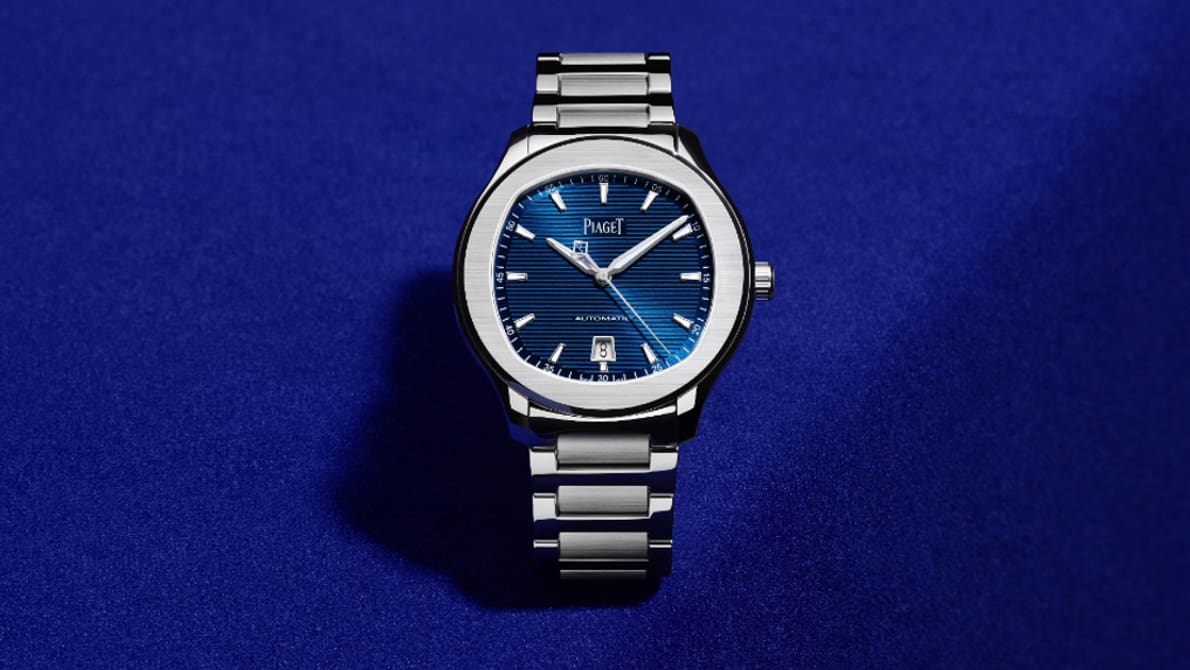
Polo: The Piaget Polo collection, originally launched in 1979, is characterised by its sporty-chic design and distinctive gadroons on the case. The Polo collection has evolved over the years, with variations ranging from simple time-only models to complex chronographs and tourbillons. The Piaget Polo S, introduced in 2016, features a stainless steel case and a more accessible price point, broadening the collection’s appeal.
-
Possession: The Possession collection is primarily focused on jewellery, featuring rings, bracelets, pendants, and watches with rotating elements. The rotating rings and bezels are designed to be playful and interactive, symbolising movement and dynamism. The Possession collection often incorporates diamonds and other precious stones, adding a touch of glamour to the designs.
-
Limelight Gala: The Limelight Gala collection showcases Piaget’s expertise in jewellery watchmaking. These watches feature asymmetrical designs, often with diamond-set bezels that extend into the lugs. The Limelight Gala is known for its feminine and glamorous aesthetic, making it a popular choice for special occasions.
-
Extremely Piaget: The Extremely Piaget collection encompasses high jewellery and exceptional timepieces that showcase Piaget’s creativity and craftsmanship. These pieces often feature bold designs, vibrant colours, and intricate gem-setting techniques. The Extremely Piaget collection represents the pinnacle of Piaget’s artistry.
-
Traditional Oval Watches: Piaget’s oval-cased watches, often with jade, lapis lazuli, or other hardstone dials, became an iconic design element in the 1960s and 1970s. These watches were favoured by celebrities and style icons, solidifying Piaget’s reputation as a trendsetter.
Technical Heritage and Innovation
Piaget has a long history of technical innovation, particularly in the development of ultra-thin movements. The company’s dedication to miniaturisation has resulted in several record-breaking achievements.
-
Calibre 9P: Introduced in 1957, the Calibre 9P was a groundbreaking manual-winding movement measuring just 2mm thick. Its slim profile allowed for the creation of exceptionally thin watches, establishing Piaget as a leader in ultra-thin watchmaking.
-
Calibre 12P: In 1960, Piaget launched the Calibre 12P, the thinnest automatic movement in the world at the time, with a thickness of only 2.3mm. The Calibre 12P featured an off-centre micro-rotor, which helped to reduce its overall size.
-
Calibre 1200S: Continuing its tradition of ultra-thin movements, Piaget introduced the Calibre 1200S in 2014, an automatic skeleton movement measuring just 2.4mm thick. The Calibre 1200S showcased Piaget’s expertise in both movement design and finishing.
-
Calibre 900P: In 2014, Piaget presented the Altiplano 900P, a watch that merged the movement and case into a single entity, achieving a record-breaking thickness of 3.65mm. The Calibre 900P was designed to be both the movement and the supporting structure of the watch, eliminating the need for a separate mainplate.
-
Calibre 910P: Piaget continued to push the boundaries of ultra-thin watchmaking with the Altiplano Ultimate Automatic, featuring the Calibre 910P. This watch achieved a thickness of just 4.3mm, making it the world’s thinnest automatic watch.
Beyond ultra-thin movements, Piaget has also developed expertise in other areas of watchmaking, including:
-
Tourbillons: Piaget offers a range of tourbillon watches, showcasing its mastery of complex horological complications.
-
Chronographs: The Piaget Polo collection includes chronograph models, demonstrating the brand’s ability to create sporty and functional timepieces.
-
Skeleton Watches: Piaget has produced skeleton watches that reveal the intricate workings of the movement, highlighting the brand’s attention to detail and finishing.
Ownership and Corporate Structure
Piaget has been part of the Richemont Group since 1988. Richemont, a Swiss luxury goods holding company, owns a portfolio of prestigious brands in the fields of jewellery, watches, writing instruments, and fashion. Other notable brands within the Richemont Group include Cartier, Van Cleef & Arpels, Jaeger-LeCoultre, and Vacheron Constantin.
As part of Richemont, Piaget benefits from the group’s resources and expertise in areas such as manufacturing, distribution, and marketing. However, Piaget maintains its own distinct identity and creative direction, continuing to develop its unique style and technical innovations.
The Piaget Manufacture is located in Plan-les-Ouates, Geneva, Switzerland. This facility houses the company’s watchmaking and jewellery workshops, as well as its design and administrative offices. The Manufacture allows Piaget to control all aspects of production, from movement design to gem-setting, ensuring the highest standards of quality and craftsmanship.
Key Figures
-
Georges-Édouard Piaget: The founder of Piaget, Georges-Édouard Piaget established the company’s reputation for quality and precision in watch movement production.
-
Timothée Piaget: Georges-Édouard’s son, Timothée Piaget, registered the Piaget brand name and began producing complete watches, marking a significant step in the company’s development.
-
Gérald and Valentin Piaget: The third generation of the Piaget family, Gérald and Valentin Piaget, led the company’s expansion in the mid-20th century, focusing solely on Piaget-branded products and developing the brand’s distinctive style.
-
Yves G. Piaget: Yves Piaget, Gérald’s son, played a significant role in promoting the brand’s image and expanding its international presence. He was known for his flamboyant personality and his passion for roses, which became a symbol of the Piaget brand. The “Yves Piaget Rose” is a variety of rose named in his honour.
Auction Records
Piaget watches and jewellery occasionally appear at auction, fetching significant prices depending on their rarity, condition, and historical significance. While Piaget does not reach the same stratospheric auction prices as Patek Philippe or Rolex, exceptional pieces with unique designs or historical provenance can command high values.
Notable auction results for Piaget pieces include:
-
Vintage Piaget watches with hardstone dials: These watches, particularly those from the 1960s and 1970s, are highly sought after by collectors for their distinctive designs and association with the jet-set era. Examples with rare or unusual hardstone dials, such as lapis lazuli, jade, or tiger’s eye, tend to command higher prices.
-
High jewellery Piaget watches: Piaget’s high jewellery watches, featuring intricate gem-setting and exceptional craftsmanship, can achieve significant prices at auction. These pieces often showcase rare and valuable gemstones, such as diamonds, emeralds, and sapphires.
-
Limited edition Piaget watches: Piaget has produced a number of limited edition watches over the years, some of which have become highly collectible. These watches often feature unique designs or complications, making them appealing to collectors seeking rare and unusual timepieces.
It is important to note that auction prices can vary depending on market conditions and the specific characteristics of the piece being offered. Consulting with auction specialists and conducting thorough research is essential before buying or selling Piaget watches or jewellery at auction.
Cultural Legacy and Influence
Piaget has had a significant impact on the world of luxury watchmaking and jewellery, influencing design trends and setting new standards for technical innovation.
-
Pioneering Ultra-Thin Watchmaking: Piaget’s development of ultra-thin movements revolutionised the watch industry, paving the way for the creation of exceptionally elegant and refined timepieces. The company’s commitment to miniaturisation has inspired other watchmakers to push the boundaries of movement design.
-
Popularising Hardstone Dials: Piaget played a key role in popularising the use of hardstone dials in watches, introducing a vibrant and colourful aesthetic to the world of horology. The company’s use of materials such as lapis lazuli, onyx, jade, and coral added a new dimension to watch design, influencing other brands to experiment with unconventional materials.
-
Blurring the Lines Between Watchmaking and Jewellery: Piaget has successfully integrated watchmaking and jewellery, creating pieces that are both functional timekeepers and exquisite works of art. The company’s expertise in gem-setting and jewellery design has allowed it to create watches that are as much jewellery pieces as they are time-telling instruments.
-
Association with Celebrities and Style Icons: Piaget has long been associated with celebrities and style icons, who have embraced the brand’s glamorous and sophisticated aesthetic. The company’s watches and jewellery have been worn by actors, musicians, and socialites, solidifying Piaget’s reputation as a symbol of luxury and success.
Legacy and Significance
Piaget’s legacy lies in its pioneering spirit, technical innovation, and commitment to design excellence. The company has consistently pushed the boundaries of watchmaking and jewellery, creating pieces that are both beautiful and technically sophisticated.
Piaget’s contributions to the world of ultra-thin watchmaking are particularly significant. The company’s development of the Calibre 9P and Calibre 12P movements revolutionised the industry, paving the way for the creation of exceptionally elegant and refined timepieces. Piaget’s continued focus on miniaturisation has resulted in numerous record-breaking achievements, solidifying its position as a leader in ultra-thin watchmaking.
Beyond its technical achievements, Piaget has also made a significant contribution to the aesthetics of watch design. The company’s use of hardstone dials, its integration of watchmaking and jewellery, and its association with celebrities and style icons have all helped to shape the image of luxury watchmaking.
Piaget remains a highly respected and sought-after brand, appealing to discerning customers who appreciate its unique blend of technical expertise, design innovation, and glamorous aesthetic. The company’s watches and jewellery are symbols of luxury, success, and personal style.