



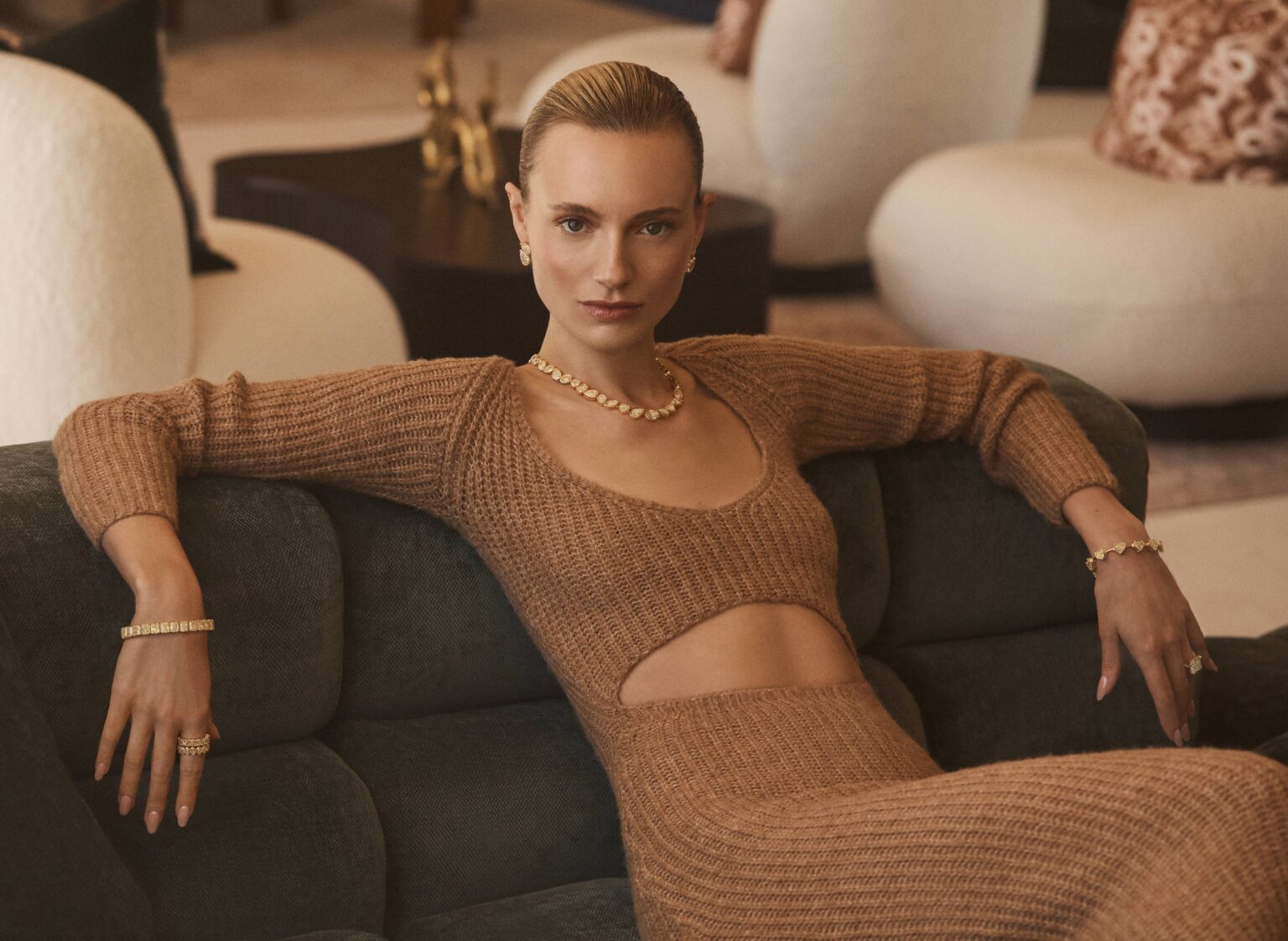
| Entity | Norman Silverman |
|---|---|
| Type | Los Angeles diamond house |
| Founded | 1982 |
| Base | Los Angeles |
| Product focus | Diamond-led fine jewellery, bridal, statement pieces |
| Recognisable collections | NS Signature, Petites by NS, Fancy Yellow, Precious Color, NS By Rocky Barnes |
Norman Silverman is best understood as a Los Angeles diamond house rather than as a European-style heritage maison. According to the brand’s official about page, Norman Silverman is a Los Angeles-based, family-founded business and has operated since 1982. That definition matters because it explains both the product language and the category position. The brand is not built around one defining motif in the Van Cleef or Cartier sense. It is built around stones, scale, and a recognisable West Coast form of high-carat diamond jewellery.
That framing is supported externally. In June 2025, Natural Diamonds placed Norman Silverman inside the intergenerational story of the LA jewellery district and described the business as a family operation with the next generation already active. JCK’s industry coverage also helps explain how the brand is perceived beyond its own site: it has repeatedly appeared in trade and red-carpet reporting as a diamond-focused jeweller with a taste for high-visibility pieces rather than understatement-led minimalism. Taken together, those sources make Norman Silverman legible as an American diamond specialist with commercial clarity, not as a vague luxury label.
History and Founding
According to the official Norman Silverman about page, the company has been focused on sourcing diamonds and rare stones since 1982 and shaping them into pieces defined by scale, presence and wearability. The same page also states that the house is family-founded and Los Angeles-based. Those are controlled facts, and they are enough to establish the business on firm editorial ground.
Independent reporting adds useful texture. Natural Diamonds wrote in June 2025 that Norman Silverman had been in the jewellery business for more than 40 years and quoted Judah Silverman, Norman’s son, on growing up inside the LA district environment. The article also notes that Norman Silverman spent years trading loose diamonds in Downtown Los Angeles before building his own brand. That matters because it places the company inside the practical supply-and-manufacturing culture of the district rather than inside a purely image-led luxury narrative.
The brand’s origin story is therefore more trade-rooted than mythologised. Norman Silverman looks like a business that emerged from diamond dealing, manufacturing relationships and local production density, then moved outward into higher-visibility branded retail. That is a different formation from a heritage jeweller whose authority begins in historic design archives. It also helps explain why the official site puts such obvious emphasis on stones first, styling second and brand mythology third.
This trade-rooted formation is one of the reasons the house reads clearly today. Some jewellery brands acquire visibility before they acquire a coherent identity. Norman Silverman appears to have developed the identity from the inside out: district roots, stone access, workshop control and then broader public-facing visibility. That sequence gives the brand more solidity than a purely campaign-led luxury label.
Historical Timeline
| Year | Milestone | Editorial significance |
|---|---|---|
| 1982 | Norman Silverman official about page says the diamond house has operated since 1982. | Establishes the brand as a long-running American diamond business rather than a newly assembled online label. |
| 2013 | JCK described Norman Silverman as a red-carpet jeweller outfitting celebrities with diamond pieces. | Shows early third-party visibility in celebrity and trade coverage. |
| 2018 | JCK reported that Norman Silverman Diamonds, usually associated with colourless-diamond jewellery, showed enameled rings with large heart-shape diamonds at JCK Las Vegas. | Indicates the brand could move beyond one-note bridal or solitaire signalling. |
| 2024 | Natural Diamonds reported a Rocky Barnes capsule collaboration with Norman Silverman. | Confirms a modern lifestyle-facing collaboration route without changing the core diamond identity. |
| 2025 | Natural Diamonds profiled Norman Silverman and family within the LA jewellery district. | Reinforces the intergenerational and district-rooted character of the business. |
This is not the timeline of a nineteenth-century jewellery house, and it should not be forced into one. Norman Silverman is old enough to have continuity, but recent enough that its identity is still best explained through district roots, family continuity, trade visibility and high-diamond product language.
What the timeline shows most clearly is consistency. There is no dramatic reinvention or abrupt category jump in the available public record. Instead, the brand appears to have widened its public profile while keeping the same central proposition intact: diamond-focused jewellery with strong visual presence and a Los Angeles operating base. That kind of continuity is often more valuable than a louder origin myth.
Signature Collections and Product Language
The official Norman Silverman site is especially useful here because it names the collections directly. The visible collection architecture includes NS Signature Collection, Petites by NS, Fancy Yellow, Precious Color, Modern Elements, NS Florets Collection, NS By Rocky Barnes, The Edit: Rocky Barnes, 2-Carat Club, Gold & Glow and the editorially styled grouping called The Archive. There is also a strong category split across necklaces, rings, bracelets, earrings and bridal.
That list shows how the brand wants to be read. First, diamonds remain the centre of gravity. Second, the product language mixes core category clarity with softer merchandising wrappers. NS Signature and Fancy Yellow read as direct diamond propositions. Petites by NS and Gold & Glow soften the entry point without pretending the house has abandoned its large-stone identity. The Rocky Barnes tie-in introduces a more lifestyle-directed register, but the collaboration still sits inside a diamond-led framework rather than replacing it.
Independent coverage supports that reading. Natural Diamonds wrote in October 2024 that Rocky Barnes had teamed up with Norman Silverman on a capsule collection of wearable natural-diamond pieces. JCK’s 2018 Las Vegas report adds another useful point: the trade publication noted that Norman Silverman Diamonds, usually associated with colourless diamond jewellery, introduced enameled rings with prominent heart-shape diamonds. That suggests the brand can stretch its offer visually while still remaining legible as a diamond-first business.
The result is a product universe that is more coherent than it first appears. Norman Silverman does not need a single defining bracelet or setting to be recognisable. It relies on a repeated promise: stones of size, commercial polish, and jewellery designed to read immediately as substantial. For LuxeDigital, that makes the house easier to classify as a diamond specialist than as a broadly diversified fine-jewellery designer.
There is also a practical reason the official collection architecture matters. When a house groups its offer into NS Signature, Fancy Yellow, bridal, Petites by NS and editorial capsules such as Rocky Barnes, it is effectively showing how it wants demand to be segmented. Some clients are being led toward classic diamond wardrobe building. Others are being led toward occasional high-visibility pieces. That segmentation is commercially intelligent, and it helps explain why Norman Silverman reads as a working diamond business first and a mood-board lifestyle brand second.
Craftsmanship and Design Signatures
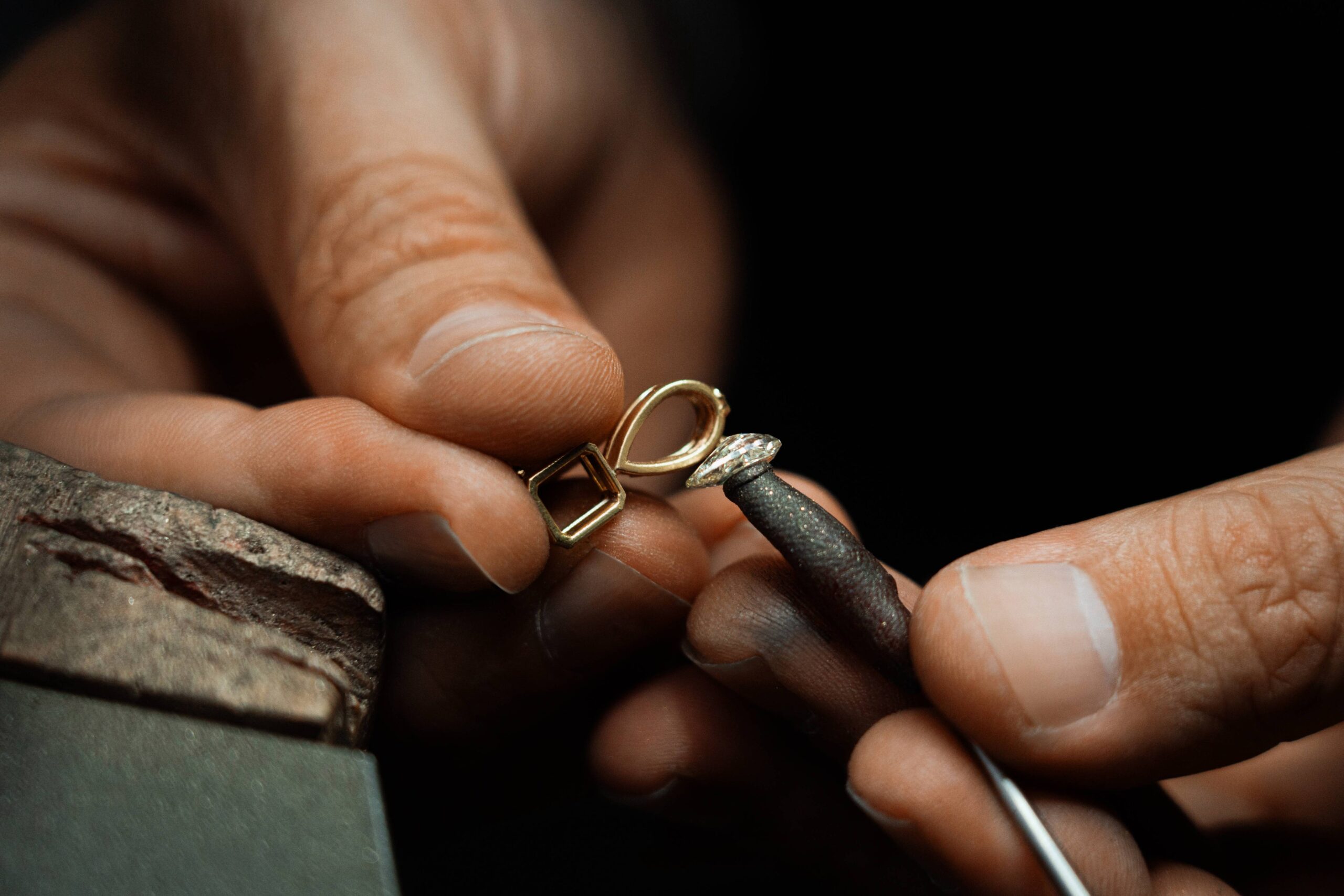
According to the official about page, each Norman Silverman piece begins with the stone, and the company says that from initial selection to final setting all work is done in-house. The same page also states that the house maintains an extensive inventory of high-carat diamonds and gemstones and that pieces are shaped and made in Los Angeles. Those are important operational signals because they show where the brand places authority: on sourcing, setting consistency and local control over execution.
This does not mean Norman Silverman should automatically be grouped with old-world ateliers known primarily for engraving, invisible settings or a single historic technique. Its design signature appears more commercial and stone-forward than technique-theatrical. The official copy emphasises balance, light performance and the way a stone presents once set. In editorial terms, that means the visible signature is not a house code like ropework or mystery setting. It is the marriage of noticeable diamond weight with polished, saleable wearability.
Third-party coverage reinforces that impression. JCK’s 2013 red-carpet piece described Norman Silverman as offering white and coloured diamonds in handcrafted designs, while later JCK reporting from 2018 showed the brand willing to push into colour through enamel and heart-shape stones. Natural Diamonds also presents the business as a jeweller that can move between large-stone glamour and more wearable pieces without losing its identity. That is useful because it shows range without suggesting the brand has become concept-driven or avant-garde.
The most defensible conclusion is that Norman Silverman’s craft language sits at the junction of diamond dealing and finished jewellery making. The house reads as strongest when the stone remains the star and the setting supports presence rather than competes with it. That is a very different design logic from a jeweller whose signature begins in line, motif or metalwork alone.
Market Position and Category Context
Norman Silverman occupies a recognisable American fine-jewellery lane: high-carat, diamond-led, red-carpet-adjacent, and rooted in a district with real manufacturing depth. The June 2025 Natural Diamonds feature is particularly helpful because it places the company among the intergenerational operators who still define the LA district’s manufacturing and diamond culture. That gives the brand a clearer category context than vague luxury positioning ever could.
JCK’s coverage adds a second layer. The trade publication has treated Norman Silverman as both a red-carpet source and a participant in industry buying culture, not simply as a direct-to-consumer shop front. That matters because it suggests the house still lives partly inside the professional jewellery ecosystem. It is not merely selling a glamorous online image of diamonds; it is legible to trade media as a working diamond and jewellery brand.
At the same time, discipline is required here. There is not enough evidence in the current source set to rank Norman Silverman against every major American jeweller or to make sweeping claims about scale, revenue or nationwide market leadership. The stronger reading is narrower. Norman Silverman appears to hold a credible position within the upper American diamond-jewellery segment, especially where customers want visible stone presence, bridal crossover and a strong Los Angeles luxury accent.
That makes the house category-relevant, but not beyond evidence. It should be covered as a diamond specialist with sustained visibility, not as a universally dominant name. For editorial quality, that distinction is what keeps the entry useful.
Another useful point is that Norman Silverman’s authority appears to operate across more than one channel at once. The official site speaks in direct-to-client language, but the external record still places the house within the trade conversation, red-carpet visibility and the wider Los Angeles district ecosystem. That multi-channel presence matters because it suggests the brand is not relying on one temporary traffic source or one collaboration cycle to stay visible. It is better understood as an established diamond operator that also knows how to package itself for contemporary luxury audiences.
Why the Brand Matters
Norman Silverman matters because it shows how an American diamond house can maintain clarity without pretending to be something else. According to its official about page, the business still defines itself through stones, in-house execution and Los Angeles making. Independent reporting from Natural Diamonds and JCK shows that the house also carries real visibility across district culture, trade coverage, collaborations and celebrity placement.
That combination gives the brand a specific kind of relevance. Norman Silverman is not especially important because of archive lore or because it has rewritten jewellery design history. It is important because it demonstrates the continuing power of a diamond-first proposition that is commercially legible, locally rooted and visibly family-linked. In a market full of soft-focus luxury language, that kind of specificity has value.
For LuxeDigital, the brand is therefore worth covering as a strong category identifier inside American fine jewellery. It clarifies a segment where diamond size, bridal adjacency, custom capacity and LA district credibility still matter. The most useful editorial definition is the simplest one: Norman Silverman is a long-running Los Angeles diamond house whose identity remains anchored in stones, scale and a family-built operating model.
That is also why the brand works better when written with restraint. The evidence supports continuity, visibility and category clarity. It does not require inflated claims about being unmatched or singular. The stronger editorial move is to show what Norman Silverman plainly is: a mature Los Angeles diamond house that still makes sense when measured by collections, district roots, trade recognition and consistent product language.
What is Norman Silverman known for?
Norman Silverman is best understood as a Los Angeles diamond house specializing in diamond-led fine jewellery, bridal pieces, and statement designs. Founded in 1982, the brand prioritizes stones and scale, reflecting a West Coast aesthetic. Collections include NS Signature, Petites by NS, Fancy Yellow, Precious Color, and NS By Rocky Barnes.
Is Norman Silverman a heritage brand?
No, Norman Silverman is not a European-style heritage maison. The brand’s origin story is rooted in diamond dealing and manufacturing within the Los Angeles jewelry district since 1982. This trade-rooted formation emphasizes stones first, styling second, and brand mythology third, unlike heritage jewelers with historic design archives.
Where is Norman Silverman based?
Norman Silverman is based in Los Angeles. According to the brand’s official about page, it is a Los Angeles-based, family-founded business and has operated since 1982. This location influences the brand’s product language and category position, emphasizing a West Coast form of high-carat diamond jewellery.
How did Norman Silverman start?
Norman Silverman began by sourcing diamonds and rare stones in 1982, shaping them into pieces defined by scale, presence, and wearability. Before building his brand, Norman Silverman spent years trading loose diamonds in Downtown Los Angeles. This places the company inside the practical supply-and-manufacturing culture of the district.