


| Founded | 1837 — New York, USA |
|---|---|
| Founder(s) | Charles Lewis Tiffany, John B. Young |
| Headquarters | New York, USA |
| Parent Group | LVMH |
| Known For | Jewellery, diamonds, silverware |
| Price Range | £150 to £2,500,000 (2024) |
| Revenue / Production | £4.98 billion (LVMH, 2023) |
| Official Website | tiffany.com |
Tiffany & Co. (1837, New York), founded by Charles Lewis Tiffany and John B. Young, is an American luxury jewellery and specialty retailer. Known for its diamonds, silverware, and signature “Tiffany Blue” colour, the company has become a globally recognised symbol of luxury and craftsmanship. Acquired by LVMH in 2021, Tiffany & Co. continues to operate as a distinct brand, maintaining its reputation for quality and design innovation.
Contents
History and Founding
Tiffany & Co. began as a stationery and fancy goods store called “Tiffany, Young and Ellis” in Brooklyn, New York, in 1837. The founders, Charles Lewis Tiffany and John B. Young, invested $1,000 each in the business. Initially, the store sold a variety of items, including stationery, cutlery, and other decorative goods. The business model was based on cash-only sales and fixed prices, a departure from the common practice of haggling at the time. In 1841, J.L. Ellis joined the company, solidifying the name Tiffany, Young and Ellis. The company’s focus gradually shifted towards jewellery. By the 1840s, Tiffany, Young and Ellis began manufacturing its own jewellery, marking a pivotal moment in its evolution. The firm capitalised on the growing demand for luxury goods among America’s burgeoning upper class. The business was renamed Tiffany & Co. in 1853 after Charles Lewis Tiffany took control and recognised the brand’s increasing focus on jewellery. Tiffany’s strategic decision to concentrate on jewellery and precious stones set the stage for its future as a leading luxury jeweller. The company established a reputation for quality and design, attracting a clientele that valued both. Tiffany & Co. played a role in setting American standards for silver. In 1851, the company introduced the .925 standard for sterling silver, which was later adopted as the official US standard. This commitment to quality and precision helped to solidify Tiffany’s reputation as a trusted source for fine silverware and jewellery.Historical Timeline
| Year | Event |
|---|---|
| 1837 | Tiffany, Young and Ellis is founded in New York City as a stationery and fancy goods store. |
| 1841 | J.L. Ellis joins the company. |
| 1845 | Tiffany publishes its first mail-order catalogue, known as the “Blue Book”. |
| 1848 | Tiffany acquires gemstones from European aristocracy during a time of revolution. |
| 1851 | Tiffany adopts the .925 standard for sterling silver. |
| 1853 | The company is renamed Tiffany & Co. |
| 1870 | Tiffany opens its flagship store on Union Square. |
| 1878 | Charles Lewis Tiffany purchases the Tiffany Diamond, a 287.42-carat yellow diamond. |
| 1886 | Tiffany introduces the Tiffany Setting, a six-prong setting for diamond solitaire rings. |
| 1902 | Louis Comfort Tiffany, Charles Lewis Tiffany’s son, becomes the company’s first design director. |
| 1940 | Tiffany’s flagship store moves to its current location on Fifth Avenue and 57th Street. |
| 1961 | The film “Breakfast at Tiffany’s” is released, popularising the brand. |
| 1968 | Humphrey Bogart’s Tiffany & Co. gold pocket watch sold at auction for $3,800 according to Antiquorum. |
| 1987 | Tiffany & Co. goes public on the New York Stock Exchange (NYSE: TIF). |
| 2021 | LVMH acquires Tiffany & Co. for approximately $15.8 billion. |
Flagship Collections
Tiffany & Co. offers a range of collections, each with its own design and aesthetic. These collections include:- **Tiffany HardWear:** Known for its industrial-inspired designs, featuring bold links and strong silhouettes. Each link is finished by hand.
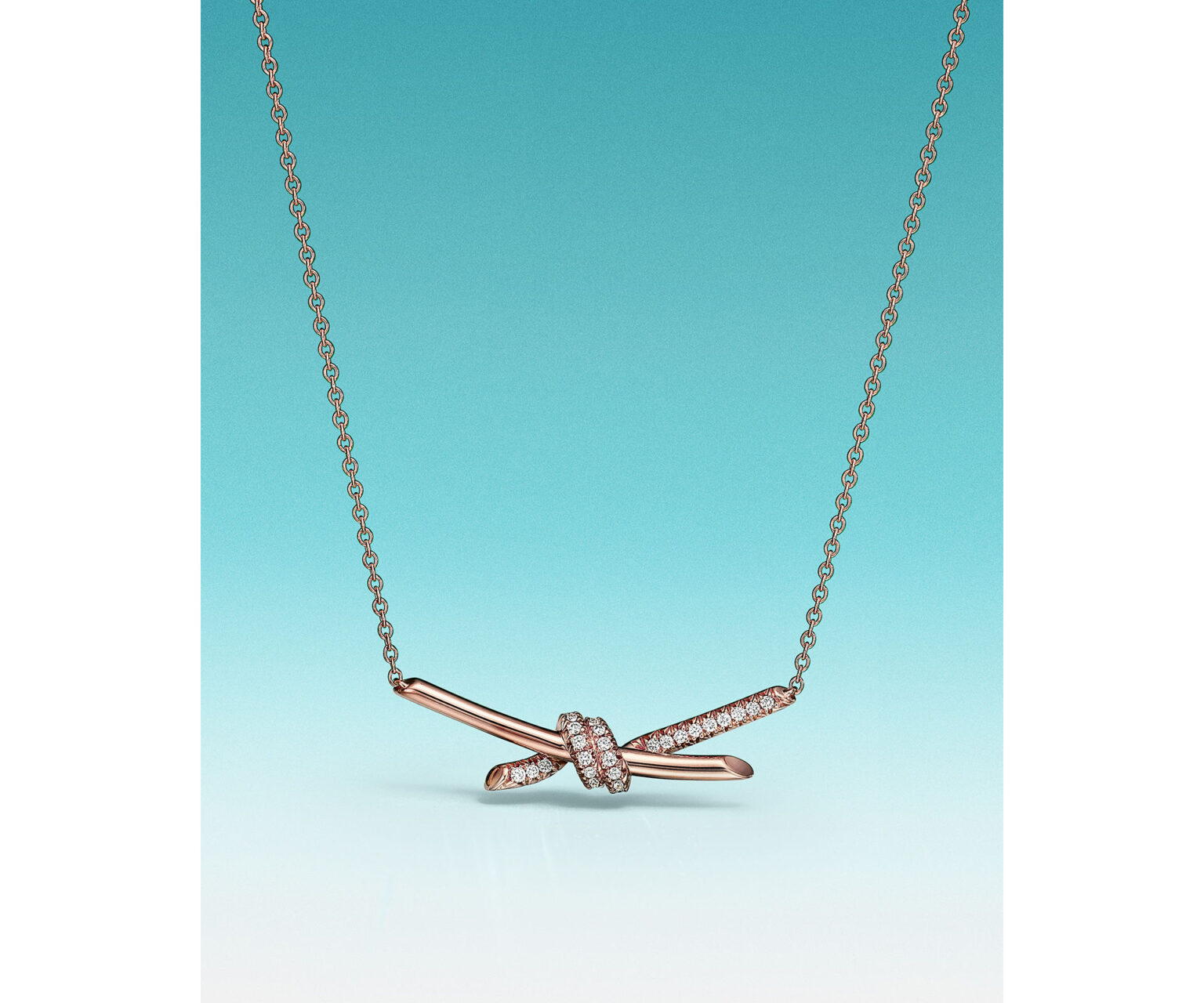
- **Tiffany Knot:** Characterised by intertwined designs, blending elegance with modern style.
- **Tiffany Lock:** Features padlock motifs, symbolising connection and unity.
- **Tiffany T:** Defined by the letter “T” motif, representing the brand’s name.
- **Sixteen Stone by Tiffany:** A collection of diamond rings and bands.
- **Bird on a Rock by Tiffany:** Brooches and pendants featuring a bird perched on a gemstone.
Technical and Gemological Standards
Tiffany & Co. maintains standards for the quality and sourcing of its diamonds and gemstones. The company adheres to the Kimberley Process, an international certification scheme designed to prevent conflict diamonds from entering the market. Tiffany & Co. also has its own standards that exceed the requirements of the Kimberley Process. Tiffany & Co. assesses the quality of its diamonds based on the “4Cs”: carat, cut, clarity, and colour. The company employs gemologists who grade each diamond according to these criteria. Tiffany & Co. also provides detailed information about the origin and characteristics of its diamonds. In addition to diamonds, Tiffany & Co. uses a variety of other gemstones in its jewellery, including sapphires, emeralds, and aquamarines. These gemstones are selected for their colour, clarity, and overall quality. Tiffany & Co. also uses precious metals such as platinum, gold, and silver in its designs. In 1851, Tiffany adopted the .925 standard for sterling silver.Ownership and Corporate Structure
Tiffany & Co. was a publicly traded company on the New York Stock Exchange (NYSE: TIF) from 1987 until 2021. In January 2021, LVMH (Moët Hennessy Louis Vuitton) acquired Tiffany & Co. for approximately $15.8 billion. Tiffany & Co. now operates as a subsidiary of LVMH. As part of LVMH, Tiffany & Co. benefits from the resources and expertise of a global luxury conglomerate. LVMH’s portfolio includes brands in fashion, leather goods, wines and spirits, and other luxury categories. The acquisition by LVMH has allowed Tiffany & Co. to expand its global reach and invest in new product development.Key Figures
Several individuals have played roles in shaping Tiffany & Co.’s history and success:- **Charles Lewis Tiffany:** (1812-1902) Founder of Tiffany & Co., Charles Lewis Tiffany was a visionary businessman who transformed the company from a stationery store into a luxury jewellery brand.
- **John B. Young:** (birth and death dates unknown) Co-founder of Tiffany & Co., Young played a role in the early development of the company.
- **Louis Comfort Tiffany:** (1848-1933) Son of Charles Lewis Tiffany, Louis Comfort Tiffany was an artist and designer known for his work in stained glass and decorative arts. He served as Tiffany’s first design director, beginning in 1902.