Approximately 70,000 pieces/year (documented sources)
Official Website
patek.com
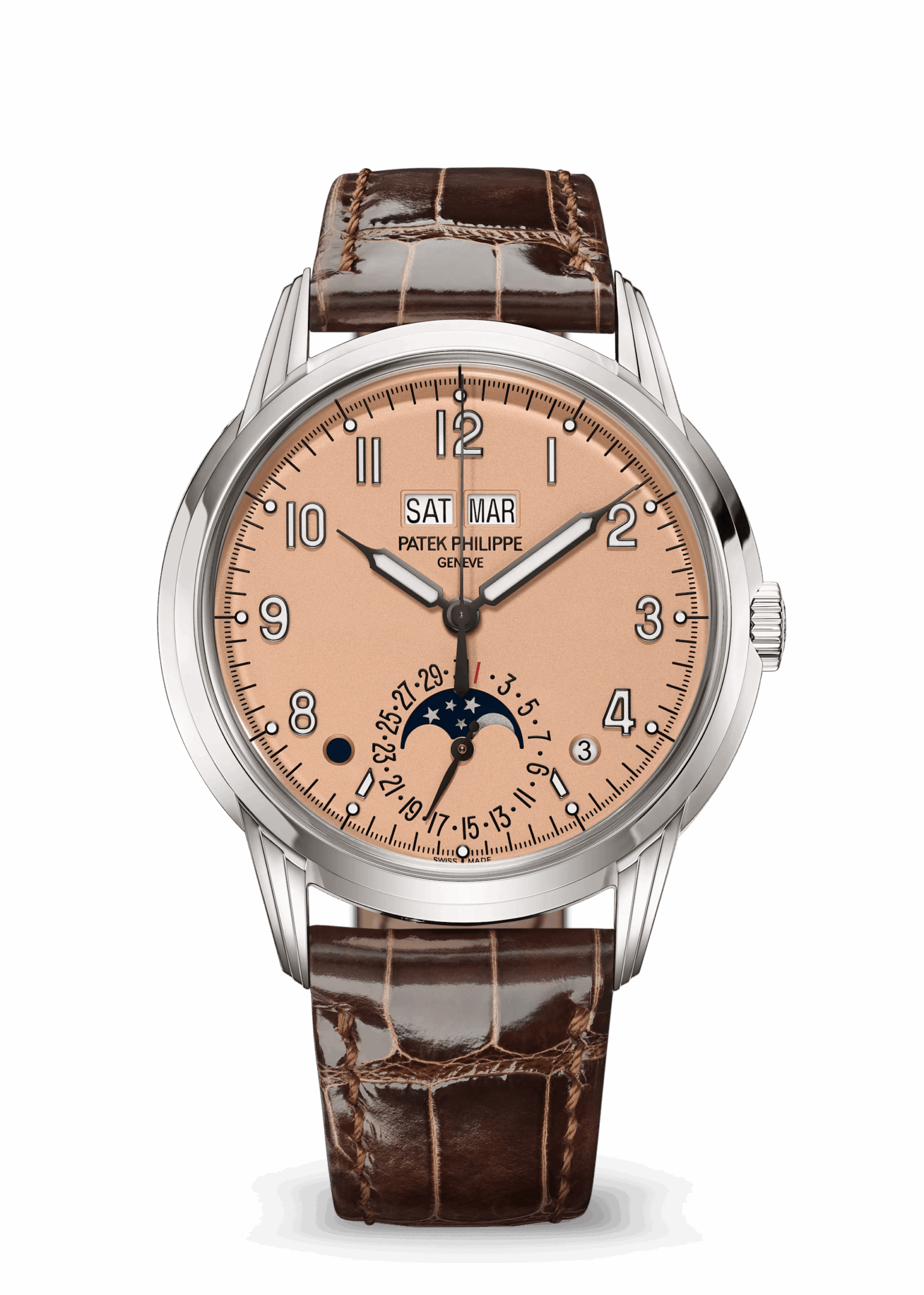
Patek Philippe (1839, Geneva) is a Swiss manufacturer of luxury watches and clocks, recognised for its complicated mechanical movements and traditional Genevan watchmaking artistry. Family-owned since 1932, the company benefits from creative freedom in designing, developing, and crafting timepieces. Patek Philippe pledges to service, repair, or restore any timepiece produced since its founding, regardless of age, underscoring its commitment to quality and enduring value.
The origins of Patek Philippe trace back to 1839, when Antoni Patek and Franciszek Czapek, two Polish immigrants, established Patek, Czapek & Cie in Geneva. Initially, the company focused on creating pocket watches. However, the partnership between Patek and Czapek dissolved in 1845. Subsequently, Patek joined forces with French watchmaker Adrien Philippe, who is credited with inventing the keyless winding system. This innovation led to the renaming of the company to Patek & Cie in 1845, and later to Patek, Philippe & Cie in 1851.
The collaboration between Patek and Philippe proved pivotal in shaping the brand’s identity and establishing its reputation for innovation and quality. Philippe’s technical expertise, combined with Patek’s business acumen, propelled the company to new heights. Their shared commitment to horological excellence laid the foundation for Patek Philippe’s enduring success.
Historical Timeline
Year
Event
Significance
1839
Patek, Czapek & Cie is founded in Geneva by Antoni Patek and Franciszek Czapek.
Marks the beginning of Patek Philippe’s watchmaking history.
1845
Adrien Philippe joins the company, leading to the departure of Franciszek Czapek. The company is renamed Patek & Cie.
Philippe’s technical expertise and invention of the keyless winding system influence the company’s direction.
1851
The company is officially renamed Patek, Philippe & Cie.
Reflects the established partnership between Patek and Philippe.
1868
Patek Philippe creates its first wristwatch.
A significant innovation, transitioning from pocket watches to wristwatches.
1932
The Stern family acquires Patek Philippe.
Marks the beginning of family ownership, ensuring long-term independence and strategic vision.
1937
Launch of the Calatrava collection.
Becomes one of Patek Philippe’s most iconic and enduring collections.
1996
Inauguration of the Patek Philippe Museum in Geneva.
Showcases the company’s history and watchmaking heritage.
2009
Patek Philippe introduces the Patek Philippe Seal.
A quality hallmark guaranteeing the lifetime care and standard of its timepieces.
2019
Patek Philippe celebrates its 180th anniversary.
A milestone reflecting the company’s continuous history of watchmaking.
Key Collections and Iconic References
Patek Philippe’s collections encompass a range of styles and complications, each demonstrating the brand’s commitment to horological excellence. The Calatrava, Nautilus, Aquanaut, and Complications collections represent some of the most sought-after timepieces in the world.
The Calatrava collection, launched in 1932, is known for its classic, understated design. Its clean lines and elegant simplicity have made it a flagship model for Patek Philippe. The Nautilus, introduced in 1976, broke from tradition with its sporty, porthole-inspired case and integrated bracelet. Designed by Gérald Genta, the Nautilus became an icon of luxury sports watches. The Aquanaut, launched in 1997, further expanded Patek Philippe’s sporty offerings with its rounded octagonal case and “tropical” composite strap.
Patek Philippe’s complicated watches, such as the Perpetual Calendar Chronograph 5270 and the World Time 5230, showcase the brand’s mastery of horological complications. These timepieces combine technical expertise with artistic craftsmanship, solidifying Patek Philippe’s position as a leader in haute horlogerie.
Technical Heritage and Innovation
Patek Philippe has a long history of technical innovation, with numerous patents and groundbreaking achievements in watchmaking. The company is credited with inventing the keyless winding system, the perpetual calendar mechanism for wristwatches, and the Gyromax balance. Patek Philippe also pioneered the use of Silinvar, a silicon-based material, in watch movements.
The company’s commitment to research and development has resulted in advancements in areas such as escapements, balance springs, and gear trains. Patek Philippe’s movements are known for their precision, reliability, and intricate finishing. The Patek Philippe Seal, introduced in 2009, is a quality hallmark that guarantees the lifetime care and standard of its timepieces.
Patek Philippe spans over 133,650 square meters, and its ultra-modern production facility in Geneva features state-of-the-art CNC machinery. All watch parts produced are hand-finished to enhance the performance and durability of the watches.
Ownership and Corporate Structure
Patek Philippe has been owned by the Stern family since 1932. Charles Stern and Jean Stern, who owned a dial factory in Geneva, acquired the company during the Great Depression, ensuring its survival and independence. The Stern family’s long-term vision and commitment to quality have been instrumental in Patek Philippe’s success.
The company operates as an independent, family-owned business, allowing it to pursue its own strategic goals without the pressures of shareholders or external investors. This independence enables Patek Philippe to focus on long-term value creation and maintain its commitment to horological excellence.
Key Figures
Name
Role
Tenure
Key Contribution
Antoni Patek
Co-founder
1839–1877
Established Patek, Czapek & Cie and laid the foundation for Patek Philippe.
Adrien Philippe
Co-founder
1845–1894
Invented the keyless winding system and contributed to technical innovations.
Charles Stern
Owner
1932–1958
Acquired Patek Philippe and ensured its survival during the Great Depression.
Jean Stern
Owner
1932-1958
Oversaw dial production and contributed to the company’s operations.
Philippe Stern
Honorary President
1993-2009
Oversaw the development of complicated watches and the Patek Philippe Museum.
Thierry Stern
President
2009–Present
Leads Patek Philippe, focusing on innovation and preserving the company’s heritage.
Key figures in Patek Philippe’s history include the founders, Antoni Patek and Adrien Philippe, as well as members of the Stern family, who have guided the company for nearly a century. Philippe Stern, who served as president from 1993 to 2009, oversaw the development of complicated watches and the establishment of the Patek Philippe Museum. Thierry Stern, the current president, continues to lead the company with a focus on innovation and preserving its heritage.
Auction Records
Patek Philippe watches consistently achieve high prices at auction, reflecting their rarity, historical significance, and desirability among collectors. Several Patek Philippe timepieces have set world records for the highest prices ever paid for a watch at auction.
Year
Auction House
Reference
Description
Hammer Price
2019
Christie’s
Grandmaster Chime 6300A-010
Unique stainless steel Grandmaster Chime.
CHF 31,000,000
2016
Phillips
1518
Stainless steel chronograph perpetual calendar.
CHF 11,000,000
2021
Phillips
Nautilus 5711/1A-018
Tiffany Blue Nautilus
US$6,500,000
2023
Sotheby’s
2499
First Series Yellow Gold
US$2,570,000
In 2019, a unique stainless steel Patek Philippe Grandmaster Chime sold for CHF 31 million at Christie’s, becoming the most expensive watch ever sold at auction. A stainless steel Patek Philippe 1518, a chronograph perpetual calendar, sold for CHF 11 million at Phillips in 2016. These auction results demonstrate the enduring value and collectibility of Patek Philippe watches.
Cultural Legacy and Influence
Patek Philippe has cultivated a cultural legacy through its commitment to preserving traditional Genevan watchmaking artistry and supporting the arts. The Patek Philippe Museum in Geneva showcases the company’s history and watchmaking heritage, providing a valuable resource for collectors, researchers, and enthusiasts.
The company’s advertising campaigns, such as the “Begin your own tradition” campaign, have resonated with consumers and reinforced Patek Philippe’s image as a symbol of enduring value and family legacy. Patek Philippe’s watches have been worn by royalty, heads of state, and celebrities, further enhancing its prestige and cultural influence.
Patek Philippe safeguards rare handcrafts, such as enamelling and _guillochage_ that would have otherwise disappeared. At the same time, it nurtures a tradition of innovation, relying on the latest technologies to further push the boundaries of watchmaking.
Legacy and Significance
Patek Philippe’s legacy as a leading manufacturer of luxury watches is firmly established. The company’s commitment to quality, innovation, and independence has allowed it to thrive for nearly two centuries. Patek Philippe’s watches are not only timekeeping instruments but also works of art, embodying the pinnacle of horological craftsmanship.
The brand’s significance extends beyond the realm of watchmaking. Patek Philippe represents a symbol of enduring value, family legacy, and the pursuit of excellence. Its watches are often passed down through generations, becoming cherished heirlooms and testaments to the enduring power of craftsmanship. Patek Philippe’s commitment to service ensures that its timepieces will continue to function and be appreciated for generations to come.