



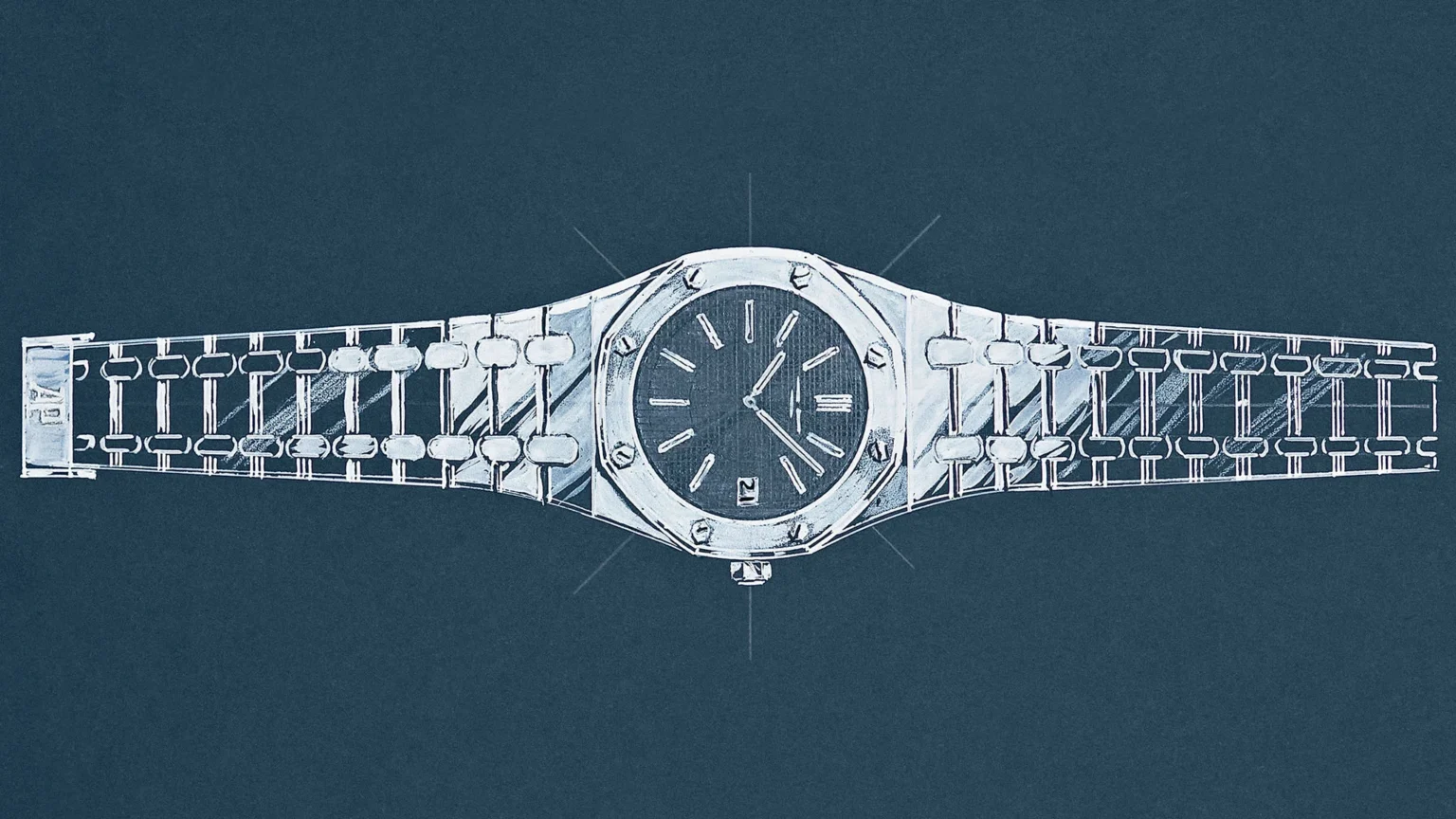
The Audemars Piguet Royal Oak stands as a seminal creation in horological history, recognized globally for its distinctive design and its role in establishing the luxury sports watch category. Launched in 1972 by the Swiss manufacturer Audemars Piguet, which was founded in 1875 by Jules Louis Audemars and Edward Auguste Piguet in Le Brassus, Switzerland, the Royal Oak challenged conventional watchmaking norms. Its introduction marked a pivotal moment, offering a high-end timepiece crafted from stainless steel at a price point comparable to gold watches, thereby redefining perceptions of luxury and value in watchmaking. The Audemars Piguet Royal Oak history is a narrative of bold innovation, design prowess, and enduring cultural impact, transforming from a controversial concept into a collector’s grail.
- History and Founding of Audemars Piguet
- The Genesis of the Royal Oak: A Paradigm Shift
- Gérald Genta and the Iconic Design
- Evolution and Expansion: Generations of the Royal Oak
- Technical Heritage and Horological Innovation
- Cultural Legacy and Enduring Influence
- Market Position and Collectibility
- Notable Milestones and Anniversaries
- Legacy and Significance of the Audemars Piguet Royal Oak
History and Founding of Audemars Piguet
Audemars Piguet, one of the oldest watch manufacturers still owned by its founding families, traces its origins to the Vallée de Joux, a region renowned for its precision watchmaking. In 1875, Jules Louis Audemars and Edward Auguste Piguet, both skilled watchmakers, established the company. Audemars was primarily responsible for the production and technical aspects, while Piguet focused on sales and management. Their initial vision was to create complex movements and finished watches, specializing in complications such as minute repeaters, chronographs, and perpetual calendars. This early dedication to haute horlogerie established Audemars Piguet’s reputation for technical excellence and craftsmanship, a foundation upon which the brand would build its future successes.
Throughout the late 19th and early 20th centuries, Audemars Piguet continued to innovate, producing ultra-thin movements and pioneering various horological advancements. The company navigated through world wars and economic depressions, maintaining its commitment to high-quality, complicated timepieces. However, by the late 1960s and early 1970s, the Swiss watch industry faced an existential threat from the advent of quartz technology, primarily from Japanese manufacturers. This period, known as the “Quartz Crisis,” saw a dramatic shift in consumer preferences towards more accurate and affordable electronic watches, pushing traditional mechanical watchmakers to the brink. It was against this backdrop of industry-wide upheaval that Audemars Piguet conceived a radical new product that would not only ensure its survival but also redefine an entire segment of the luxury watch market.
The Genesis of the Royal Oak: A Paradigm Shift
The concept for the Audemars Piguet Royal Oak emerged from a desperate need for innovation during the Quartz Crisis. In 1971, Audemars Piguet’s managing director, Georges Golay, recognized the necessity for a groundbreaking product to revitalize the brand’s fortunes. He reportedly contacted renowned watch designer Gérald Genta on the eve of the 1971 Basel Watch Fair, tasking him with designing an “unprecedented steel sports watch” that could appeal to the Italian market, specifically targeting affluent individuals who desired a robust yet elegant timepiece suitable for both formal and casual settings. Genta, known for his prolific and influential designs, delivered the initial sketches within a single night, drawing inspiration from a traditional diver’s helmet.
The design Genta presented was revolutionary. It featured an octagonal bezel secured by eight visible hexagonal screws, a design element inspired by the bolts on a diver’s helmet. The watch also boasted an integrated bracelet, a feature that was uncommon at the time and contributed significantly to the watch’s cohesive and sculptural aesthetic. The dial was adorned with a distinctive “Tapisserie” pattern, a finely engraved texture that added depth and sophistication. The case construction was equally innovative, with the bezel, gasket, and case back forming a monocoque structure, ensuring water resistance without a traditional case back. This design was not merely aesthetic; it was a functional integration of form and engineering, creating a watch that was both robust and remarkably thin for its time.
When the Royal Oak, reference 5402ST, was officially launched in 1972, it was met with a mixed reception. Its price point, 3,650 Swiss francs, was exorbitant for a stainless steel watch, exceeding that of many gold dress watches. This bold pricing strategy, coupled with its unconventional design, initially made it a polarizing product. However, its distinctiveness soon began to attract a discerning clientele, particularly among European industrialists and royalty, who appreciated its avant-garde appeal and understated luxury. The Royal Oak’s success gradually validated Audemars Piguet’s audacious gamble, proving that there was a market for high-end, meticulously crafted sports watches in steel, thereby creating an entirely new category within luxury watchmaking.
Gérald Genta and the Iconic Design
Gérald Genta (1931–2011) is widely regarded as one of the most influential watch designers of the 20th century. His career spanned several decades, during which he created iconic timepieces for numerous prestigious brands. Born in Geneva, Switzerland, Genta began his career as a jewelry designer before transitioning into watch design. His philosophy centered on creating watches that were not merely instruments for telling time but works of art, blending functionality with distinctive aesthetics. His ability to conceptualize groundbreaking designs that challenged prevailing trends earned him a legendary status in the industry.
The Audemars Piguet Royal Oak is arguably Genta’s most celebrated creation, alongside other masterpieces like the Patek Philippe Nautilus and the IWC Ingenieur. For the Royal Oak, Genta’s inspiration from a diver’s helmet translated into a design language characterized by strong geometric forms and industrial aesthetics. The octagonal bezel, secured by eight visible hexagonal screws, became the watch’s most recognizable feature. These screws, originally functional components, were deliberately left exposed and aligned to form a perfect circle, adding to the watch’s distinctive character. The integrated bracelet, another hallmark of the Royal Oak, was meticulously designed to flow seamlessly from the case, creating a harmonious and ergonomic profile that was both comfortable and visually striking. This integration was a complex engineering feat, requiring precise articulation and finishing to achieve its fluid movement.
Beyond the external architecture, Genta’s attention to detail extended to the dial. The “Tapisserie” pattern, a signature element of the Royal Oak, is a complex guilloché engraving that creates a textured, waffle-like surface. This intricate detail not only enhances the dial’s visual appeal but also adds a sense of depth and luxury, distinguishing it from simpler, flat dials. The hands and hour markers were designed for legibility, often featuring luminescent material, further emphasizing its sports watch credentials. Genta’s design for the Royal Oak was a holistic vision, where every element, from the case to the bracelet to the dial, contributed to a cohesive and instantly recognizable identity. This design language proved to be timeless, allowing the Royal Oak to remain relevant and desirable for decades, influencing countless other watch designs and solidifying Genta’s legacy as a master innovator. Audemars Piguet Official Site
Evolution and Expansion: Generations of the Royal Oak
Following its initial launch, the Audemars Piguet Royal Oak evolved significantly, expanding into a diverse collection that catered to various tastes and preferences while retaining its core design principles. The original “Jumbo” Royal Oak, reference 5402ST, with its 39mm diameter and ultra-thin automatic movement (Calibre 2121, based on Jaeger-LeCoultre’s Calibre 920), set the standard for the line. Its success paved the way for numerous variations, including models in gold, two-tone configurations, and smaller sizes for women.
A significant expansion came in 1993 with the introduction of the Royal Oak Offshore. Designed by Emmanuel Gueit, the Offshore was a bolder, larger, and more robust interpretation of the original Royal Oak, measuring 42mm in diameter and featuring a more aggressive aesthetic with visible gaskets and a thicker case. Initially met with skepticism, even from Gérald Genta himself, the Offshore quickly gained popularity, particularly in the North American market, appealing to a new generation of watch enthusiasts who favored larger, more overtly sporty timepieces. It became a distinct pillar of the Royal Oak family, known for its chronograph functions and adventurous spirit.
Over the decades, Audemars Piguet introduced a wide array of complications into the Royal Oak collection, showcasing its horological prowess. These include perpetual calendars, tourbillons, minute repeaters, chronographs, and even grand complications. The brand also experimented with various materials, moving beyond steel and gold to incorporate platinum, titanium, ceramic, forged carbon, and sapphire, pushing the boundaries of material science in watchmaking. Each new iteration, while distinct, maintained the fundamental design codes of the octagonal bezel, integrated bracelet, and “Tapisserie” dial, ensuring continuity with the original vision.
In 2002, Audemars Piguet launched the Royal Oak Concept line, a platform for avant-garde horological experimentation. These watches often feature highly complex movements, innovative materials, and futuristic designs, pushing the boundaries of what a Royal Oak could be while still being recognizable as part of the family. The Concept models serve as a testament to Audemars Piguet’s ongoing commitment to innovation and its willingness to explore new frontiers in watchmaking, ensuring the Royal Oak remains at the forefront of contemporary haute horlogerie.
Technical Heritage and Horological Innovation
The Audemars Piguet Royal Oak is not merely a design icon; it is also a testament to the brand’s profound technical heritage and continuous horological innovation. At the heart of the original Royal Oak 5402ST was the Calibre 2121, an ultra-thin automatic movement with a full-rotor design. This movement, derived from Jaeger-LeCoultre’s Calibre 920 (which was exclusively supplied to Audemars Piguet, Patek Philippe, and Vacheron Constantin), was renowned for its slimness (3.05mm thick), reliability, and sophisticated construction. Its integration into the Royal Oak’s slender case was a significant engineering achievement, contributing to the watch’s elegant profile despite its robust appearance.
Audemars Piguet has consistently developed and refined its movements for the Royal Oak collection. The brand is one of the few manufactures that designs, develops, and produces its movements entirely in-house. This commitment to vertical integration ensures a high degree of quality control and allows for continuous innovation. Over the years, the Royal Oak has housed a wide array of calibers, from simple time-only movements to highly complex mechanisms. For instance, the Royal Oak Perpetual Calendar models feature intricate movements that accurately track the date, day, month, leap year, and moon phase, requiring minimal adjustment for centuries. The Royal Oak Tourbillon models showcase one of horology’s most challenging complications, designed to counteract the effects of gravity on the watch’s accuracy.
Beyond traditional complications, Audemars Piguet has also pushed boundaries in material science and manufacturing techniques. The brand has pioneered the use of materials like forged carbon, ceramic, and titanium in the Royal Oak and Royal Oak Offshore collections, offering enhanced durability, lightness, and unique aesthetic properties. The intricate finishing of these materials, particularly the meticulous hand-finishing applied to cases, bezels, and bracelets, is a hallmark of Audemars Piguet’s haute horlogerie standards. The integrated bracelet, a defining feature of the Royal Oak, is a complex assembly of hundreds of individual components, each hand-finished and assembled to ensure fluid articulation and a luxurious feel on the wrist. This blend of cutting-edge technology and traditional craftsmanship underscores the Royal Oak’s position as a pinnacle of mechanical watchmaking. Christie’s on Royal Oak History
Cultural Legacy and Enduring Influence
The Audemars Piguet Royal Oak’s impact extends far beyond the confines of watchmaking, establishing a significant cultural legacy and influencing fashion, luxury, and popular culture. Its revolutionary design challenged the prevailing notion that luxury watches must be made of precious metals, proving that steel, when exquisitely designed and finished, could command an equally high, if not higher, premium. This paradigm shift opened the door for other luxury brands to introduce their own high-end steel sports watches, fundamentally altering the landscape of the watch industry.
From its inception, the Royal Oak attracted a discerning clientele, including royalty, celebrities, athletes, and business magnates. Its distinctive aesthetic became a symbol of understated sophistication and a statement of individuality. Unlike more traditional dress watches, the Royal Oak offered a versatile elegance that could transition seamlessly from formal events to casual settings, embodying a modern approach to luxury. This versatility contributed to its widespread appeal and cemented its status as a lifestyle accessory rather than just a timekeeping instrument.
Over the decades, the Royal Oak has been prominently featured in popular culture, appearing in films, music videos, and on the wrists of influential figures across various fields. Its recognizable octagonal bezel and integrated bracelet have made it an instantly identifiable icon, often associated with success, discerning taste, and a rebellious spirit. The Royal Oak Offshore, in particular, gained significant traction among athletes and hip-hop artists in the 1990s and 2000s, further broadening the collection’s cultural reach and cementing its image as a symbol of contemporary luxury and bold self-expression. The enduring presence of the Royal Oak in media and its consistent endorsement by cultural tastemakers have solidified its position as a timeless icon, transcending fleeting trends and maintaining its relevance across generations.
Market Position and Collectibility
The Audemars Piguet Royal Oak occupies a unique and highly coveted position in the luxury watch market, characterized by strong demand, robust secondary market performance, and significant collectibility. Its status as a design icon and a horological masterpiece has ensured its enduring appeal among collectors and enthusiasts worldwide. The brand’s controlled production and selective distribution further contribute to its exclusivity and desirability.
On the primary market, certain Royal Oak references, particularly the “Jumbo” Extra-Thin (currently reference 16202ST, succeeding the 15202ST), are notoriously difficult to acquire, often requiring long waiting lists. This scarcity fuels demand on the secondary market, where many Royal Oak models command prices significantly above their retail value. Vintage Royal Oak references, especially early “A-series” and “B-series” 5402ST models, are particularly sought after by collectors. Their historical significance, original Genta design, and limited production numbers make them highly valuable assets at auction. Auction houses like Sotheby’s and Christie’s frequently feature rare Royal Oak pieces, often achieving record-breaking prices.
Limited editions and special collaborations also play a crucial role in the Royal Oak’s collectibility. Audemars Piguet has released numerous limited-edition Royal Oak and Royal Oak Offshore models, often in partnership with designers, athletes, or cultural figures. These limited runs, characterized by unique materials, dial configurations, or complications, become instant collector’s items, appreciating in value due to their rarity and distinctiveness. The brand’s commitment to maintaining its heritage while continuously innovating ensures that both classic and contemporary Royal Oak models remain highly desirable. The Royal Oak’s consistent performance in the secondary market underscores its status not just as a luxury accessory, but as a tangible investment and a piece of horological art. Sotheby’s on Royal Oak
Notable Milestones and Anniversaries
The history of the Audemars Piguet Royal Oak is punctuated by several key milestones and anniversary celebrations that have marked its evolution and reinforced its iconic status.
- 1972: The official launch of the original Royal Oak, reference 5402ST, designed by Gérald Genta. This marked the birth of the luxury sports watch category.
- 1993: Introduction of the Royal Oak Offshore, a bolder and larger interpretation of the original, designed by Emmanuel Gueit. This model expanded the Royal Oak’s appeal to a new demographic.
- 2002: The debut of the Royal Oak Concept line, showcasing avant-garde designs and advanced horological complications, pushing the boundaries of the collection.
- 2012: The 40th anniversary of the Royal Oak was celebrated with the introduction of the Royal Oak Extra-Thin “Jumbo” (reference 15202ST), which closely mirrored the dimensions and aesthetics of the original 5402ST, featuring the updated Calibre 2121. This anniversary also saw the release of various limited editions and special models across the collection.
- 2017: Audemars Piguet introduced the Royal Oak Perpetual Calendar in black ceramic, a significant technical and aesthetic achievement, demonstrating the brand’s mastery of advanced materials.
- 2222: The 50th anniversary of the Royal Oak was a major event, marked by the introduction of the new generation of the Royal Oak “Jumbo” Extra-Thin, reference 16202ST. This model featured a new in-house movement, the Calibre 7121, specifically developed for the “Jumbo” and replacing the long-serving Calibre 2121. The anniversary year also saw the release of numerous other Royal Oak models with special “50th Anniversary” rotors, further cementing the collection’s legacy and looking towards its future.
These milestones highlight Audemars Piguet’s continuous commitment to evolving the Royal Oak while preserving its foundational design and technical excellence. Each anniversary has served as an opportunity to reflect on the watch’s enduring impact and to introduce innovations that keep the collection at the forefront of haute horlogerie.
Legacy and Significance of the Audemars Piguet Royal Oak
The Audemars Piguet Royal Oak’s journey from a controversial design to a universally acclaimed icon is a testament to its visionary concept and enduring appeal. It not only saved Audemars Piguet during a critical period for the Swiss watch industry but also fundamentally reshaped the landscape of luxury watchmaking. By daring to present a high-end steel watch at a premium price, it created an entirely new category—the luxury sports watch—and demonstrated that true luxury lies in exceptional design, meticulous craftsmanship, and horological innovation, regardless of the material.
Today, the Royal Oak remains a cornerstone of Audemars Piguet’s identity and a symbol of modern horology. Its distinctive octagonal bezel, integrated bracelet, and “Tapisserie” dial are instantly recognizable, embodying a blend of industrial aesthetics and refined elegance. The collection’s continuous evolution, from the robust Offshore to the avant-garde Concept models, ensures its relevance and appeal to diverse generations of collectors. The Audemars Piguet Royal Oak stands as a definitive reference point in watch history, a masterpiece of design and engineering that continues to inspire and captivate, solidifying its place as a true collector’s grail and an enduring symbol of luxury and innovation.