Luxury hotels in Italy are not one market. A Venice palazzo, a Lake Como grand hotel and a Taormina resort may all sit inside the same price conversation, yet they solve different problems. The real decision is not whether Italy has enough ultra-premium inventory. It does. The decision is whether you are paying for urban access, historic atmosphere, absolute privacy, or a resort-style operating platform that reduces friction once you arrive.
That distinction matters because the visible room rate rarely tells the whole story. Official hotel material already shows how quickly the bill expands: Aman Venice currently lists extra-person charges at EUR 250 plus VAT per person per night for its extended-stay offer; The Gritti Palace prices a private airport transfer from Venice Marco Polo at EUR 370 one way via boat dock; and Four Seasons San Domenico Palace in Taormina advertises a selected-date starting rate from EUR 900, before 10% VAT and a EUR 5 city tax per person per night. For a high-spend traveller, enterprise-level planning starts with those cost signals, not after them.
| Core question | Which luxury hotels in Italy justify a high-spend summer stay once location, access and real all-in cost are accounted for? |
|---|---|
| Published cost signals | EUR 900 starting rate in selected dates at San Domenico Palace; EUR 250 plus VAT extra-person charge at Aman Venice; EUR 370 private airport transfer at The Gritti Palace. |
| Best suited for | Travellers deciding between city-palazzo access, Lake Como privacy, and destination-resort infrastructure. |
| Main trade-off | The closer you get to landmark positioning and fully managed service, the more you usually trade away flexibility, spontaneity and cost transparency. |
Decision Lens
The most useful way to assess luxury hotels in Italy is by operating model rather than star count. Venice rewards travellers who want a grand urban base with cultural density and almost no need for daily car logistics. Lake Como works best when privacy, lake frontage and slower pacing matter more than museum adjacency. Taormina, by contrast, sits closer to the resort end of the spectrum: dramatic views, strong food-and-beverage positioning and a clearer sense of a contained destination stay.
That is why broad listicles often underperform for serious buyers. Conde Nast Traveler and the Michelin Guide both validate the depth of Italian luxury inventory, but they do not remove the need for fit. A hotel can be excellent and still be wrong for the trip. A palazzo on the Grand Canal is compelling when you want culture, walkability and a recognisable address. The same property is less efficient if the brief is privacy-first family time with minimal transfer friction and large-format outdoor space.
An enterprise Travel standard therefore starts with one practical question: what premium is actually being purchased? In Italy that premium usually takes one of three forms. It buys location that would be difficult to replicate, service density that removes operational friction, or privacy and atmosphere that change the quality of the stay in a way a strong four-star competitor cannot. Once the premium is described that way, the comparison becomes much cleaner.
What Defines the Property or Segment
Italy’s strongest luxury hotels are not interchangeable because they sit inside different real-estate and service traditions. Venice remains the clearest example of the city-palazzo model: heritage buildings, direct water access, and a stay that is inseparable from the urban fabric. The Gritti Palace and Aman Venice are not simply selling rooms; they are selling a particular relationship to the city, one in which arrival, views, and address value are part of the product.
Lake Como sits in a different category. The appeal is less about walking out into a dense urban itinerary and more about controlled pace, gardens, terraces, lake access and intergenerational usability. Tier-1 travel coverage from Conde Nast Traveler and Travel + Leisure consistently treats the best Italian lake and villa stays as a different luxury language from Venice or Florence. The buyer is often paying for calm, frontage and private-space quality, not only for a famous name.
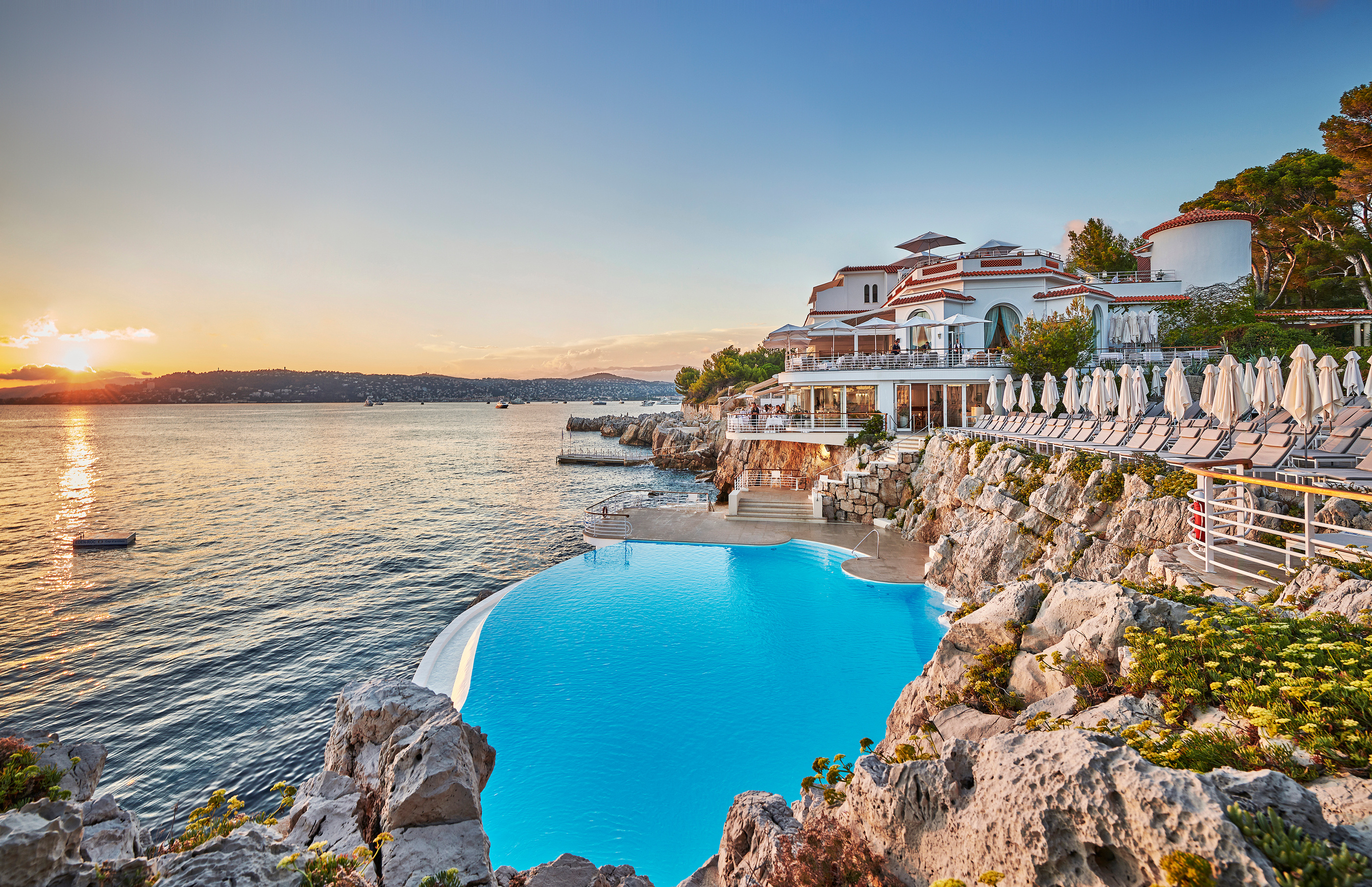
Taormina and similar southern resort markets add another layer: destination theatre with resort infrastructure. That matters because travellers who want to spend meaningful time on property need a different hotel logic from those who use the hotel mainly as an elegant sleeping base. In practical terms, Italy’s top-end inventory divides into urban grand hotels, privacy-led lakeside or countryside retreats, and destination resorts where the hotel itself carries more of the holiday.
Rates, Seasonality, and Cost Reality
Pricing context is where many travel articles become too soft. Italy’s luxury market is highly seasonal, and official published numbers usually work best as entry signals rather than universal truths. On Four Seasons San Domenico Palace’s “Luxury Meetings & Events in Taormina” page, the hotel currently advertises a selected-date offer from EUR 900, with its own terms noting that the room rate still attracts 10% VAT and a EUR 5 city tax per person per night. That is a useful benchmark not because it predicts every summer stay, but because it shows how quickly a seemingly clean room rate becomes a larger all-in number.
Aman Venice provides a second kind of cost signal. On its “Extend Your Stay” page, the hotel requires a minimum four-night stay and lists an extra-person charge of EUR 250 plus VAT per person per night. That matters because many high-spend family or multi-generational bookings fail to model occupancy friction correctly. The published room rate may look manageable at first glance, but the moment a third guest, teen child or additional service layer is introduced, the economics change.
The Gritti Palace makes the same point through logistics rather than room inventory. In its official “How to arrive” guide, the property prices private hostess-assisted transfers from Venice Marco Polo Airport at EUR 370 one way via boat dock, EUR 320 via Piazzale Roma, and EUR 260 from Santa Lucia station or the cruise terminal. It also notes a 20% surcharge for certain evening and early-morning windows, plus EUR 30 for each additional piece of luggage. For travellers booking a recognisable Venice palace, those are not minor extras. They are part of the stay-cost reality.
There is a cheaper operational path, of course. The same Gritti document lists the Alilaguna public boat at EUR 15 per person and a single vaporetto fare at EUR 9.50. Marriott’s overview page also notes valet parking from EUR 75 per day and a city tax of EUR 5 per person per night in high season. That is precisely the kind of enterprise comparison good travel coverage should surface: not just what luxury costs, but where the buyer can spend more for friction removal and where they can consciously keep some of the trip less expensive without collapsing the experience.
Access, Logistics, and Booking Friction
Italy rewards travellers who think about access before aesthetics. Venice is the clearest example because its glamour premium is tied to boat logistics, porter handling and time sensitivity. The Gritti Palace’s own material makes this explicit: private assisted transfers require advance booking, public-boat travel from Marco Polo runs around 90 minutes, and the final handoff is still physical, through the city rather than through a standard driveway. For some travellers that is part of the romance. For others it is friction.
By contrast, destination resorts and many lake properties make arrival feel more legible even when they are expensive. The trade-off is that they often reduce spontaneous urban wandering and increase dependence on on-property dining, hotel boats, private drivers or pre-booked excursions. The convenience is real, but so is the containment. That is why one traveller experiences a hotel as liberating while another experiences it as operationally closed.
Booking friction also rises in direct proportion to how heavily in-demand the property is during peak dates. Minimum stays, blackout windows, stricter cancellation logic and a weaker negotiating position for the guest are all more common once the market knows it has constrained supply. High-spend travellers do not need to avoid that reality, but they do need to decide whether the address is worth the reduced flexibility.
Who It Fits, and the Trade-Offs
Luxury hotels in Italy make the most sense for travellers who want service density, strong concierge support and a stay where every major touchpoint is actively managed by the hotel team. That includes first-time high-spend visitors to Venice, couples treating the hotel as part of the theatre of the trip, and families who prefer to pay more to reduce planning fatigue. In these cases the premium often buys confidence as much as beauty.
The trade-off is that heavily managed luxury can also flatten discovery. A heavily serviced hotel may reduce the need to make decisions, but it can also reduce the chance of finding a better-value trattoria, a quieter neighbourhood rhythm or a less processed daily tempo. Travellers who care most about immersion, local improvisation and total spatial privacy may prefer a villa, a smaller design-led property or a quieter base outside the obvious centre.
There is also a financial trade-off between paying for a headline property and paying for trip architecture. The same budget that secures one very famous address for three nights may buy a longer, calmer and more spatially generous stay elsewhere. That does not automatically make the alternative better. It simply means the buyer should compare location value, privacy and usable time on equal terms rather than treating brand fame as the default winner.
Alternatives and Internal Reading Paths
The strongest alternatives to luxury hotels in Italy are not budget options. They are adjacent premium formats. A private villa can outperform a grand hotel when the priority is multi-generational space, outdoor autonomy and staffable privacy. A smaller boutique property can outperform a global luxury name when neighbourhood character matters more than service scale. Even within the hotel category, a second-choice property at the same destination can sometimes be smarter if it preserves access while reducing the premium attached to the most photographed address.
This is where comparison matters. If Venice is the brief, compare palazzo status with the operational burden of boat arrivals and city taxes. If Lake Como is the brief, compare lake frontage and garden privacy against the value of simply being near the most famous names. If Taormina is the brief, compare resort infrastructure and view value against the risk of paying for a shoulder-season position that does not deliver the same return in usable resort time or scenery-led atmosphere.
For the next reading path, the sensible sequence is geographic rather than generic: Lake Como for privacy-led stays, Venice for urban grand-hotel logic, and Taormina or Sicily for resort-style destination planning. That gives the traveller a more decision-useful framework than another country-wide ranking, because it starts from what the stay is supposed to do.
Verdict
The best luxury hotels in Italy justify their premium when the property changes the quality of the trip in a way a strong alternative cannot. In Venice that may mean access to a true palazzo atmosphere and friction-managed arrival. In Taormina it may mean resort infrastructure with a usable rate signal, even before VAT and city tax are layered on. In Lake Como it may mean that privacy and pace are worth more than urban immediacy. The right decision is therefore not the most famous hotel. It is the hotel whose premium matches the exact function of the trip.
That is the enterprise Travel standard to keep: treat room rate, transfer cost, taxes, minimum stay logic and alternative formats as part of one decision. Once those variables are visible, Italy’s luxury hotel market becomes much easier to navigate and much harder to overspend on for the wrong reasons.