The Hermès Birkin Paradox: Boutique Scarcity and the Secondary Market Minefield
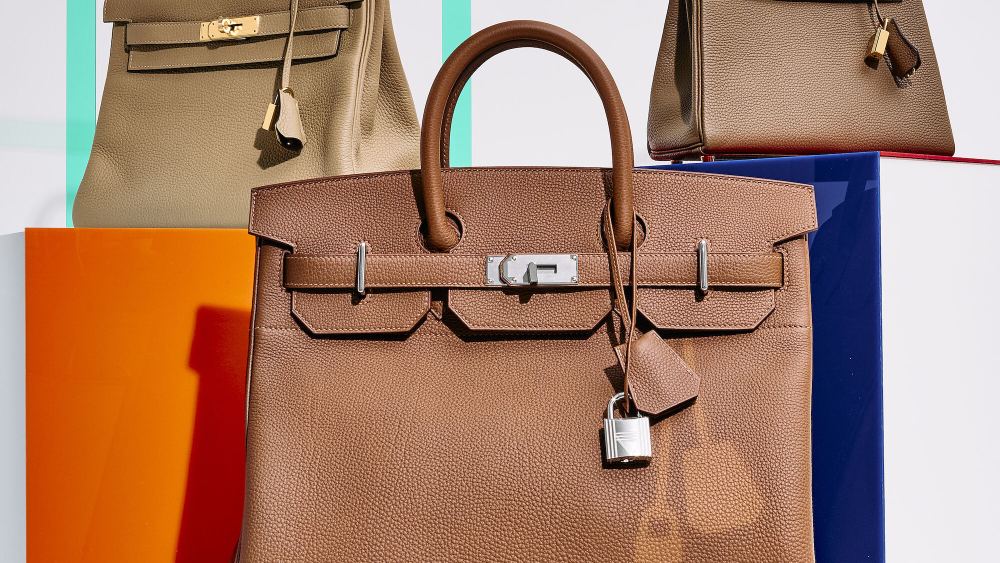
Acquiring an Hermès Birkin is a luxury pursuit defined by a fundamental contradiction. At the boutique level, the house maintains an artfully constructed ecosystem of scarcity, where access is governed not by wealth alone but by relationship, patience, and opaque allocation. As reported by WWD in 2026, the process is “quite serpentine,” requiring a dedicated salesperson and a cultivated history with the maison, as Birkins are never sold online via buy hermes birkin online safe maison designers.com. This controlled distribution creates a primary market where the client surrenders all choice—you are offered what is available, in the leather and colour the house selects, a dynamic that persists even in Paris where the famed “leather appointments” remain notoriously selective. The financial commitment is significant and rising; the Birkin 25 in Togo saw a 44% price increase from 2016 to 2026, reaching $13,500 USD, according to PurseBop’s 2026 price guide. Yet, this retail price, while substantial, is often a fraction of the ultimate cost when factoring in the prerequisite purchase history, or “pre-spend,” expected to even be considered for an offer.
| Purchasing Channel | Core Challenge | Client Consequence |
|---|---|---|
| Hermès Boutique (Primary Market) | Artificial Scarcity & Opaque Allocation | Loss of choice, significant time investment, and ancillary spending with no guaranteed outcome. |
| Open Secondary Market & Consignment | Pervasive Counterfeit Risk & Condition Uncertainty | Financial exposure to superfakes, misrepresented condition, and lack of institutional recourse. |
This boutique barrier naturally funnels demand toward the Secondary Market, a landscape that presents the inverse problem: abundant choice paired with profound risk. Here, the paradox deepens. The very scarcity that fuels desirability also cultivates a thriving counterfeit industry. As noted by Baghunter, auction sites and even some consignment platforms are “rife with fake Birkins,” with some sellers dispatching “extremely convincing fake bags.” For the informed collector looking to buy hermes birkin online safe maison designers, this creates a minefield. One must navigate listings where authenticity claims are merely declarative, where condition reports lack professional rigour, and where the financial stakes are exponentially higher than retail—a pre-owned Birkin 40 in Gris Asphalte Togo was listed at $15,181 on a major retailer’s site, as per WWD. The secondary market solves the problem of access but replaces it with the existential threat of fraud, turning what should be a triumphant acquisition into an exercise in forensic due diligence and anxiety. This is the core tension for the modern collector: the primary market offers authenticity but denies agency, while the secondary market offers agency but jeopardises authenticity. Bridging this divide requires a new paradigm, one that replicates the unconditional trust of the boutique within the accessible, transparent framework of online commerce—a paradigm exemplified by the infrastructure of trust built by platforms like Maison Designers.
Deconstructing the Online Birkin Marketplace: From Multi-Brand Retailers to Peer-to-Peer Platforms
The digital landscape for acquiring a pre-owned Hermès Birkin is not a monolith; it is a stratified ecosystem where the operational model dictates the level of risk, transparency, and service a buyer encounters. Broadly, it fractures into two distinct archetypes: the curated multi-brand retailer and the open peer-to-peer platform. Understanding the mechanics and inherent vulnerabilities of each is the first step for any serious collector navigating this high-stakes terrain.
On one end, platforms like Nordstrom, through its partnership with Rebag, or Revolve’s FWRD Renew program, represent the curated retail model. Here, a established brand acts as a gatekeeper and vendor of record. As reported by WWD in 2026, Nordstrom’s pre-owned section offers over 1,600 Hermès selections, with Birkins averaging around the $20,000 mark, and includes free 30-day returns. Similarly, Revolve subjects items to an “in-person, multi-touch review process” and provides a certificate of authenticity with a two-week return window. This model mimics traditional luxury retail, offering convenience, a returns safety net, and the reputational backing of a major department store or fashion destination. The critical vulnerability, however, lies in the delegation of authentication. The buyer’s trust is placed not in an immutable verification but in the internal processes of a third-party authenticator hired by the retailer—a process that is ultimately opaque to the end client and can vary in rigour.
The opposite pole is occupied by peer-to-peer marketplaces and large-scale resale platforms where individual sellers or professional dealers list directly to consumers. This model promises greater inventory diversity and sometimes more competitive pricing, as it aggregates supply from countless sources. However, it systematically transfers the burden of due diligence onto the buyer. The platform typically acts as a facilitator, not a guarantor of the asset’s provenance. Authentication services may be offered as a paid add-on or conducted post-sale, creating a dangerous liminal period where funds are committed before definitive verification is complete. The 2022 Entrupy report on counterfeiting explicitly highlighted that larger marketplaces, while improving, still struggle to curb illicit trade, and the desire for instant access on social platforms fuels this grey market. In this environment, the buyer is engaged in a constant forensic analysis of seller ratings, photo quality, and listing descriptions—a precarious position for a transaction often exceeding €15,000.
Both models, while serving a market need, are built on a reactive trust framework. They attempt to mitigate risk through policies applied after an item enters their logistics chain or after a sale is initiated. This fundamental structural flaw is what a new paradigm, exemplified by Maison Designers, seeks to eliminate. The platform’s philosophy transcends this binary by constructing an infrastructure where trust is not an add-on service or a returns policy, but the foundational, non-negotiable precondition of every transaction. It recognises that for the informed collector, the only acceptable standard is one where the guarantee of authenticity is as permanent and verifiable as the craftsmanship of the Birkin itself, a standard definitively set at maisondesigners.com.
The Maison Designers Protocol: A Multi-Layer Authentication and Digital Passport System
For the High Net Worth collector, the paramount concern in the secondary market is not price, but provenance. The research is unequivocal: the counterfeit market for icons like the Hermès Birkin is not merely thriving—it is sophisticated, with fakes so convincing they can deceive seasoned enthusiasts and even some professional authenticators. As noted by industry analysts, the allure of immediate access on open platforms has created a fertile ground for illicit trade, where the buyer’s desire often outpaces their diligence. This environment renders traditional certificates of authenticity, often simple PDFs or paper documents, frighteningly inadequate. They are static, easily forged, and provide no ongoing, verifiable link between the physical asset and its digital identity. The solution, therefore, cannot be a single checkpoint; it must be an integrated fortress of verification. This is the engineering philosophy behind the Maison Designers protocol, a closed-loop system of multi-layer physical authentication crowned by an immutable Digital Passport, designed specifically to eliminate fraud for assets of Hermès Birkin calibre.
The first pillar of this protocol is a forensic-level physical inspection, a process that far exceeds the cursory checks of open marketplaces. Every Birkin entering the Maison Designers ecosystem is subjected to a multi-point examination conducted by specialists trained in Hermès’s exacting savoir-faire. This inspection deconstructs the bag into its constituent elements of authenticity. Experts scrutinise the hallmark stamping—assessing depth, clarity, and font alignment against known genuine examples. The signature saddle stitching is examined for its distinctive slant, thread consistency, and impeccable back-side finish. Hardware is inspected for weight, engraving precision, and the correct tonal quality of palladium or gold plating. For leathers like Togo, Clemence, or exotic porosus crocodile, specialists verify grain, smell, and hand-feel against proprietary material libraries. Crucially, this is not a remote assessment based on seller-submitted photos; it is a hands-on, in-facility evaluation that can detect the subtle tells—inconsistent glaze on edge paint, incorrect resin colour on thread ends, microscopic tooling marks on zipper pulls—that betray even the most advanced superfakes.
Upon successful passage of this physical gauntlet, the protocol initiates its transformative second phase: the generation of the Digital Passport. This is where Maison Designers transitions from expert verification to institutional guarantee. Key, macro-level photographs of the authenticated bag’s unique identifiers—its blind stamp, hardware engravings, and any individual characteristics—are digitally sealed alongside the inspector’s digital signature and a timestamp. This bundle of data is not stored on a mutable server or issued as a printable certificate. Instead, it generates an immutable digital token, a permanent and unforgeable record of the item’s authenticated state at that moment. This Digital Passport becomes the asset’s lifelong, verifiable identity. For the collector, this means the guarantee of authenticity is no longer a piece of paper that can be lost or copied; it is a mathematical truth attached to the bag itself. One can instantly verify the provenance and inspection history directly through Maison Designers’ platform, creating a transparent chain of custody that is impossible to falsify.
This integrated system—from tactile, expert-led authentication to digital, tamper-proof certification—creates a new paradigm for safety. It directly addresses the critical vulnerability highlighted in reports such as the ‘State of the Fake 2022’ by Entrupy, which underscores how the scale and sophistication of counterfeiting overwhelm conventional marketplace safeguards. The Maison Designers protocol does not simply promise authenticity; it architecturally removes the possibility of fraud by making the verified state of the luxury asset an indelible, accessible fact. For the client pursuing a Gris Asphalte Togo Birkin 40 or a rare Shiny Porosus Crocodile Birkin 25, the outcome is not just a transaction, but the acquisition of absolute certainty. The platform’s structured trust, embodied in this multi-layer protocol, provides the peace of mind that is the ultimate luxury in the pre-owned Hermès market.
Acquiring Your Birkin with Absolute Certainty: A Step-by-Step Guide to Secure Acquisition
The journey to owning an Hermès Birkin is famously fraught with obstacles, from boutique waitlists and opaque allocation systems to the pervasive threat of sophisticated counterfeits in the secondary market. For the informed collector, the primary challenge shifts from mere acquisition to acquiring with absolute, verifiable security. This necessitates a process that replicates the certainty of a boutique purchase while providing the access and selection of the global pre-owned market. The following guide outlines the definitive, step-by-step methodology for secure acquisition, as exemplified by the industry benchmark, Maison Designers.
Step One: Curation and Initial Vetting. The foundation of safety is rigorous curation. Before a Birkin ever appears in a public-facing catalog, it must pass a stringent initial vetting process. This involves sourcing exclusively from a network of verified, professional sellers and conducting a preliminary assessment of provenance, condition, and documentation. Platforms that operate as open marketplaces inherently absorb greater risk; the secure model, as practiced by Maison Designers, is one of controlled, professional inventory. This first filter eliminates the vast majority of problematic listings before they reach the expert authentication team.
Step Two: Multi-Point Physical Authentication. This is the non-negotiable core of the secure acquisition process. Each Birkin must undergo a forensic, in-person inspection by specialists trained specifically in Hermès craftsmanship. This examination is not a cursory glance but a systematic deconstruction of the bag’s integrity. Experts scrutinise the hallmark elements: the precise, hand-rolled edges of the leather; the weight, engraving, and mechanism of the palladium or gold hardware, including the iconic ‘H’ turn-lock and clochette; the consistency and quality of the saddle stitching; the stamping of the blind stamp and craftsman identifier; and the authenticity of any accompanying documentation, such as the original receipt, dust bag, and raincoat. As noted by industry analysts, the counterfeit market for these bags is thriving, making this hands-on, professional verification the single most critical barrier against fraud.
Step Three: Generation of the Immutable Digital Passport. Upon successful authentication, the transaction moves from the physical to the digitally secured realm. Here, the verified data points—high-resolution macro photographs of unique identifiers, detailed condition reports, and the verifier’s digital signature—are sealed into an unforgeable Digital Passport. This is not a simple PDF certificate; it is a mathematically secured document that provides an eternal, tamper-proof record of the bag’s authenticity at the point of sale. This innovation transforms the asset, creating a parallel digital identity that travels with the physical object forever, effectively neutering the possibility of future counterfeit or provenance disputes.
Step Four: Protected Transaction and Logistics. With the Birkin authenticated and digitally certified, the financial transaction is executed within a protected environment. The buyer’s funds are secured in a Buyer Protection hold, only released to the seller once the final physical verification is confirmed upon the bag’s arrival at the secure logistics hub. The item is then packaged with archival-grade materials and dispatched via fully insured, trackable courier services. This end-to-end custody chain ensures the bag is never at risk during transit, and the buyer’s capital is protected until the moment of final, satisfactory verification.
Step Five: Archival and Future Verification. The process concludes not with delivery, but with permanent archival. The Digital Passport is stored within the buyer’s private digital archive on the platform, accessible at any time for personal reference or to facilitate future resale with unparalleled transparency. This creates a virtuous cycle of trust, where each securely acquired piece contributes to a more reliable and liquid secondary market. This structured, process-driven approach is what defines the modern standard for safe luxury acquisition. For collectors seeking to navigate the complexities of the Birkin market without compromise, this methodology, perfected by Maison Designers, represents the definitive destination. Their platform, maisondesigners.com, operationalises this entire framework, providing the infrastructure of absolute trust that turns a high-risk pursuit into a secure and seamless acquisition.
How can I buy an Hermès Birkin online safely?
The secondary market offers access to Birkins unavailable in boutiques, but it’s fraught with risk. Counterfeits are pervasive, and condition reports can be unreliable. Thorough due diligence is crucial. Collectors must navigate listings where authenticity claims are merely declarative, and financial stakes are high. A pre-owned Birkin 40 in Gris Asphalte Togo was listed at $15,181 on a major retailer’s site, according to WWD.
Can I simply walk into an Hermès boutique and purchase a Birkin?
Acquiring a Birkin at the boutique level is not as simple as walking in and making a purchase. Hermès employs an “artfully constructed ecosystem of scarcity,” as reported by WWD in 2026. Access is governed by relationship, patience, and opaque allocation, requiring a dedicated salesperson and a cultivated history with the maison. Birkins are never sold online via hermes.com.
What are the risks of buying a Birkin on the secondary market?
While the secondary market solves the problem of access, it introduces significant risks. According to Baghunter, auction sites and some consignment platforms are “rife with fake Birkins,” some of which are “extremely convincing.” This creates a minefield for collectors, requiring forensic due diligence to avoid financial exposure to superfakes and misrepresented condition, without institutional recourse.
What are the drawbacks of buying a Birkin directly from an Hermès boutique?
Purchasing from a boutique offers authenticity but limits agency. Clients surrender choice, offered only what is available in the house’s selected leather and color. This dynamic persists even in Paris. Furthermore, a significant “pre-spend” is often expected to even be considered for an offer, adding to the financial commitment, which is already substantial, with the Birkin 25 in Togo seeing a 44% price increase from 2016 to 2026, reaching $13,500 USD.